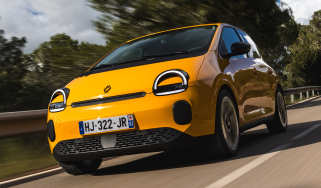
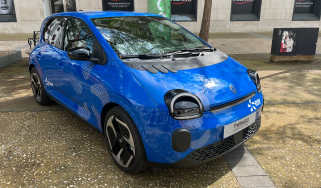
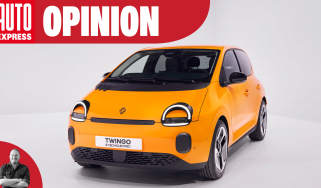
Renault's cute new Twingo is hard not to love and we have globalisation to thank
By leveraging the scale and resource of China, Renault has made a very European car better for all of us

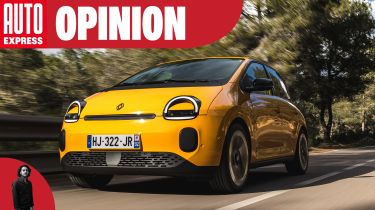
When driving the new Renault Twingo last week, there was one figure that I just couldn’t get out of my mind. It wasn’t 163, which is the quoted range in miles, or 27.5 (its battery capacity) or 20,000, which is the amount of Euros that it’ll cost in Europe. It was 100. This is the number of weeks that it took Renault to turn an idea into a profitable product that you can now (just about) go out and buy.
How did it do it? Cooperation and globalisation. Renault might be a very French company, and sell products that emphasise this very French-ness. But the new Twingo – of which 75 per cent of its global marketplace is within a few hundred miles of its Slovenian assembly plant – is a result of leveraging Chinese scale and resources for the benefits of us all.
This Chinese resource is in the form of its ACDC engineering hub based in Shanghai. It acts as a remote location full of engineers and production designers that has been repurposed from designing models for the tough Chinese market to collaborating on the development of Renault’s European models.
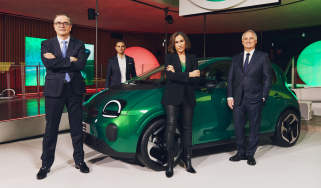
Speaking with Renault’s top brass, ACDC was able to cooperate with the main team in France to complete lots of the engineering tasks at a rate far faster than is possible in Europe. What would usually take years now takes just months, completing the journey from concept to reality in a fraction of the time it would take with a single European team.
Granted, the Twingo isn’t a particularly complex car from a technical standpoint. But the task of transforming the AMPR-Small platform from its use in the Renault 4 and Renault 5 for the much smaller Twingo wasn’t. You can see this much in the completely different proportions between the three models.
The Twingo’s shape isn’t an easy one to legislate, either. The classic monobox might be associated with the nineties, but safety rules have changed a lot in the nearly three decades since the original’s launch. Pedestrian safety regulations make this type of short-nose car very difficult to package, which is part of the reason why the Twingo’s windscreen is so high. The new car, however, didn’t just need to pass modern laws, but do so at a price that has to include a battery pack, European manufacturing and the styling cues essential to its design narrative.
We’ll have to see whether this way of engineering cars is still useful or relevant as the deliverables rise. But this collaboration might have just revealed a lifeline that all legacy brands could tap into in order to try compete with the Chinese speed and accuracy now deemed necessary to operate at a profit.
However, this system breaks down if the world around Renault isn’t as globalised. What’s now a politically charged term seems to have moved beyond a tool for good, and has instead become a buzz-word to represent a supposed threat to livelihoods. Is this ACDC outpost removing jobs from France and sending them to China instead? Or is this shoring-up Renault’s future success by keeping it globally competitive, therefore opening a door to growth? I’d be inclined to suggest it’s the latter.
Did you know you can sell your car through Auto Express? We’ll help you get a great price and find a great deal on a new car, too.