New Citroen 2CV: icon to be reborn for the electric era, and it’s coming soon
The planets are aligned! Retro design buzz and rules promoting small EVs will see Citroen's most famous car rebooted

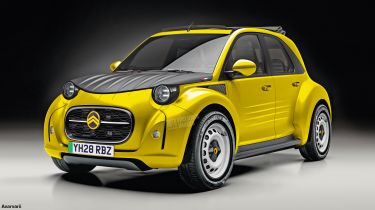
Citroen is set to rule the Paris Motor Show with a 2CV concept exploring the future of affordable electric motoring.
Rumours have been swirling about plans to revive the the Citroen 2CV, which democratised budget motoring after World War II. Now Citroen’s new CEO, Xavier Chardon, has green-lit the concept and locked in its October premiere, to capitalise on new rules currently working their way through the European Commission to incentivise electric city cars.
What will the new Citroen 2CV look like?
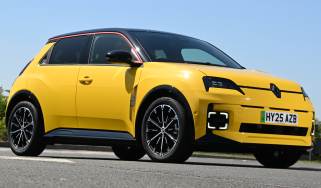
Citroen’s design team, under the experienced Pierre Leclercq, is hard at work on the show car. The success of the reborn Renault 5, which has landed 120,000 orders and been Europe’s top-selling retail electric car at times, illustrates the power of a well executed retromodernist design – or ‘neo-retro’ to use Leclercq’s term.

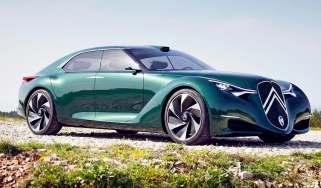
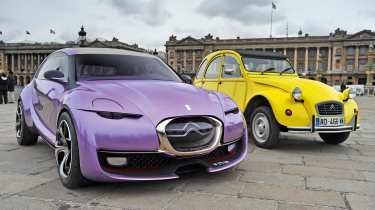
“We’ve all had a shot at recreating the 2CV,” he said, referencing the 2009 Revolte concept conceived under former Citroen design boss Jean-Pierre Ploué. “It was a modern interpretation of a 2CV and it was super cool. You cannot say it’s something you won’t try, the same way we tried little H-types or things like that. We tried those projects.”
The Revolte was a plug-in hybrid based on a shortened Citroen DS3, which nodded to the 2CV with its ‘eye’ headlamps, grille and exaggerated fenders. But it wasn’t a parody of the original and that’s the approach being championed by Leclercq, who will take the 2CV’s ethos of affordability, spaciousness, comfort and fuel efficiency in a modern direction.
“If you think of a 2CV, a cheap car for villages, it’s so important to keep the philosophy and values. If you can reinterpret it in a car today, then let’s do it,” Leclercq added.
But while the new Renault 5 is the commercial lodestar, the concept will be closer in size and price to Renault’s 16,000 Euro, 3.8m-long Twingo. This sits on a shortened, simplified version of the 5’s platform, called RGEV Small.
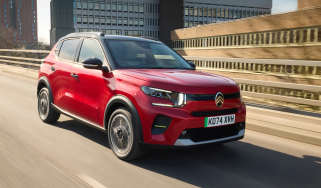
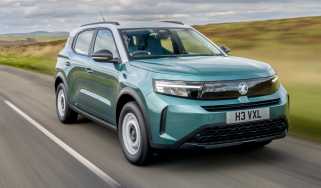
Citroen has its own low-cost architecture, dubbed ‘Smart Car’, which underpins the new C3, C3 Aircross and Fiat Grande Panda, with combustion and electric power. Citroen engineers have been exploring whether the platform is flexible and cost effective enough to support a city car that would sit beneath the C3 and above the Ami quadricycle. One consideration may be whether the structure is strong enough to support a rollback canvas roof, a 2CV staple.
What sort of range and power can we expect?
Renault’s Twingo benchmark has a 27.5kWh lithium iron phosphate (LFP) battery, mustering 163 miles of range, and a detuned electric motor with 80bhp and 175Nm of torque. It will also underpin Dacia’s forthcoming A-segment EV and a Nissan sibling.
Citroen’s owner Stellantis will seek to deploy its A-segment platform across multiple brands – with Fiat a prime contender due to its small car heritage.
The ‘neo-retro’ 2CV will need to conform with the European Commission’s nascent ‘M1E’ category. The regulation is still being hammered out, but cars must measure less than 4.2 metres and be assembled within the EU. Individual countries will be given leeway to financially support battery production within the economic block, and Stellantis has already announced a 4.1billion Euro (£3.5billion) Spanish joint venture with Chinese battery maker CATL, with their Zaragoza gigafactory due to be producing packs by the end of 2026.
The Commission wants to fast-track the supply of homegrown, affordable EVs – filling the EV void beneath 25k Euros – the equivalent of £21,500 – before subsidies. Assuming the EU ruling is issued by the end of this year, Citroen would strive to have its 2CV EV in production in 2029.
Buy a car with Auto Express. Our nationwide dealer network has some fantastic cars on offer right now with new, used and leasing deals to choose from...