Cupra Born review
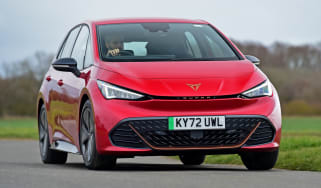
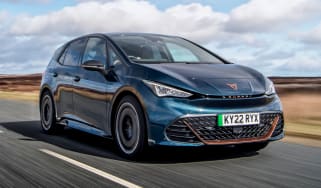
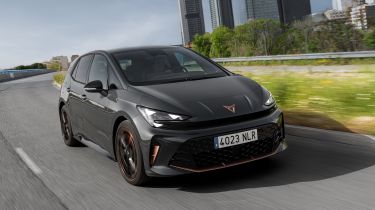
Cupra Born is a distinctive electric hatchback that offers strong performance, especially in its most powerful form

Our opinion on the Cupra Born
The Cupra Born skillfully balances fun handling with comfort and refinement. Even the extra sporty VZ model can be a quiet, comfortable, spacious and easy-to-drive family EV from nine to five, but then good fun to hustle along a twisty B-road when you want to let your hair down. Upgrades for 2026, such as the addition of one-pedal driving, extra range and, at long last, physical buttons on the steering wheel, will make this an even better car to live with. Meanwhile, the quality of the already stylish and premium-feeling interior has been taken to another level.
The infotainment system could be better, however, and we’re disappointed Cupra hasn’t added the physical climate controls the VW ID.3 recently got as part of its much-needed glow-up. We can only hope the brand finally adopts them soon. Also, while the spicier Born VZ offers hot-hatch pace and is very capable, it doesn’t deliver a thrilling driving experience.
About the Cupra Born
As any older sibling will know, the arrival of a new baby brother or sister immediately makes them the centre of attention. The same can be true for cars it seems, as the long-awaited £23k Cupra Raval is one of the most talked about and important cars hitting the streets in 2026. Whereas the launch of the new and improved version of its now five-year-old big brother, the Born, has gone more under the radar.
Used - available now


Nevertheless, we’re happy to make a fuss over the refreshed family hatchback, partly because we had very few complaints about it. Especially when compared to its cousin, the Volkswagen ID.3, which has just undergone a massive transformation to create the new ‘Neo’ version that has a totally different look and an overhauled interior.
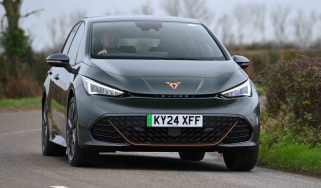
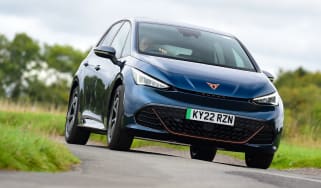
The Born, on the other hand, has received a new, sharper front-end, the triangular light signature that’s found on the hot-topic brand’s other models, a slight rejig of the powertrain and trim line-up, plus some carefully selected and very welcome refinements to the interior.
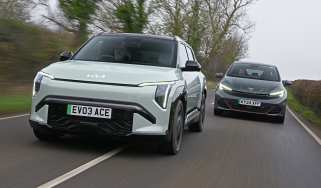
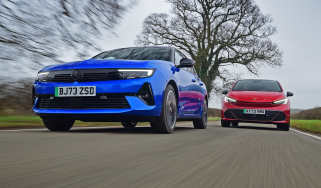
Our first experience in the updated Born was driving the range-topping VZ model on Spain’s perfect roads. However, we’ve put the original version through a series of challenges since it first hit the UK’s roads in 2021. It triumphed over the Vauxhall Astra Electric in our real-world twin test, for instance, thanks to lower pricing and a superior driving experience. However, the Spaniard couldn’t defeat the Kia EV3 in another comparison test, because the latter offered better practicality and a longer warranty.
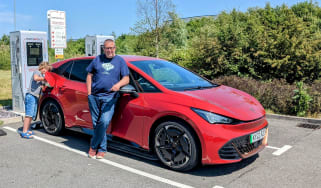
We’ve also spent six months living with a Curpa Born V3 on a long-term test, and found the EV to be perfectly capable of taking on longer family holiday road trips, but the pitfalls of VW Group’s infotainment tech at the time was a source of frustration.
Cupra Born prices and latest deals
The new and improved Cupra Born is available to order now, with prices officially starting from just under £36,000. But the V1 and V2 spec models will be eligible for Band 2 of the Government's Electric Car Grant (ECG), which means a discount of £1,500.
That means entry-level V1 models will be available from £34,500 and mid-range V2 models will start at £36,500. That’s with the smaller battery, though; upgrading to the larger powerpack costs £1,000-£2,000. The top-of-the-range VZ model doesn’t get the grant, so costs nearly £46,000.
If you're interested in getting yourself a Cupra Born, we can help you to save even more money. Configure your ideal Cupra Born through the Auto Express Buy a Car service to get top offers from local dealers, check out the latest Cupra Born leasing deals, or search for used Cupra Born models. You can even sell your existing car for a great price with Auto Express Sell My Car.
Performance & driving experience
Pros |
|
Cons |
|
We’ve always praised the Cupra Born for its well-judged balance between comfort, refinement and handling, and it’s still true five years on. The most significant changes to the driving experience with the facelift model are the addition of more strength levels for the regenerative braking system, including one-pedal driving capability, wider tyres for both the 19 and 20-inch wheel options, launch control for cars with the bigger battery and a new ‘immersive’ interior sound for when you’re in Performance or Cupra mode.
Thanks to its lowered suspension, uprated anti-roll bars, tweaked steering and braking systems, the VZ is the sharpest Born to drive. And for the price, it’s one of the most engaging EVs around.
However, the VZ isn’t quite as much fun as a 321bhp rear-wheel-drive hatchback sounds on paper. We’d like Cupra to show a little more courage and allow the stability and traction control systems to let the driver play with the car a little more, because fundamentally, there’s a lovely balance to the chassis, which gives you the confidence to push hard.
| Model | Power | 0-62mph | Top speed |
| Cupra Born V1 58kWh | 187bhp | 8.0 seconds | 99mph |
| Cupra Born V2 79kWh | 228bhp | 7.0 seconds | 99mph |
| Cupra Born VZ 79kWh | 322bhp | 5.6 seconds | 124mph |
Electric motors, 0-60mph acceleration and top speed
Performance is great across the Born range. The smaller-battery models naturally weigh less but still produce a peppy 187bhp and 350Nm of torque from their rear-mounted electric motor, so 0-62mph takes exactly eight seconds. Those with the larger powerpack get a bit of extra oomph, cutting their sprint time to seven seconds.
From testing different versions of the Born over several years, we found the throttle response in recent models seems much more lively than in earlier ones, which also helps with performance.
With 322bhp and 545Nm on tap, the Born VZ is much swifter. Capable of 0-62mph in just 5.6 seconds, it has genuine hot hatch pace. Well, at least on paper, because we found that power tails off surprisingly quickly after you launch it. At the time same though, we like that the Cupra isn’t as hair-risingly fast as the 429bhp dual-motor MG4 XPower; it feels more controlled in everyday situations and generally pleasant to drive. Plus it’s also far more engaging on a country road.
Town driving, visibility and parking
One-pedal driving is not a new thing in the world of EVs, and more than a few of the Born’s rivals already have it, but nevertheless it’s a welcome new feature that makes this an even easier car to drive around town.
‘B’ mode on the drive selector is how you activate one-pedal mode, and you can adjust how strong the regen is when you lift off the throttle, either using paddles behind the steering wheel – on those models that have them – or within one of many settings menus on the touchscreen. There’s multiple levels for the regen in the standard ‘D’ mode, too, so it does take time to find the right settings for you.
The throttle is easy to modulate and has plenty of travel to enable smooth driving around town, and the ‘dynamic steering’ becomes lighter at low speeds, which helps when making quick manoeuvres and traversing through tight spots. Even in the tuned VZ model, the suspension does a great job of absorbing the impacts from potholes. It’s so comfortable, in fact, you won’t know it’s the hot version until you put your foot down. The ride is perhaps a little firmer than some alternatives, but it rarely crashes harshly over bumps.
From the driver’s seat, the Born’s deep windscreen and small A-pillar quarterlights give the same feel of sitting at the wheel of an MPV. It does make it hard to judge where the bonnet ends, although the very short front means you can squeeze the nose into smaller spots than you initially realise.
Country road driving and handling
Ironically, the smoothest-riding Born is the hottest VZ model. Thanks to its 15-way adjustable adaptive dampers, the ride can vary from a superbly cosseting level of comfort at one end to almost track-ready firmness at the other. For those models that do without, the driving manners are simply very well-judged.
Regardless of which version you go for, the Born is a hefty car – the kerbweight in some models only just dips below the two-tonne mark. Yet despite this, the low centre of mass and rear-wheel-drive layout mean it’s competent along a twisty road, with a predictable balance and little body roll. Although we did find it pitches and dives if you’re not smooth with the throttle.
Once you start pushing on, there’s a satisfying weight to the steering, which also feels precise and consistent. The same can’t be said for the brake pedal, which feels spongy and requires you to put quite a bit of force onto it before the car starts to really slow. Whether you’re driving enthusiastically or simply trying to perform an emergency stop, it’s not the most reassuring feedback.
Cupra hasn’t tried to replicate the sound of its petrol-powered hot hatches with its new interior noise. Instead, the engineers apparently took inspiration from the brand’s Formula E race cars, although you won’t know that from the deep sci-fi-like rumble that plays when in Performance or Cupra mode. It’s a nice detail, but we wouldn’t say it makes the driving experience more engaging.
Motorway driving and long-distance comfort
While Cupra may be seen as a sporty brand, comfort and refinement at motorway speeds are two of the Born’s greatest strengths. Combined with a potential for an excellent cruising range, this is a very capable long-distance car. On the flawless roads outside Madrid, where we got to drive the updated model, hardly any noise was coming into the cabin. The little that did was easily masked by the excellent Sennheiser stereo in our VZ test car.
Range, charging & running costs
Pros |
|
Cons |
|
V1 and V2 models are available with a choice of 58kWh or 79kWh batteries, which promise up to 300 and 389 miles of range, respectively. That’s a healthy increase from the 264 and 346 miles of range offered before the Born’s facelift, and means the Cupra now matches the Kia EV4.
The VZ gets the bigger powerpack as standard, and even though it's the most powerful version, it also has the longest range, capable of covering 392 miles on a single charge.
Electric range, battery life and charge time
During our test drive through town, with one-pedal mode activated to recoup as much energy as possible – but also climbing through the mountains outside Madrid and spending a lot of time cruising on the motorway – we averaged a respectable 3.5 miles per kWh in the Born VZ. We saw similar efficiency figures from previous tests of the Born, and this would mean a real-world range of just under 280 miles from a charge, which is about 100 miles less than Cupra says this version can deliver.
Models fitted with the smaller 58kWh battery can charge at up to 105kW, while those featuring the 79kWh unit reach 185kW, according to Cupra. Both are impressive for this class of EV, and whichever version you go for, a typical 10 to 80 per cent top-up from a suitably fast charger will take less than half an hour.
When we tested the old Born VZ and pre-conditioned the battery to its ideal temperature, we achieved 185kW up to about 30 per cent charge, tailing off to around 155kW by 50 per cent and 85kW at 80 per cent.
Fully replenishing the 58kWh battery from a 7kW home wallbox will take more than six hours, with the 79kWh battery needing more than eight hours.
| Model | Battery size | Range | Insurance Group |
| Cupra Born V1 58kWh | 58kWh | 300 miles | TBC |
| Cupra Born V2 79kWh | 79kWh | 389 miles | TBC |
| Cupra Born VZ 79kWh | 79kWh | 392 miles | TBC |
Insurance groups
Insurance ratings for the updated Cupra Born have yet to be released, however we don’t expect there to be much difference from the pre-facelift models.
That means the entry-level Born equipped with the 59kWh battery should start in insurance group 26 (out of 50), with bigger-battery models and higher trim levels rising to 30. The extra sporty VZ model will be the most expensive of the range to insure, likely sitting in group 34.
That’s a little better than the MG4, which starts in group 29 and goes up to group 38 for the hottest XPower model, but not as good as the Renault Megane which starts in group 25. Meanwhile the Kia EV4 is in groups 33 to 38.
Tax
Fortunately, the luxury car tax threshold for EVs has been increased to £50,000, which means all versions of the Cupra Born avoid the additional surcharge above the standard annual rate of VED road tax.
There’s good news for company car buyers, too, because the Born benefits from the usual low Benefit-in-Kind (BiK) tax rates associated with zero-emission cars. For the 2026/27 tax year, the Born, like all EVs, falls into the 4% tax bracket.
Depreciation
The Cupra Born does suffer its fair share of depreciation, but it’s no worse than some of its key rivals. According to our market data, this EV should retain 41 to 44 per cent of its original price after three years and 36,000 miles. This isn’t worlds apart from the Cupra’s sister car, the Volkswagen ID.3, at 36 to 43 per cent.
Elsewhere, the Renault Megane E-Tech holds on to between 36 and 38 per cent, while our small company car of the year, the Kia EV3, clings on to between 48 and 52 per cent.
Interior, design & technology
Pros |
|
Cons |
|
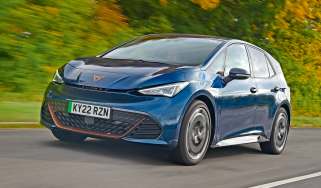
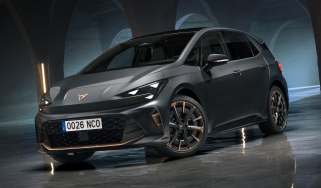
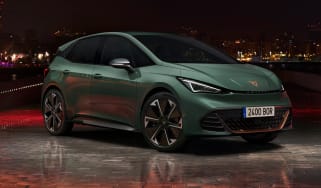
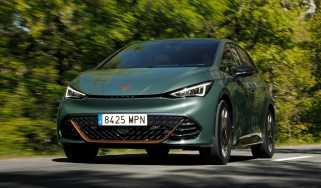
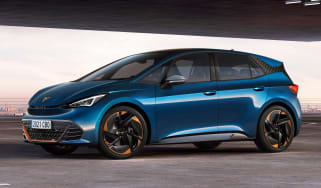
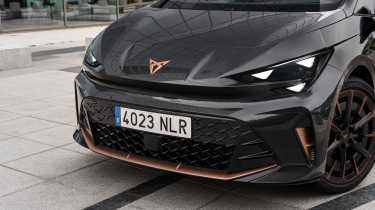
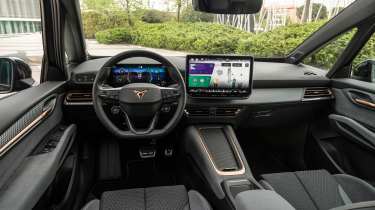
While the Born’s fundamental shape is the same as before, the visual enhancements are significant and add some of the styling elements featured on Cupra’s newer models, including the Tavascan and Raval. For instance, the new ‘shark nose’ front end is much sharper, and the wider grille makes the car look more aggressive than before.
As well as the three-triangle lighting signature, the Born now incorporates matrix LED tech for the first time. There’s more of the brand’s signature copper detailing, too, new 19 and 20-inch alloy wheel designs, all the door handles are now illuminated, and a new Timanfaya Grey colour joins the paint palette.
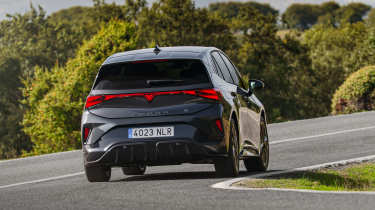
Finally, at the rear the Born now features a full-width light bar with illuminated Cupra badge in the middle, plus the bumper has been redesigned and has a more prominent diffuser.
All versions of the Born come with plenty of equipment, starting with V1 trim that includes 19-inch alloy wheels (20-inch on 79kWh battery cars), a 12.9-inch touchscreen, 10.25-inch driver’s display, wireless charging pad, ambient lighting, dual-zone climate control, front and rear parking sensors with a reversing camera, heated front seats and a heated steering wheel.
We’d be more than happy with that level of kit, but if you want a head-up display, surround-view camera system or Cupra’s latest Travel Assist 3.0 system to make motorway driving less stressful, you’ll need to upgrade to V2 trim.
The top-of-the-range VZ not only gets the more potent 322bhp electric drive motor and a tuned chassis with adaptive dampers, but also sportier bucket seats, keyless entry, a Sennheiser sound system and matrix LED headlights.
Interior and dashboard design
The interior hasn’t gone through a top-to-bottom transformation like the VW ID.3’s did as part of its recent facelift, but it didn’t really need to. Since the Born was launched, we’ve liked the more driver-focused design and thought the quality was superior to its Germanic cousin. A few well-placed upgrades were all this cabin needed, and that’s what’s happened.
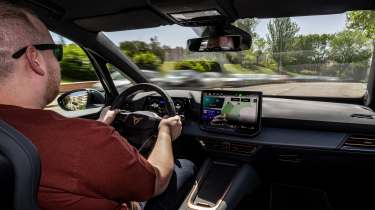
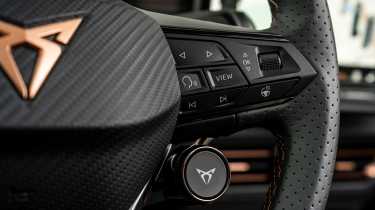
So the steering wheel no longer features annoying haptic touch-sensitive panels, there are proper physical buttons and dials, plus large separate buttons for toggling between drive modes and activating the special Cupra mode. Certain models also get paddles to adjust the strength of the regenerative braking.
Another improvement comes in the form of separate rear-window switches; previously these were combined with the switches for the front ones, which wasn’t very user-friendly.
Unfortunately, Cupra stopped short of adding physical climate controls beneath the touchscreen, as you’ll find in the new ID.3 Neo. We’re told it was Cupra’s decision not to add these and pay more attention to other areas of the car, such as material quality. But that means we’re stuck with the constantly criticised touch-sensitive sliders for the temperature. All other settings are adjusted via the touchscreen. At least they’re illuminated, but even so it’s disappointing.
Materials and build quality
Cupra has revisited some of the cabin materials. The doors are now more sculpted and incorporate plush suede on the middle section. Also all versions get bucket seats upholstered in upcycled Seaqual Yarn or Dinamica recycled textiles, while the upgraded CUP buckets on the VZ are now partly made from flax fibre.
The upper parts of the doors and dashboard also feature nice squidgy materials, and we like the 3D-effect triangular trim and copper accents. Fit and finish feels solid throughout, and overall the Born’s interior feels more expensive than many other competitors at this price point.
Infotainment, sat-nav and stereo
The most noticeable change to the Born’s interior is the larger digital instrument cluster. It’s a crisp 10.25-inch display that allows for bigger graphics and more options for different views, such as a full-screen map.
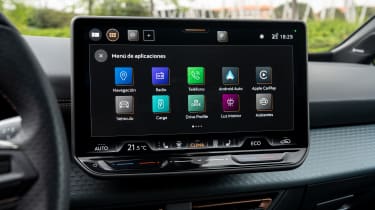
It’s flanked by a 12.9-inch central touchscreen that’s the same size as before but is now running a new Android-based infotainment system. It doesn’t look that different from the last batch of software this car had, but it does allow owners to download third-party apps such as Spotify and YouTube, and Cupra claims it’s more intuitive.
We’re not so sure, though, because we found changing some of the car’s settings required trawling through various menus or playing with a 3D model of the car. Some of the icons along the bottom of the display, such as those for windscreen heater, are also small and difficult to hit on the move.
There’s no shortcut button to quickly turn off the ADAS functions, either, like the ingenious ‘My Safety’ switch in the Renault Megane. But at least there is a shortcut for a customisable safety menu fixed to the top of the screen, and we like that you don’t have to confirm whether you want to turn off each system.
Wireless Apple CarPlay and Android Auto come as standard, while the Born VZ features a new 10-speaker Sennheiser Contrabass sound system that’s rich and clear. It will be available as an optional extra on lesser variants, too, and we would recommend adding it, so long as it’s not too expensive.
“We criticised early versions of the Born’s infotainment, and rightly so – initial set-ups had one or two baffling menu structures, and we found them to be full of glitches. The new Android-based system in the updated models is a vast improvement, but still not perfect.” - Ellis Hyde, news reporter.
Boot space & practicality
Pros |
|
Cons |
|
For a family hatchback, the Cupra Born feels very spacious, especially for those up front, thanks to its expansive windscreen and relatively low dashboard design.
Thanks to a high centre console, which is more or less entirely dedicated to storage, there’s plenty of space to hide various items away. This area manages to compensate for the Born having a small glovebox.
However, the swooping exterior design with its small rear glass area doesn’t let a huge amount of natural light in, and all the dark materials throughout don’t help make the cabin feel particularly cozy or inviting. If you want a family car that's more like that, the Skoda Elroq will be a better choice – as well as more versatile.
Dimensions and size
A short bonnet and fairly long wheelbase help deliver plenty of cabin space, given the Cupra’s relatively compact footprint. In terms of size, the Born is slightly longer, wider and taller than its petrol-powered counterpart, the Cupra Leon.
| Model | Cupra Born | Volkswagen ID.3 Neo | Kia EV4 |
| Length | 4,336mm | 4,265mm | 4,200mm |
| Width | 1,809mm | 1,809mm | 1,860mm |
| Height | 1,543mm | 1,554mm | 1,505mm |
| Wheelbase | 2,766mm | 2,766mm | 2,690mm |
| Boot space | 385 litres | 385 litres | 440 litres |
Seats & passenger space
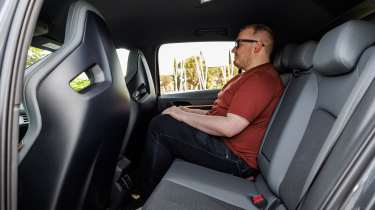
Because of the deep windscreen and small A-pillar quarterlights, it can feel like you’re in an MPV while piloting the Born. That’s not necessarily a bad thing. There’s plenty of adjustment for the driver’s seat and steering wheel in all versions of the Born, while the upgraded Sabelt seats in the VZ model are superb. They offer excellent support when cornering, while remaining comfortable on longer trips.
While slightly taller SUV alternatives such as the Hyundai Kona Electric and Kia EV3 offer a little more rear legroom, the Born is above average for the segment, and passengers benefit from more shapely and supportive seats than in either the Kona or BYD Dolphin, too. Six-feet-tall adults have legroom to spare and plenty of headroom, although the large C-pillars make things feel a little more gloomy in the back than in some rivals.
Boot space
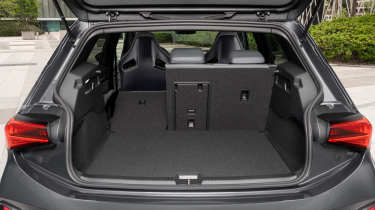
The Born offers 385 litres of boot space, which should be more than enough for day-to-day family life. That said, some rivals can haul even more stuff. The Renault Megane has 440 litres of luggage capacity, while you can cram 460 litres worth of stuff into the Kia EV3.
The boot is at least a nice, square area, and with the height-adjustable floor there’s no load lip, so filling up the space shouldn’t be difficult. If we had one complaint, it’s that the button for the tailgate is tucked under the light bar, making it very difficult to open.
Unlike the EV3 and many other electric cars, the Born doesn’t have extra storage under the bonnet, which is always a handy feature for charging cables.
Reliability & safety
Pros |
|
Cons |
|
Euro NCAP awarded the Born a five-star safety rating when it was first assessed in 2022, and the car held on to this score when it was retested in 2025 under much stricter criteria.
Every model in the line-up has adaptive cruise control, forward-collision warning and autonomous emergency braking, lane assist and traffic-sign recognition.
Also, while other marques in the VW Group provide three years or 60,000 miles of warranty cover (whichever comes first) as standard, Cupra offers its customers extra peace of mind with a five-year/90,000-mile warranty.
The Born didn’t appear in the most recent Driver Power car ownership results, but the Cupra brand continues to underwhelm in the best manufacturer rankings, finishing in 28th place out of 31 car makers. This makes it the worst performer of the Volkswagen Group (Cupra’s parent brand) whose other makes include VW, Skoda and SEAT.
| Euro NCAP safety ratings | |
| Euro NCAP safety rating | Five stars (2025) |
| Adult occupant protection | 89% |
| Child occupant protection | 87% |
| Vulnerable road user protection | 76% |
| Safety assist | 76% |
Buying and owning
Best buy: Cupra Born V1 79kWh
V1 might be the entry-level specification, but it comes with all the equipment that most people will want, including two big displays, heated bucket seats up front, a heated steering wheel, a wireless charging pad and a reversing camera. We’d recommend buyers stick with this, unless they really want a head-up display that you get with mid-range V2 trim.
The larger-capacity battery also means the range is much more competitive with rivals such as the Kia EV3, well ahead of the Renault Megane.
Cupra Born alternatives
The Born is the sister car to the Volkswagen ID.3 hatchback, although we prefer the Cupra because of its sportier personality and slightly larger standard infotainment screen, plus it feels better resolved to drive on UK roads.
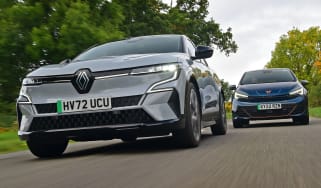
The Renault Megane E-Tech is another key rival. It can offer a range of around 280 miles on a charge, so can’t match certain versions of the Cupra, but the all-electric Renault is more practical and features one of the best infotainment systems in any new car. Another option is the Kia EV3, which is more SUV-like in its design, plus it has a softer chassis and a longer range.
The MG4 EV is also surprisingly fun on a twisty road, but more importantly for some buyers, it costs several thousand pounds less than the Cupra – an entry-level MG4 starts at less than £27,500. Even the top-spec MG4 XPower is only around £37,000, although it’s not as fun or as engaging to drive as a Cupra VZ.
Perhaps the biggest challenger for the Cupra Born is the Skoda Elroq. It too uses the MEB platform, but it’s bigger in every dimension and is a much more grown-up car. It undercuts the Born on price and is better equipped. The Skoda isn’t as quick or as good to drive, but it isn’t that far behind. All in, it’s a better overall package.
Key updates of the Cupra Born review
23 April 2026: General update after having driven the new facelift Cupra Born in Spain.
30 March 2026: General update including the increased expensive car supplement for electric cars.
11 December 2025: Added details of Euro NCAP’s updated 2025 safety test, as well as impressions from our long-term and twin tests.
Deals on the Born and alternatives
Cupra Born 77kWh V3 long-term test
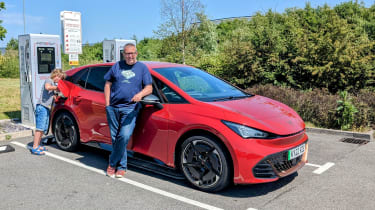
Former deputy editor, John Mcllroy, ran a Cupra Born for six months in 2023 and covered a little over 5,000 miles in it. He completed mostly urban journeys, but took it on a long family holiday and a few extended day trips, where he found the range to be perfectly usable, leaving him in no doubt that the 77kWh battery pack was more than enough for family life.
What was more frustrating during his time with the car was the scheduled charging function that didn’t work. This is an important feature for any EV driver on an electric-car-specific home electricity tariff to take advantage of cheaper rates, but John had to do this manually via an app on his phone rather than rely on what he’d programmed into the car’s touchscreen. You can read the full long term test here...
Frequently Asked Questions
The Cupra Born combines the sharp looks and capable handling of a hot hatch with the comfort, refinement and spacious interior you need for a family car or a great motorway cruiser. The interior looks and feels excellent, too, and a range of up to 389 miles is more than a match for the best in its class.