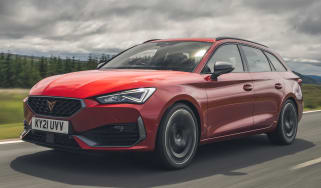
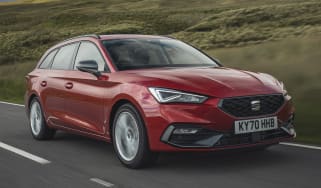
Cupra Leon review
Cupra Leon is an eccentric and capable hatchback with impressive powertrains and plenty of appeal
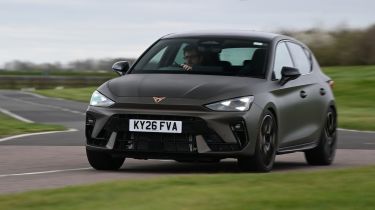

Our opinion on the Cupra Leon
The Cupra Leon doesn’t break any boundaries, but it’s a more engaging and high-spec operation than many in the hatchback class, and offers a range of potent engines that give it a leg up against most of the competition. The quickest Leon VZ isn’t quite a hot hatchback leader, and top-spec versions can get pricey enough to take this Cupra into the premium space alongside Audi, BMW and Mercedes.
About the Cupra Leon
Similar to previous Cupra models, the Cupra Leon shares traits with existing SEAT models, but that was done to get people used to the sportier Cupra brand before its own exclusive models, like the Cupra Formentor, Cupra Born, and Cupra Tavascan, came charging onto the scene.
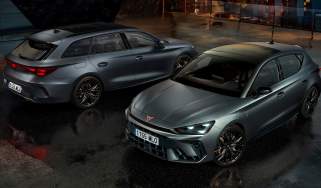
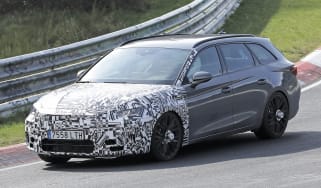
So what’s the difference aside from the badge? True, the SEAT Leon uses the same engines as certain Cupra Leon models (the 148bhp 1.5-litre engine in particular), but you will also find more powerful engines exclusive to the Cupra version. A few unique design tweaks help to visually separate the two cars, while a mid-life facelift gave the Cupra a much more distinctive front end. Both models are also available as either a hatchback or estate car body styles.
We’ve tested both the SEAT and Cupra Leon on numerous occasions, and if you are more interested in the Cupra’s sibling, we also have a dedicated in-depth SEAT Leon review…
Used - available now


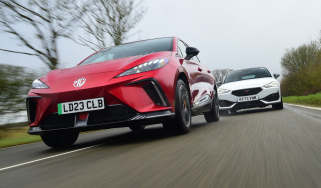
Our expert road testers have tested the Cupra Leon on several occasions in the UK. We pitted the Cupra against the MG4 XPower in order to test its hot hatch credentials thoroughly, and we’ve also spent six months with a Cupra Leon as part of our long-term test fleet.
Performance & driving experience
Pros |
|
Cons |
|
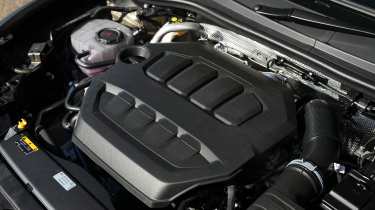
The Leon’s petrol engines are broadly carry-overs from the previous generation, with 1.5 TSI and eTSI (mild-hybrid) 148bhp derivatives kicking off the line-up, and a fiery 296bhp 2.0-litre four-cylinder turbo unit sitting above. The latter is the same basic unit you’ll find in a Volkswagen Golf R, albeit producing a bit less power. If you’re really craving maximum speed, you’ll want to look towards the Leon Estate, because this gets a unique 328bhp power boost along with 4Drive all-wheel drive.
In truth, the standard 2.0 TSI engine feels a little off the hot hatch pace by today’s standards. It’s not the most tuneful version of the EA888 engine you’ll ever encounter, with a flat growl about the most noise it ever makes. And while it does everything dynamically well, by the same token, it doesn’t really do anything exceptionally when compared with contenders like the Golf R and Honda Civic Type R.
For the best balance of power and sensible costs, we reckon the 1.5 eHybrid is the Leon to aim for. Despite being saddled with 212kg of additional bulk compared to the 296bhp TSI, it steers and handles every bit as well as the plain petrol model. If anything, it rides with a bit more grace because it’s not trying to suspend the unsprung mass of larger 19-inch alloy wheels. It's a surprisingly spry performer with 250Nm of torque on tap at all times. The Leon eHybrid never feels thin on power, although V1, V2, V3, and Shadow Edition models get 201bhp compared to the V-spec cars’ 268bhp.
Admittedly, there are times when the 1.5-litre engine sounds a bit coarse, specifically at higher revs. But until you’ve breached 5,000rpm, it feels smoother and sounds a lot quieter than the 296bhp 2.0 TSI. And because the Leon is better suited to being a zesty family hatch rather than a red-hot performance car, the eHybrid is a more cohesive fit for this car’s character.
| Model | Power | 0-62mph | Top speed |
| Leon Hatchback 1.5 TSI 150 V1 | 148bhp | 8.9 seconds | 134mph |
| Leon Hatchback 1.5 eHybrid 272 VZ1 | 268bhp | 7.1 seconds | 142mph |
| Leon Hatchback 2.0 TSI 300 VZ3 | 296bhp | 5.7 seconds | 155mph |
Performance, 0-60mph acceleration and top speed
Cupra Leon models with the 148bhp 1.5-litre petrol engine will accelerate from 0-62mph in 8.9 seconds. Cars with the eTSI mild-hybrid and DSG automatic gearbox trim this time slightly to 8.7 seconds. All of these models reach a 134mph top speed.
Unsurprisingly, the 2.0-litre TSI petrol is quicker. The 296bhp version has a 0-62mph time of 5.7 seconds and 155mph top speed, while the 328bhp version found in the estate reaches the same top speed, but gets from 0-62mph even quicker, in just 4.8 seconds.
While its boosted efficiency comes at the cost of some performance, the Leon e-hybrid still manages a respectable 7.7-second 0-62mph sprint in 201 bhp form, or down to 7.1 seconds in the more powerful 268 bhp version. Top speeds are 137mph and 142mph, respectively.
Town driving, visibility and parking
Just like the SEAT Leon, the Cupra Leon is pretty stress-free to drive in the city streets. Its relatively small stature makes it easy to manoeuvre in trickier situations, and this is only enhanced by its sensibly small turning circle. All-round visibility is fine, and parking isn’t notably difficult. Front and rear sensors are standard-fit, but you’ll need to fork out for at least the V2 trim if you want a reversing camera.
The hotter VZ1, VZ2, and VZ3 models come with dynamic chassis control (DCC), which is also known as adaptive suspension. Much like what you’ll find on the Volkswagen Golf R, it allows you to slacken things off in town to give you a much more comfortable ride over speed bumps and potholes.
Country road driving and handling
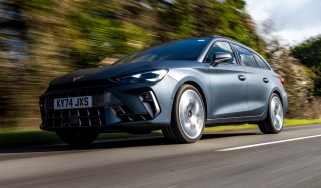
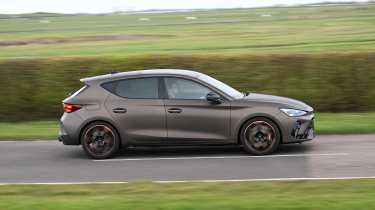
As with any remotely hot hatch, B-roads are where the Cupra Leon is at its happiest. The chassis is pleasingly composed, while the steering feels reassuringly direct. Even the heavier PHEVs keep their weight well under control.
Front-wheel drive VZ models get an electronically controlled limited-slip differential, while the four-wheel drive estate comes with a torque-splitting rear differential. Both diffs mean you can indulge in a lot more fun and mischief because they maximise traction in certain driving conditions to prevent you spinning away all your power in an anti-social and somewhat childish cloud of tyre smoke.
Motorway driving and long-distance comfort
When you’re not blasting it through the bends, the standard Cupra Leon suspension settles down into a fairly firm but comfortable cruiser that doesn’t constantly send shocks through its occupants’ spines. Despite the large 19-inch wheels on the Shadow Edition, VZ1, VZ2, and VZ3 models, the adaptive suspension in these versions helps soften the ride in comfort mode, making long journeys more relaxing.
Just like at low speeds, the PHEV provides the most peaceful experience, though, and the additional torque of the electric motors makes overtaking an absolute doddle.
“Although Cupra won’t openly admit as much, I’m convinced the suspension settings are softer in the UK cars, especially in Cupra mode, the result being that they don’t feel as precise as their left-hand-drive cousins.” - Steve Sutcliffe, contributing editor.
MPG & running costs
Pros |
|
Cons |
|
The petrol-powered models aren’t as efficient as the PHEVs, but they’re still pretty easy-going on fuel compared to some other hot hatchbacks. The base 148bhp model hovers around the mid-to-high 40s in day-to-day driving. Stick to motorways, and you’ll be able to break the 50mpg mark. All versions come with an engine start-stop system to help save some fuel while you’re sitting in traffic.
The pure 2.0-litre engine isn’t quite as sophisticated, but it will still average high 30s and might even sneak over 40mpg on longer runs. However, its in-town efficiency isn’t great, so these figures will deteriorate in traffic. Driving at pace will also see the fuel economy plummet. Officially, the hottest Cupra is a slightly more economical car than the Volkswagen Golf R, which only manages an official 33.2mpg versus 34mpg for the Leon.
| Model | MPG | CO2 | Insurance group |
| Leon Hatchback 1.5 TSI 150 V3 | 47.9mpg | 135g/km | 21 |
| Leon Hatchback 1.5 eHybrid 272 VZ1 | 201.8mpg | 7g/km | 28 |
| Leon Hatchback 2.0 TSI 300 VZ3 | 37.2mpg | 173g/km | 31 |
Electric range, battery life and charge time
The 25.8kWh (19.7kWh usable) battery pack in the eHybrid means its official electric range is up to 81 miles, which could cover most of your journeys on electric alone. As with many PHEVs, the Leon eHybrids have some skewed on-paper fuel economy figures. The official WLTP combined number is 201.8mpg, but in our experience with plug-in hybrid cars, this will be very difficult to replicate in real-world driving.
Instead, we’d pay closer attention to what the Leon achieved during our own testing on various road types and speeds, achieving a commendable 74.3mpg. If you don’t charge your car regularly, the Leon eHybrid is expected to average 55.4mpg according to the WLTP test cycle.
A typical 7.4kWh home wallbox charger should be able to fully recharge the Leon PHEV in around four hours. Like the Volkswagen Golf, which uses the same battery and charging technology, the Leon can accept a rapid charge and top the battery up from 20 to 80 per cent state of charge in under 30 minutes. It’s best not to clutter up a 350kW rapid charger, though, because it’ll only accept a peak charging speed of about 50kWs.
Like the Golf eHybrid and GTE, the battery in the E-Hybrid Leon is covered by a separate warranty, but only for five years or 100,000 miles in the Leon, compared with eight years or 100,000 miles in the Golf.
| Model | Battery size | Range | Insurance group |
| Leon Hatchback 1.5 eHybrid 204 V1 | 19.7kWh | 81 miles | 24 |
| Leon Hatchback 1.5 eHybrid 272 VZ1 | 19.7kWh | 76 miles | 28 |
Insurance groups
The Cupra Leon’s performance and prestige-based ambitions result in higher insurance premiums than its more modest SEAT Sibling. The Cupra line-up resides in groups 21 to 34 (out of 50), while the SEAT sits in groups 14 to 24. For hot hatch comparison purposes, the Volkswagen Golf GTI sits in group 31.
Tax
While many versions of the Cupra Leon dip below the £40,000 luxury car tax threshold, you just have to be wary of adding options to higher specification and plug-in hybrid models, because a relatively light dusting of options could push some of these cars above this limit. If the version you choose incurs this VED road tax supplement, you’ll find yourself paying over £600 annually between years two and six after the car is first registered.
While the plug-in hybrid Leons incur lower Benefit-in-Kind rates than their petrol-powered brethren, they don’t come close to pure electric cars for outright savings when it comes to company car tax. The Cupra Born EV is the closest alternative for those seeking bigger tax breaks.
Depreciation
Our expert data suggests the Cupra Leon will retain between 41 and 45 per cent of its initial value after three years or 36,000 miles in hatchback form, and the estate holds on to between 39 and 43 per cent.
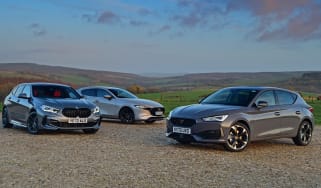
This means the hatch doesn’t perform as well as the BMW 1 Series in this regard, as that rival is expected to be worth between 44 and 48 per cent of its original value after the same period. The Cupra Leon estate performs similarly to the Skoda Octavia vRS estate, retaining 43 per cent.
Interior, design & technology
Pros |
|
Cons |
|
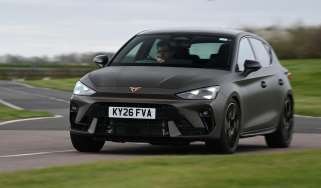
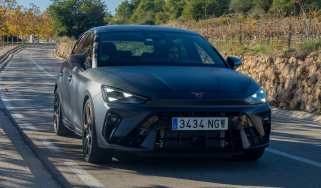
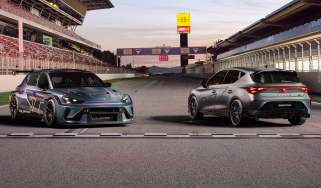
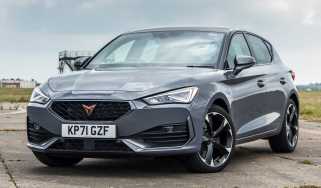
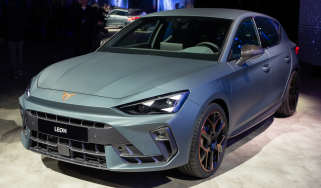
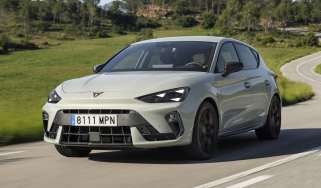
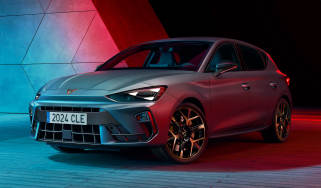
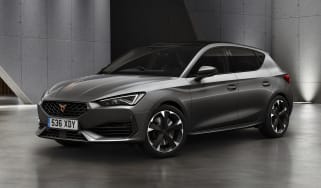
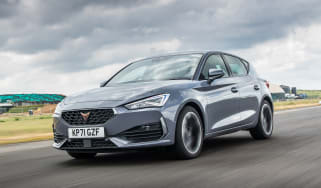
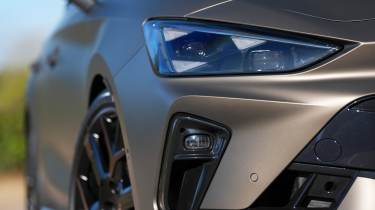
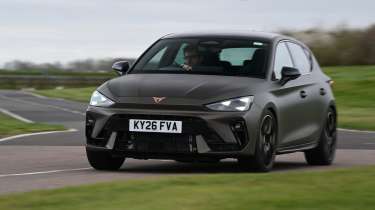
Looks are subjective, so we’ll leave it up to you as to what you think of the smoothed-off Cupra’s revamped nose with its triangular-LED headlights. We think it looks a little fussy, but it does add some welcome drama to the range. We bemoaned the previous generation for looking a little too much like the standard Seat variant.
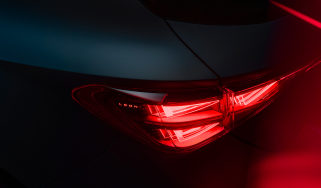
The same new look hasn’t quite been carried across the rest of the body, because its relatively subdued surfacing and rear end are slightly out of kilter with the more aggressive nose. The rear light bar helps, with more complex layered LED internals and an illuminated rear badge. Overall, we think it helps sharpen up the overall design. Many of the 19-inch wheel designs enhance the visual drama with copper accents and triangular spoke arrangements.
Interior and dashboard design
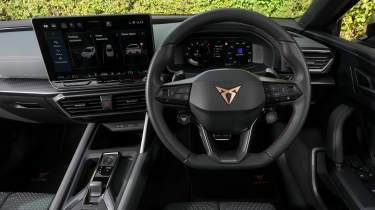
Inside the facelifted Leon, you’ll find the same cabin as before, still with Cupra’s trademark copper-tinged details and a higher content of eco-friendly materials, such as 73 per cent recycled microfibre for the seat upholstery. Top-specification VZ3 models pick up a superb set of rigid-back bucket seats, and all the materials and trims come in an interesting array of dark greys, blacks and even purples that give the otherwise pretty subtle interior some real interest.
Materials and build quality
Volkswagen Group’s reputation for build quality is generally rather good, and the Cupra Leon helps to uphold this image. Everything feels well put together, and there’s a pleasant sense of occasion about the cabin. The chunky steering wheel quickly reminds the driver of this car’s sporting character, too.
Infotainment, sat-nav and stereo
Inside, the infotainment system was overhauled as part of the Leon’s facelift, with a larger 12.9-inch screen and the newer MIB4 operating system. It works a little better than it used to, although the climate control functions are still on the touch-sensitive display, which can make them fiddly to use when you’re on the move.
There are shortcuts that remain on screen at all times. The lower bar’s climate controls pretty much handle everything commonly needed without switching to the dedicated climate control screen, including heated seats and fan control. At the top of the screen sit two ‘home’ screen options, plus quick access to Apple CarPlay, parking assistance, and drive modes. Between them is your main screen, and whether you use a phone mirroring system or the car’s embedded interface, it responds quickly. We think the screen might even be a little too big, considering the seating position.
Boot space & practicality
Pros |
|
Cons |
|
Because the two cars share many of the same underpinnings, the Cupra Leon hatchback and Volkswagen Golf GTI are very similar in size.
Dimensions and size
The Cupra Leon is longer than a BMW 1 Series or Volkswagen Golf, but a little easier to park than the bigger Honda Civic. The Leon is lower than many of its rivals, apart from the Civic, and the Leon’s width is similar to that of the 1 Series.
| Dimensions comparison | |||
| Model | Cupra Leon (hatch) | Volkswagen Golf | BMW 1 Series |
| Length | 4,398mm | 4,282mm | 4,361mm |
| Width | 1,799mm | 1,789mm | 1,800mm |
| Height | 1,444mm | 1,483mm | 1,459mm |
| Wheelbase | 2,683mm | 2,620mm | 2,670mm |
| Boot space | 380 litres (270 litres in PHEV) | 381 litres (273 litres in PHEV) | 300 litres |
Seats & passenger space
There’s enough adjustment up front for the driver to find a comfortable position, and the front passenger should have ample space, too. All versions come with some form of driver’s seat lumbar adjustment, but V2 trim adds electric driver’s seat adjustment with a memory function.
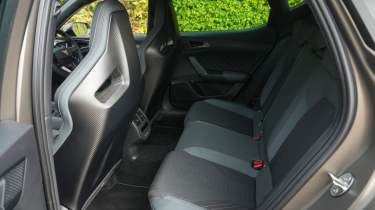
The Cupra Leon’s rear seats are merely average, though. While it does offer more space than an MG4, rear legroom isn’t as generous as the Honda Civic, according to our minimum and maximum measurements (623 to 841mm in the Leon versus 634 to 859mm in the Civic), and headroom in the Leon is some way behind the VW Golf (939mm in the Leon and 968mm in the Golf). The dark colours and rooflining of the Leon don’t help with the feeling of space, but the optional sunroof on both the hatchback and estate will help lighten things up.
Boot space
The flipside of the tight rear legroom is boot capacity, which is actually above average for the class. The 380 litre boot is bigger than you’ll find on an equivalent Audi A3 and on par with the Golf, and comes with both a ski-hatch and 60:40 split folding rear seats. Of course, the Leon Estate is even bigger with a colossal 620 litres of space.
As with the regular SEAT Leon, the plug-in Cupra Leon hatch loses some boot capacity due to its battery pack, dropping to 270 litres. That’s on par with the plug-in version of the Volkswagen Golf, but drops behind the Audi A3 (280 litres) and Mercedes A-Class (310 litres). The Leon hatch also has a pretty high loading lip of 766mm from the ground, which is significantly higher than the 659mm lift over height of a Honda Civic.
“We’re not fans of the hidden exterior boot release button under the rear light bar on the driver’s side of the car. The centrally positioned flip-up Cupra badge of pre-facelift models was easier to find.” – Max Adams, online reviews editor.
Reliability & safety
Pros |
|
Cons |
|
The Leon received a full five star safety rating from Euro NCAP when it was originally tested in 2020 and retested again under more stringent criteria in 2025.
Cupra, as a brand, is still in its infancy, and it would appear there’s a long way to go if it truly wants to wow its customers. In the 2026 Driver Power owner satisfaction survey, Cupra only managed a meagre 27th place finish out of 30 brands in the best manufacturer results. This was the worst performance out of the entire VW Group, but Volkswagen wasn’t too far ahead in 26th place.
| Euro NCAP safety ratings | |
| Euro NCAP safety rating | 5 stars (2025) |
| Adult occupant protection | 88% |
| Child occupant protection | 86% |
| Vulnerable road user protection | 82% |
| Safety assist | 77% |
Buying, prices and deals
- Best buy: Leon Hatchback 1.5 eHybrid 204 V1
The temptation to go for the quickest version is difficult to resist, but with the Cupra Leon, it is necessary if you wish to keep the price from getting out of control. In entry-level V1 form, you’ll be looking at no less than £33,000. However, we recommend sticking with this trim, as it includes all the standard kit you need, and we’d upgrade to plug-in hybrid power.
This powertrain strikes a strong balance between performance and efficiency. This brings the price up to nearly £40,000, but you can soon save a considerable amount on running costs, partly thanks to its pure-electric capability. It’s important to note, though, that these prices reflect the hatchback, and the estate carries a premium of roughly £2,500 compared to the equivalent hatch.
Whichever Leon you’re lusting after, you can save by building your perfect Cupra Leon Hatchback through the Auto Express Buy A Car service. We can also help you to sell your car.
Cupra Leon alternatives
Larger hot hatchbacks are a bit thin on the ground at present, so the Cupra Leon’s closest competition mostly comes from within the VW Group family. The Volkswagen Golf GTI and Volkswagen Golf R are the brand’s best-known hot hatches, and share plenty of their DNA with the Leon. The Skoda Octavia vRS is also a genuinely fast family car worth considering.
If you’re considering going electric, the Cupra Born is the more obvious alternative to the Leon, along with the closely related Volkswagen ID.3. Other appealing electric hatchbacks include the Renault Megane E-Tech and MG4.
Cupra Leon pictures
Key updates of the Cupra Leon review
- 18 August 2026: Up-to-date pricing data.
- 5 May 2026: Latest driving impressions.
Frequently Asked Questions
Every brand-new Cupra Leon comes with a five-year or 90,000-mile warranty, whichever comes first. This is actually longer than the Volkswagen Golf’s warranty, which only applies for three years or 60,000 miles.
Deals on the Leon and alternatives