New Vauxhall Astra won't be a hatch, with big estate-ment of intent planned
Vauxhall is guaranteed to offer wagon body and electric power, but conventional hatch is not certain

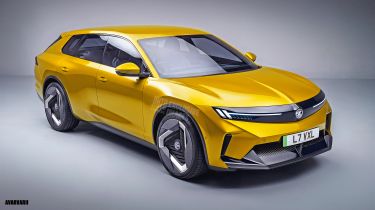
The long-running Vauxhall Astra has been green-lit for an eighth generation, but there’s no guarantee it will include a hatchback.
The all-new car will come to market around 2029-30 and be underpinned by Stellantis’ STLA One architecture, which is also bound for the next Corsa in 2027. Opel/Vauxhall CEO Florian Huettl confirmed to Auto Express that the Astra will come as an battery electric vehicle (BEV) but could offer a broader powertrain line-up.
“It will certainly be BEV,” said Huettl. “But then STLA One isn’t limited to BEV only in its capabilities, so we’re currently looking at the right calibration of the powertrain offer.”

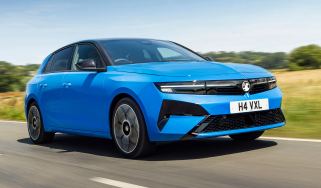
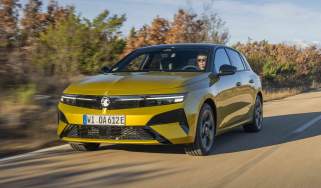
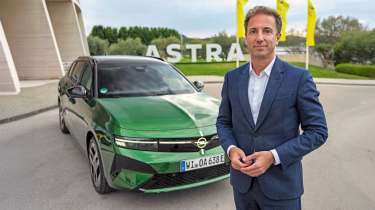
There’s a big question mark over the hatchback bodystyle, though, with the ‘C-segment’ market containing the likes of the Astra, Volkswagen Golf and BMW 1 Series hatches suffering an exodus of buyers to SUVs or more luxurious superminis. As you can see from our exclusive image, that is almost certain to mean a rethink for a car that over its 45-year life has always been built in hatchback and estate form.
“It doesn’t mean necessarily that the new Astra is a traditional hatchback,” Huettl confirmed, to our question asking whether the five-door hatchback form should evolve to boost sales. “I can tell you that there will be a station wagon, because that’s what our home market [Germany] requires, and this is what we will serve.”
The next Astra range could be estate only, mirroring a decision taken by Volkswagen with the latest Passat. But it might mean a more crossover-style variant could be spun off the platform, with Opel/Vauxhall capable of adding a second bodystyle at a faster pace having worked hard on its efficiency to battle Chinese brands.
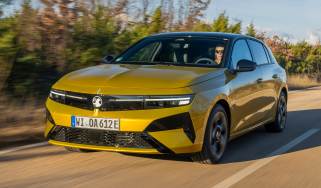
Huettl namechecked interior space and long-distance cruising capability as key attributes for the next Astra. The facelifted version of the current car – which hits the UK imminently – has a 58.3kWh battery good for 281 miles as a hatch. The next generation will push this well past 300 miles, with STLA One delivering software-defined vehicles with cutting-edge drivetrain management to maximise efficiency, plus a ‘cell-to-body’ battery design. This saves weight by integrating the battery as a structural part.
The next-gen Astra is almost sure to get a plug-in hybrid of some sort, but Opel needs to make a decision on the system. Today’s Astra PHEV has a modest battery to support the petrol engine, but range-extender (Reev) tech, where the engine is used as a generator to power the battery supplying an electric motor to drive the wheels, is also in the running.
“Today our Astra and Grandland have plug-in hybrids, and the technology has a certain part of the sales, but it is by no means at the same level of importance as the full electric or the hybrid variants.”
He added: “Range extender is quite interesting because it combines an ICE engine with battery-electric technology. What is important for us here is long-distance driving and what we see on the first-generation Reev technologies is that sometimes a car may struggle to digest the two hours of driving on the German motorway at 130-140kmh [81-87mph].”
Huettl confirmed that the new Astra will be built at Opel’s Rüsselsheim plant in Germany. Stellantis is investing one billion Euros (£864m) into the factory, a new HQ in the area and a parts facility in Kaiserslautern.
The next new Opel-Vauxhall will be the next-generation Corsa, followed by an SUV developed with Chinese partner Leapmotor. The final car due before 2030 is the new Mokka; Huettl confirmed that it’s not a priority for Opel to be part of the ‘e-car’ project, which will see Stellantis introduce a new Citroen 2CV and new Fiat Panda.
Did you know you can sell your car through Auto Express? We’ll help you get a great price and find a great deal on a new car, too.