New Vauxhall Astra 2026 facelift review: updates fail to help it stand out
The Vauxhall Astra has been updated for 2026 and it looks good on paper, but the reality is slightly different


Verdict
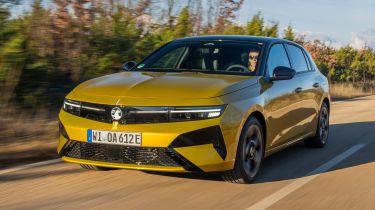
The Vauxhall Astra plug-in hybrid is cheaper than ever, filled with more kit as standard and additional power and electric range. It should be near the top of its class as a result, but exemplifying the significant strides of plug-in hybrid technology, plus the growing appeal for more affordable and versatile electric cars, the Astra PHEV struggles to stand out.
A little over a decade ago the Vauxhall Astra was a mainstay in the top 10 best-selling cars list in the UK. The current, eighth-generation model hasn’t quite seen as much success as its predecessors, although Vauxhall has just upgraded the armoury of its family hatch with a new look, fresh powertrains and a daring pricing strategy.
You can now buy the Astra Hatchback and Sports Tourer estate for the same price – whether you go for the entry-level £29,995 Griffin, mid-spec £31,495 GS or the £33,995 Ultimate. The price-matching continues with the powertrains, too, because there’s no difference in cost between the hybrid, plug-in hybrid or pure-electric versions. A pure-petrol version is joining the range later this year, however, which will undercut the other engine options on cost.
The alignment of the Astra’s pricing draws our attention to the plug-in hybrid model, which used to be the most expensive Astra you could buy (with the Astra Electric’s £1,500 Government Electric Car Grant factored in). Of course, the PHEV is the relatively new version that was added to the Astra range last year, bringing with it more electric range and increased power compared with the previous ‘Hybrid 180’ variant. The Astra plug-in hybrid’s starting price is also more than £6,000 less than its Volkswagen’s Golf eHybrid rival, too.
Used - available now

2021 Vauxhall
Astra
57,811 milesManualPetrol1.2L
Cash £9,249
2025 Vauxhall
Astra
5,723 milesAutomaticPetrol1.6L
Cash £16,799
2025 Vauxhall
Astra
7,491 milesAutomaticPetrol1.2L
Cash £19,199
2023 Vauxhall
Astra
10,059 milesManualPetrol1.2L
Cash £14,897Not only has the Astra Electric seen its all-electric range rise due to having a larger battery (now 58.3kWh with a maximum range of 281 miles), but the PHEV’s electrical side has also been boosted. The all-electric range on the latest Astra plug-in grows from 39 miles to 52 miles, thanks mainly to a larger 17.2kWh pack replacing the old 12.4kWh battery.
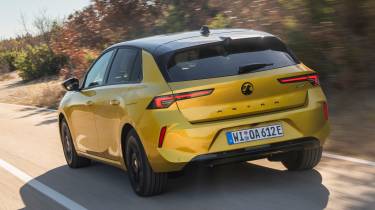
It’s difficult to gauge an accurate efficiency rating on plug-in hybrids, although we did see a maximum range figure of 47 miles with an almost full battery. Most people will find that pretty useful and more than enough for everyday journeys, but it’s worth pointing out that the Volkswagen Golf eHybrid has a claimed 89 miles of electric range. After a few hours of mixed driving environments, the Astra PHEV returned 78.4mpg – some way off its quoted 122.8mpg economy figure.
As for charging, the Astra PHEV trails the Golf again, which can take on a 40kW recharge rate for a 20 to 80 per cent top up in 20 minutes. The Astra’s 7.4kWh charge will take two hours and 53 minutes to replenish to the same percentage, so overnight charging is recommended.
The changes to the Astra’s plug-in hybrid system go beyond the battery size and increased range. The existing 148bhp 1.6-litre four-cylinder turbocharged petrol engine is retained, although with a new electric motor there’s a bump in total power from 178bhp to 192bhp. This has cut the 0-62mph time for the plug-in hatchback and estate down to 7.9 and 8.0 seconds respectively. That’s 1.3 and 1.1 seconds quicker than the fully electric and hybrid variants of the Astra.
In truth, the Astra PHEV feels as quick in a straight-line as before, thanks in part to the way the power is delivered. The updated PHEV has ditched the old eight-speed electrified automatic for a new seven-speed gearbox. It’s a dual-clutch automatic transmission, like the one found in the Hybrid 145, although with one extra gear.
We found the old gearbox shifted up and down gears pretty seamlessly when on a cruise, but when pressing on it occasionally felt sluggish to give us the ratio we wanted. The new seven-speed unit is certainly slicker, but like before, the kickdown can be lethargic sometimes if you floor the throttle.
As with most plug-in hybrids, you can choose between a variety of modes that alter the preference of petrol or electric power. ‘Hybrid’ is the Astra PHEV’s default setting to optimise fuel efficiency and performance, although you typically set off solely on the electric motor’s power, which has more than enough pep to keep up with traffic at speeds up to 84mph.
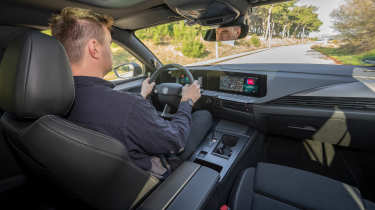
Beyond this there’s ‘Sport’, which not only tweaks the steering and throttle responses, but draws on the engine and electric motor for maximum performance. Then ‘Electric’ mode prioritises pure-EV running, improving refinement and initial throttle response as a result.
A few years ago a Vauxhall engineer (or more appropriately ‘Opel’ given it was at the firm’s Russelheim factory in Germany), told us that compared with fellow Stellantis siblings Peugeot, Citroen and DS, Vauxhall’s identity was the ‘sportiest’.
That sporty identity never really materialised with the current Astra, especially with the short-lived and disappointing GSe-branded plug-in hybrid. The Astra PHEV’s suspension set-up has been tuned for pretty neutral and predictable handling, but never to provide fun.
We’ve always felt the Astra plug-in hybrid rode a little on the firm side; the heavier Astra Electric seems to settle better over rougher roads. But the PHEV isn’t uncomfortable and something that helps with this facelift is the introduction of Vauxhall’s ‘Intelli-Seats’ as standard across the range. Vauxhall says the design is influenced by bike seats and they strike a good balance of having enough bolstering to keep you secure in the bends whilst being able to feel comfortable on long trips.
The rest of the Astra’s interior is familiar to the pre-facelift model. The twin 10-inch screens on the dash and physical row of buttons below the touchscreen survive – good news for fans of easy-going ergonomics. There’s also a new satin finish to the centre console, in place of the scratch-prone piano black that came before.
Vauxhall says the interface of its infotainment system has been made clearer and more intuitive, but there are some shortfalls to its design. Namely the integrated sat-nav, which is standard on the Griffin-spec car. It’s very slow to update directions in real-time, the surrounding map looks outdated, with precious little detail, and the voice assistant is robotic and stern-sounding. It’s a good thing then that wireless Apple CarPlay and Android Auto compatibility is standard, too.
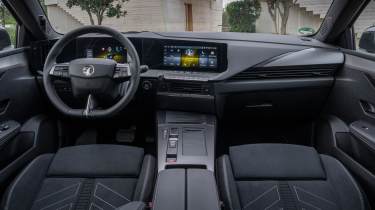
Considering its price tag, the overall kit included is solid in the Astra, with adaptive cruise control, front and rear parking sensors, heated front seats, keyless entry and a heated steering wheel standard on the Griffin model. GS trim adds 18-inch wheels with a sportier exterior look, a 180-degree reversing camera (which isn’t the clearest we’ve used), sports seats, keyless go, dual-zone climate control and heated door mirrors.
Our Ultimate trim has gained diamond-cut alloy wheels, a wireless smartphone charger, heated and massaging seats, a heated windscreen and noise-insulating side windows. Despite all this there’s very little flare or excitement in the Astra’s cabin: it’s functional and clean, but that’s about it. On Sports Tourer estate models the Ultimate also gets a powered bootlid.
Slightly strange is the reservation of the safety kit under the umbrella of ‘Intelli-Drive 1.0’, adding blind-spot alert, lane-change assist, lane-positioning assist and rear cross-traffic alert. We imagine if the Astra were to be tested by Euro NCAP again, this technology would be made standard to ensure a solid safety-assist score.
One feature Vauxhall was keen for us to try out was the new ‘Intelli-Lux’ headlights. Already fitted on the range-topping Grandland SUV, the technology comes courtesy of the Astra’s new-look front-end with its fresh headlight cluster. Described as ‘glare-free’, the adaptive headlights can adjust to provide what is in essence a high-beam vision ahead with blanked-off areas that trace oncoming traffic. Whilst testing this on the same roads as other Astras, we were dazzled a couple of times and noticed our lights occasionally took too long to shift focus, clearly lighting up other road users with a full-beam. Luckily, there’s a way to disable the feature, because it’s not quite as adept as the Matrix LED system found in VW Group cars.
As before, choosing the PHEV means you pay a penalty in terms of practicality. It’s actually even worse than before, because the old Astra PHEV hatchback provided 352 litres of boot space (the same as the Astra Electric), but now there’s just 310 litres, rising to 466 litres in the Sports Tourer. We did wonder why the hatchback and the Sports Tourer estate suddenly found themselves at the same price point with this update and in the case of the plug-in hybrid, boot space might be the answer.
Did you know you can sell your car through Auto Express? We’ll help you get a great price and find a great deal on a new car, too.
| Model: | Vauxhall Astra Ultimate plug-in hybrid |
| Price: | £33,995 |
| Engine: | 1.6-litre four-cylinder turbo petrol + 1x e-motor |
| Power/torque: | 196bhp/360Nm |
| Transmission: | Seven-speed automatic, front-wheel drive |
| 0-62mph: | 7.9 seconds |
| Top speed: | 140mph |
| Economy/CO2: | 122.8mpg/51g/km |
| Size (L/W/H): | 4,374/1,859/1,460mm |
| On sale: | Now |