Toyota bZ4X Touring review
The oddly-named bZ4X gets a more practical estate sibling, and depending on your needs, it might be the better buy

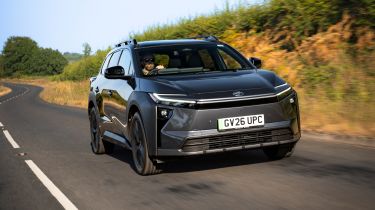

Our opinion on the Toyota bZ4X Touring
The Toyota bZ4X Touring is an intriguing alternative to mainstream electric SUVs, and a compelling option for those seeking out a practical, versatile estate in the EV era. Massive inside, well built and filled with kit, there’s plenty here to recommend. We’d steer clear of the flagship all-wheel-drive model, however; the front-drive version is not only cheaper, it’s more efficient and avoids the hefty luxury-car tax surcharge. Regardless, no one needs an electric wagon that’s punchier than a Porsche, with the dynamic nous of a circus elephant on stilts.
About the Toyota bZ4X Touring
The Toyota bZ4X suffered a stilted start in life. Born out of a similar partnership that saw the inception of the lauded GT86 and BRZ sports cars, the electric SUV – and its Subaru Solterra sibling – were plagued by inefficient powertrains and compromised interior ergonomics.
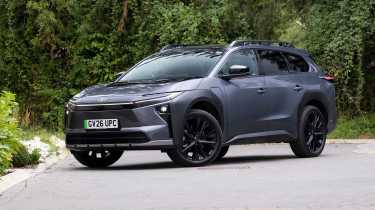
But as time went on, improvements were made, and along with the mid-life facelift in 2024, Toyota launched an all-new Touring variant – essentially a more practical, jacked-up estate with a huge cabin and the option of X-Mode all-wheel drive. Aside from its (again, Subaru) e-Outback sister car, the bZ4X sits in a class of one – luring electric SUV owners with its handsome looks and strong kit list.
Used - available now


For the time being, the bZ4X and its Touring counterpart sit at the top of Toyota’s electric-car range – above the Urban Cruiser and C-HR+, and alongside the plug-in hybrid RAV4. With no direct rivals, the bZ4X Touring aims to steal sales from cars such as the Volkswagen ID.7 and Mercedes CLA Electric, as well as SUVs like the venerable Tesla Model Y and Skoda Enyaq.
There’s no entry-level Icon trim as there is on the standard bZ4X, instead the range kicks off with the well equipped Design model. Like for like, the cheapest Touring undercuts the SUV by around £750, with a similar gap at the top of the range.
All Tourings use the same 74.7kWh battery, which in the entry-level car is officially rated for 367 miles of range. The heavier AWD version that we’ve tried isn’t as efficient; Toyota claims just 298 miles – a figure that we found likely to fall to 250-260 in real-world driving.
Performance & driving experience
Pros |
|
Cons |
|
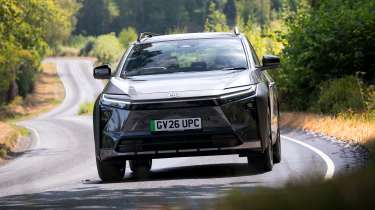
Even without trying the basic front-wheel-drive car, it’s the one we’d likely recommend. The top-spec version gets two motors for all-wheel drive, producing a combined 280kW – roughly 375bhp. Toyota claims 0-62mph in just 4.5 seconds, and the way this car takes off, we can well believe it.
If anything, the Touring AWD is a bit too quick for its own good. While throttle response is instant, and there’s decent grip through bends, its raised ride height means it suffers from quite significant body roll and a general feeling of disconnection between the car and the road.
Eco mode makes next to no difference; apart from introducing a small delay to the throttle response, there’s seemingly no reduction in available power, which on undulating or broken roads, can make it difficult to modulate your inputs. We drove the car alone, but load up the family and it won’t be long before there are the inevitable moans from sickness-prone passengers in the back.
The steering is sharp and well weighted, but there’s not much in the way of feel. This lack of tactility continues with the steering wheel-mounted paddles, which fail to click with any level of satisfaction. There isn’t a huge variation in the different levels of regenerative braking, and the strongest setting isn’t abrupt enough to offer anything close to one-pedal drive.
You’d hope with that raised suspension and exaggerated body roll, you’d benefit from a plush, uninterrupted ride. Alas, that’s not quite the case; this isn’t an uncomfortable car, but it can fidget a bit on particularly uneven ground. It’s relatively refined at motorway speeds, at least.
The clever money is therefore on the lower-powered, front-wheel-drive car. Having experienced this powertrain in the standard bZ4X, unless you desperately need the all-weather assurance of the dual-motor model, it seems sensible to trade some of that unnecessary power for a more relaxed driving experience and precious extra range.
| Model | Power | 0-62mph | Top speed |
| bZ4X Touring Design | 221bhp | 7.3s | 99mph |
| bZ4X Touring Excel | 375bhp | 4.5s | 112mph |
“Don’t bother with the top-spec all-wheel-drive model. The base version is quick enough, and gives you an extra 60 miles of range…” - Richard Ingram, deputy editor.
Range, charging & running costs
Pros |
|
Cons |
|
During our time with the top-spec bZ4X Touring AWD, we managed an impressive 3.6mi/kWh. Looking at more detailed trip information, the car had recorded an average of 3.4mi/kWh over several hundred miles – not bad for such a heavy, powerful EV.
That kind of efficiency would result in a real-world range of between 250 and 270 miles – with the caveat that we tested the car in warm weather when EVs perform most favourably. That said, we weren’t particularly gentle with our inputs, suggesting that in normal driving at least 250 miles should be within reach.
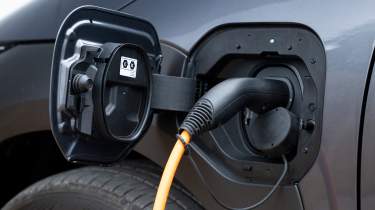
Charging speeds of 150kW are competitive for the time being, although several rivals are nudging ever closer to the magic 200kW mark. Some, including the Hyundai Ioniq 5 and Kia EV6, charge faster still, significantly slashing the time needed to refill your car’s battery on the road.
Still, those numbers should allow you to top up the bZ4X Touring from 10 to 80 per cent in 28 minutes, providing you utilise the battery pre-conditioning system accessed via the infotainment screen or dedicated smartphone app.
One thing to be wary of is the bZ4X’s list price, which in some cases can breach the trivial £50,000 luxury car tax threshold. Our car, a bZ4X Touring Excel, retails at £51,695 – resulting in a hefty £440 annual VED road tax surcharge every year for the first five years. Another reason why our pick remains the front-drive, single-motor model. Residual values of around 49 per cent after three years or 36,000 miles are about par for the course in this area of the market.
| Model | Battery size | Range | Insurance group |
| bZ4X Touring Design | 74.7kWh | 367 miles | 36 |
| bZ4X Touring Excel | 74.7kWh | 298 miles | 41 |
Interior, design & technology
Pros |
|
Cons |
|
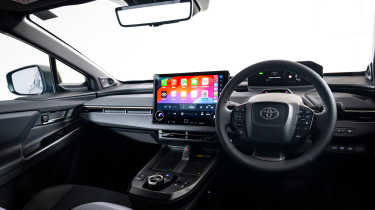
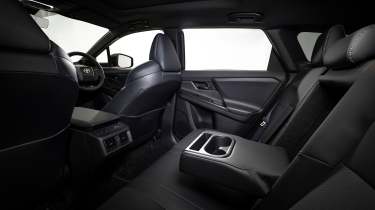
At first glance, you’ll be pleasantly surprised at how luxurious the bZ4X feels compared with Toyotas of old. There are loads of soft-feeling materials, and the massive 14-inch infotainment screen in the centre of the dashboard gives a hi-tech vibe. It’s all emphasised by an overwhelming sense of space, no matter where you’re sitting – front or back.
Search a little harder and there is some evidence of cost cutting, but not in the areas you regularly interact with. The steering wheel feels plush, and there are a few buttons that help with frequently-used controls. These include big rotary dials for adjusting the temperature, and a switch on the centre console for the parking cameras.
Our top-spec Excel test car even featured two huge wireless charging pads just ahead of the gear selector. There’s extra space underneath the console for storing odds and ends, alongside two USB-C connectors; there’s a further two USB ports in the rear, ensuring those in the back aren’t left with dead devices.
Our biggest complaint is the raised instrument cluster, which as in any modern Peugeot, you view over the steering wheel rather than through it. This may mean you need to have the wheel lower than you might like; in our desired driving position, the lowest portion of the dials was obscured by the top of the rim.
Design trim makes the most sense; you miss out on the Excel’s 20-inch alloy wheels and panoramic roof, but every version comes with a massive 14-inch infotainment screen, ambient lighting and heated front seats, as well as a heat pump for conserving energy in the colder months.
“More and more manufacturers are doing it, but the idea of looking over the wheel rather than through it in order to view key details such as speed or trip info, doesn’t always feel quite right..." - Richard Ingram, deputy editor.
Boot space & practicality
Pros |
|
Cons |
|
At 4,830mm, the Touring is 140mm longer than the standard bZ4X – and that shows inside. The rear cabin is huge, with more than enough space for tall adults to stretch out. This is aided by the completely flat floor, although the placement of the high-voltage battery does mean that those in the back will be forced to sit with their knees around their ears.
Moving to the boot, you’ll find a generous 669 litres with the rear seatbacks in place, expanding to 1,718 litres with everything folded flat – a job made easy by the accessible levers that relieve the need to reach inside the car every time you pop to Ikea, or the local tip.
Speaking of the tip, the dual-motor bZ4X Touring can tow up to 1,500kg; the front-wheel drive model is limited to just 750kg. Both figures are for a braked trailer.
But the practical points don’t end there. There’s storage underneath the boot floor for the charging cables, as well as four hooks and a further lashing points to keep your precious cargo in place. There’s even a three-pin plug socket back there, allowing you to power items such as a coolbox, or even a coffee machine away from home. Annoyingly, there’s no frunk.
As jacked-up electric estate cars, the bZ4X Touring and its Subaru e-Outback sister car don’t have many direct rivals. A Volkswagen ID.7 Tourer fits the electric estate billing, but even dual-motor models miss out on the Toyota’s raised ride height. The Tourer’s 605-litre boot isn’t much smaller, mind. If you’re interested in a more traditional SUV shape, your options are almost endless.
| Dimensions comparison | |||
| Model | Toyota bZ4X Touring | Volkswagen ID.7 Tourer | Tesla Model Y |
| Length | 4,830mm | 4,961mm | 4,790mm |
| Width | 1,860mm | 1,862mm | 1,920mm |
| Height | 1,675mm | 1,551mm | 1,624mm |
| Wheelbase | 2,850mm | 2,966mm | 2,890mm |
| Boot space | 669 litres | 605 litres | 854 litres (to roof) |
“The bZ4X Touring is littered with practical features, from a three-pin plug socket in the boot, to levers that allow you to fold the seats flat in one easy motion. It’s huge inside, too…” - Richard Ingram, deputy editor.
Reliability & safety
Pros |
|
Cons |
|
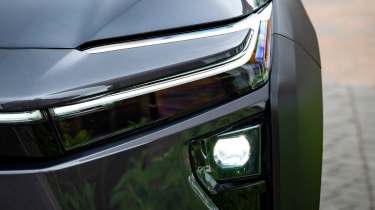
While the bZ4X Touring is a relatively new model, the standard bZ4X has been around for a good few years – with very few causes for concern. While the Touring hasn’t been tested by Euro NCAP, the SUV version was awarded the full five stars when it was assessed most recently in 2025.
That top score comprises an 88 per cent rating for adult occupancy, 85 per cent for child occupancy and 80 per cent for vulnerable road users. Its fourth and final score was a 79 per cent for its safety-assist systems.
Toyota finished 19th out of 30 manufacturers in the 2026 Driver Power owner satisfaction survey. For a brand so famed for its reliability and build quality, that will come as a shock to many, but it’s worth digging deeper to get a better understanding of Toyota’s fall from grace – and how these affect the bZ4X specifically.
Owners complained about a lack of practicality, as well as poor fit and finish – neither of which we took issue with during our drive of the spacious, well built estate car. Other black marks revolved around poor infotainment offerings; again, Toyota has made great gains in this respect, reducing concern for potential owners.
| Euro NCAP safety ratings | |
| Euro NCAP safety rating | Five stars (2025) |
| Adult occupant protection | 88% |
| Child occupant protection | 85% |
| Vulnerable road user protection | 80% |
| Safety assist | 79% |
Buying, prices and deals
Best buy: Toyota bZ4X Touring Design
The base-level Design is our recommendation. It starts from around £44,500, and features all the equipment you’ll need.
While the extra performance of the four-wheel drive version is appealing, we think the front-wheel drive version is fast enough for a family estate car, plus it’s significantly cheaper and goes over 60 miles further to a charge.
You can save on the list price by building you new Toyota bZ4X Touring via the Auto Express Buy A Car service. We also have bZ4X Touring lease deals up for grabs, and can even help you to sell your car.
Toyota bZ4X Touring alternatives
The Toyota bZ4X Touring lacks many direct (or indirect) rivals – with the only jacked-up estate cars currently on sale being the mechanically similar Subaru e-Outback, and the much pricier Porsche Taycan Cross Turismo. It’s therefore more appropriate to compare the bZ4X with cars such as the Volkswagen ID.7 Tourer and Mercedes CLA Electric, plus SUVs like the Tesla Model Y and Skoda Enyaq.
Toyota bZ4X Touring pictures
Frequently Asked Questions
The Toyota bZ4X comes with a service-activated 10-year warranty; each time you have your car serviced at a franchised dealer, you’ll get an additional year of manufacturer-backed warranty.
Deals on the bZ4X and alternatives