Used Peugeot 2008 (Mk1, 2013-2019) - What’s it like to drive?
It’s comfortable and easy to drive around town, but the 2008 Mk1 isn’t as composed as some alternatives. Performance isn’t great on low-power models, either

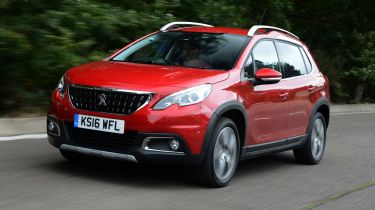
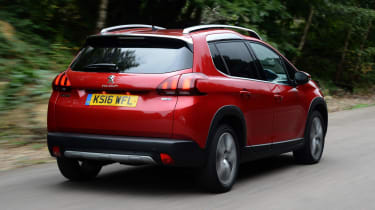
The Peugeot 2008 Mk1 has good body control and agile handling, but the end result of that isn’t a small SUV that’s amazing fun to drive. Things are better on the comfort front, though: while it can be skittish on rougher roads, the 2008 Mk1 rides well over bumpier surfaces and has decent refinement levels. Performance is pretty good for the most part, too, but we’d advise against choosing the least powerful models if you regularly do long journeys or drive on A-roads and motorways.
Engines and performance
Over its lifespan, the Peugeot 2008 Mk1 was available with a selection of engines, though the choice did vary over time. The only constant throughout the Peugeot’s production run was the 1.2-litre three-cylinder petrol engine, which was offered in 81bhp, 108bhp and 128bhp flavours – though we’d suggest you avoid the sluggish 81bhp version.
The 1.6-litre 118bhp four-cylinder petrol engine offered on pre-facelift Peugeot 2008 Mk1’s is also a little bit hit-and-miss. While the performance is decent and on-par with the equivalent 1.2-litre petrol engine, it develops its peak power and torque at higher revs, so needs to be worked a bit harder to get up to speed.
A selection of diesel engines was available on the Peugeot 2008 Mk1, too, and varied depending on the car’s age. Initially, the Peugeot could be specified with a 70bhp 1.4-litre four-cylinder, or a 1.6-litre four-cylinder with either 75bhp, 92bhp, 99bhp or 120bhp. Towards the tail end of the 2008 Mk1’s production run, those choices were replaced by a 1.5-litre four-cylinder diesel engine that was offered in 100bhp and 128bhp guises.
Used - available now

2023 MG
ZS
11,062 milesManualPetrol1.5L
Cash £13,150
2022 Kia
XCeed
28,438 milesAutomaticPetrol1.5L
Cash £14,870
2023 MINI
Cooper Electric
33,691 milesAutomaticElectric
Cash £12,400
2024 Audi
A3 Saloon
25,119 milesManualPetrol1.0L
Cash £18,497The Peugeot 2008 Mk1 was also offered with a variety of diesel engines. For most of the car’s production run, the diesel range consisted of 75bhp, 92bhp, 99bhp and 120bhp versions of a 1.6-litre four-cylinder, though early examples were also available with a 70bhp 1.4-litre four-cylinder diesel. Towards the tail end of the 2008 Mk1’s lifecycle, those engines were replaced in 100bhp and 118bhp guises. As with the petrols, the least powerful diesel options aren’t the easiest to recommend – while all the diesels sound a bit noisy when worked hard, the more potent options are a bit more flexible in everyday driving duties.
A number of gearboxes were available on the Peugeot 2008 Mk1, too, but not all of them were available across the range. Most of the engines came as standard with a five-speed manual, though the 120bhp+ diesels and the 128bhp petrol choices had a six-speed manual, which thanks to the extra gear ratio made them a bit more suited to cruising at motorway speeds than five-speed cars. On post-facelift cars, a six-speed automatic was available on the 128bhp diesel and the two most powerful petrol engines: it isn’t the smoothest-shifting automatic gearbox in the world, but it suits the Peugeot 2008 Mk1 well and is much nicer than the clunkier four-speed and five-speed automatics you’ll find on pre-facelift cars.
On the road
Perhaps unsurprisingly, considering it’s a small car, the Peugeot 2008 Mk1 is easy car to drive around town. The combination of light steering and a small steering wheel help make the 2008 Mk1 quite agile by compact crossover standards, and the raised ride height helps give the driver a slightly better view of the road ahead than they would in a conventional supermini. The rear pillars do cause a sizeable blind spot, though.
Handily, the Peugeot 2008 Mk1 isn’t out of its depth on more open stretches of road; body lean when cornering is nicely controlled and there’s decent noise insulation. However, that darty steering can make the Peugeot feel a bit nervous at higher speeds and, despite the fairly comfortable ride, the car can be a bit crashy and skittish over bumpy roads and broken surfaces.
Even though it has responsive steering, decent grip and good body control, the Peugeot 2008 Mk1 isn’t the most fun-to-drive car in this class, either. If you’re after behind-the-wheel thrills from a used supermini-sized SUV, you’ll be better off with something like a Mazda CX-3, a Nissan Juke or (if your budget stretches far enough) a Ford Puma.