New Renault Megane to take on the Tesla Model Y with a radical makeover
Hi-tech ‘software-defined’ C-segment model heralds a new design direction for Renault as the firm works to achieve a 465-mile range

Think you know mid-size Renaults? Think again. The French car maker is set to transform models such as the Megane, Scenic and Rafale with a cutting-edge new architecture featuring sporty dynamics and long-distance ranges, at affordable prices.
Engineers at Renault’s Paris Technocentre are hard at work on the new RG EV Medium 2.0 platform, to hit the deadline of launching the first car in 2028. It’s a flexible platform that can underpin vehicles from 4.3 to 4.8 metres in length. That puts it bang in the heart of the family car ‘C-segment’ for the Megane and Scenic, as well as ripe for replacing bigger flagship vehicles such as the Rafale and Espace. The wheelbase measures 2.85 metres long to ensure plenty of cabin space.
Power will come from pure electric and range-extender (REx) engines, with an efficient combustion motor acting as a generator to power an electrified drivetrain. Renault promises a minimum 465-mile range for the EVs and a whopping 870-mile capability for REx models, to ensure buyers migrating from diesel cars aren’t disappointed.
More headline news comes with the switch to rear-wheel drive, to cope with a big bump in power. A single motor will produce 275bhp and 350Nm of torque – and there will be all-wheel drive versions. Expect more exciting and dynamically sharper Renaults as a result.
“Front-wheel drive is a problem for driveability, ride and handling; it was very difficult to tune the current Scenic and Megane,” Renault’s technology boss Philippe Brunet told us. Rear-wheel drive also helps with packaging: the power electronics can be housed under the rear seats, with the reduced amount of wiring helping to cut costs.
Renault has confirmed the RG EV Medium 2.0 will underpin the next Scenic and Rafale – and the company is thinking deeply about how to replace the famous Megane. Insiders admit the current E-Tech hatch (right) has underachieved due to its compact, 4.2 metre-length, initially modest electric range and unusual, high-riding hatchback look, oversold as seriously sporty back in 2021.
The new platform, capable of supporting both high-riding SUVs and low-riding ‘sedans’, will be able to deliver a very different-looking Megane. Renault Group’s head of design, Laurens van den Acker, told Auto Express “future EV-driven platforms will give different silhouettes from the get-go. Longer wheelbases, bigger wheels, shorter overhangs; cars that are not as tall as an SUV but not as low as a sedan.”
This type of thinking isn’t new for the C-segment. Other manufacturers in this class are now experimenting with form in all sorts of ways to suit the technology. Nissan is a prime example, transforming its traditionally shaped Leaf into a new type of fastback crossover.
What we do know is that the Megane won’t bear much resemblance to previous Renault models, because its contemporary aesthetic will move the brand’s core design language, and remain distinct from the retro designs of the Renault 4, 5 and Twingo. Van den Acker told us: “Our challenge is not [the small car] segment because traditionally we are very strong in these markets and we feel very confident. Our challenges are more C+ and D segments.”
Van den Acker did give some hints, however, saying “The form language is going to be a little bit more restrained. As you can already see in the E-Space [concept], it’s very modern, but also more controlled. When you move up in price, the cars have to become more timeless.”
He added: “We need to make the cars feel a little more serious… so you might find a little less surface entertainment. But at the same time we’re a latin brand. We’re not cold like the Germans or hot like the Italians. So we need to find our own way.”
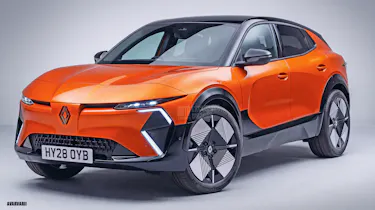
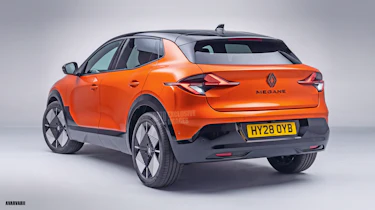
As you can see in our exclusive images, the main source of inspiration for Renault’s next generation of timeless design is based on the Clio, but with a more sophisticated use of lines and volumes. Typical styling elements of Renault’s modern BEV models also apply, such as narrow headlights, small grille openings and the use of clever LED technology.
Its aerodynamic look – including a low frontal area and shorn-off rear end – will largely be driven by a need to deliver that 465-mile target, beating just about every current rival in the C-segment. Such a mighty range would put it in the mix with the Tesla Model Y, as well as crossover rivals like the Hyundai Ioniq 5 and Skoda Enyaq.
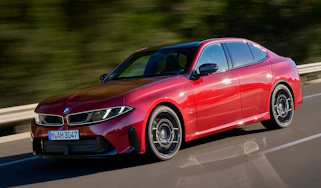
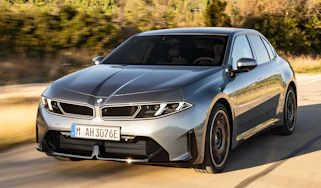
In order to reach this number, Renault is developing a new software-defined electrical architecture, like BMW’s new electric cars with their highly sophisticated dynamics and hi-tech cabins.
Renault Group CEO Francois Provost told us: “The Software-Defined Vehicle will be largely used in the C-segment, based on the Medium 2.0 platform. This is where we see the potential of scaling SDV. It’s a huge [initial] investment but after you can reuse it quite easily.”
Philippe Brunet, Renault Group’s chief technology officer, then added more technical detail to the project, saying: “When we started the study of this new platform, the idea was to bring something the Chinese don’t have. A C-segment car able to achieve 465 miles WLTP with an LFP battery, maximum two tonnes – you will not find it on the market.”
While BMW EV batteries comfortably eclipse 100kWh, Brunet says that’s much harder in C-segment cars with smaller wheelbases, and at affordable prices. “This is why we believe we need to have a reasonable battery energy level, below 90 kilowatt-hours.” The battery will be installed ‘cell-to-body’ as a structural component, acting as the car’s floor.
By running on this cutting-edge new platform, Renault will futureproof its models to include autonomous driving and steer-by-wire.
Brunet added: “We are not a premium OEM, so we have to take care of our customers [in terms of price]. If you ask me, do you see a real advantage with [technologies like] the steering-by-wire, I will say yes, for different reasons.“But if you ask me if, one day, would you have to put L4 level on the market, which is the upper level in terms of autonomous driving, I will tell that the by-wire tech is mandatory”. With many Chinese firms on the cusp of offering Level 2++ hands-off driving in European mainstream segments as early as 2028, Renault is aware that it needs to keep up.
All this new technology will be packaged into a cabin that looks to the E-Space concept for inspiration. Van den Acker explained: “What you see on the E-Space is kind of what we’re aiming for, with a pillar-to-pillar screen where you really have the main information on the screen, close to the windscreen, because we feel this is, in the end, the least tiring for your eyes.”
This will then be joined by a secondary control touchscreen: “the main action still remains on the central screen. And what we want to do is to move the actions there, and also use voice a lot more to interact with the vehicle, because vehicles will become more intelligent”.
Put all of the pieces together and it’s clear that Renault isn’t just thinking about retaining its current customers, but attracting new, tech-savvy buyers to a model that sounds more like a Tesla Model Y than it does a Renault Megane. The key, however, is that it will be designed with a certain French flair that the company knows is authentic to its values.
Get even more from Auto Express, follow our channels...
• Google
• Reddit
• Whatsapp