Range Rover reliability a key focus as brand maps its EV future
Range Rover MD admits reliability has been an issue for the brand, but points to recent progress and bold plans for the future

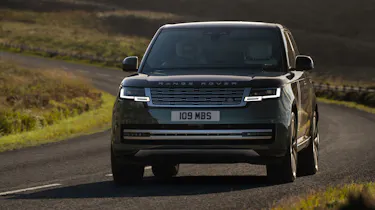
Range Rover has entered the electric car market in a big way, but that doesn’t mean its old challenges are confined to history. A perception of poor reliability has dogged the Land Rover brand’s products in the past, but Managing Director Martin Limpert is confident the corner has been turned, particularly with the new batch of Range Rover electric cars.
On the big question of Range Rover reliability, Limpert is open: “I still feel it’s a gap we have to close, but the gap is getting narrower.”
Range Rover builds complex vehicles; many with air-suspension, all with highly capable and configurable off-road drivetrains, so it doesn’t make life easy for itself. Given its premium positioning, however, doubts of any kind over reliability can be corrosive.
The 2026 edition of our own Driver Power customer satisfaction survey placed Range Rover parent brand Land Rover in an impressive 10th place overall out of 30, but 23rd in the specific ‘quality and reliability’ section.
Limpert points to the results of the Initial Quality Study by America’s JD Power customer survey, where Land Rover climbed from 21st place in 2025 to 10th place in 2026 – fourth place in the luxury section ahead of Mercedes-Benz and BMW. That study looks at customer issues in the first 90 days of ownership, but the Vehicle Dependability Study that examines problems in the first three years still placed Land Rover 27th out of 29 brands.
Signs of a corner being turned, but with work still to do? That’s certainly the perception Auto Express got talking to Limpert, who heads up the Range Rover division in Jaguar Land Rover’s new House of Brands configuration.
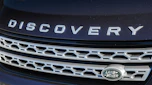
With Range Rover now sitting alongside Defender, Discovery and Jaguar, there will technically be no Land Rover badged cars, which feels like a reset in itself. He would not be drawn on the Ingenium engine reliability saga that has not helped Land Rover’s cause in this area. Instead, the boss prefers to look forward to the clever systems employed to monitor and maintain Range Rover’s new crop of EVs.
“We have a big focus on quality, and you see this in our manufacturing processes but also in technology like our Battery Digital Twin,” Limpert explains. He’s referring to the new system that allows Range Rover to hold a digital replica of the battery in every one of its electric cars. The model comprises 900 data points that are drawn from the car in regular over-the-air uploads. It lets engineers act proactively to maintain the battery and optimise its performance without the car even visiting the dealership. It enables an eight-year or 100,000-mile warranty for the propulsion system in Range Rover’s EVs.
The reshaped Range Rover
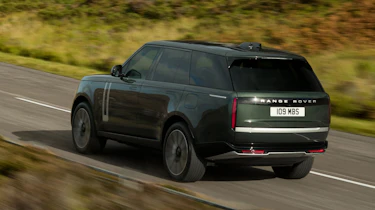
Improvements in quality and reliability will certainly assist the Range Rover brand in its wider aims. It’s not the game-changing leap Jaguar has attempted, but Range Rover is in the process of its own hop up market. “We definitely want to evolve Range Rover into the space of modern luxury,” says Limpert. “Range Rover Evoque and Velar will co-exist until 2027, but it’s no secret that we will then be focusing on the three cars.”
Those three cars are the Range Rover, Range Rover Sport and the new Range Rover GT. The accessible, and highly profitable, entry point to Range Rover ownership provided by the Evoque will disappear, with the Defender and Discovery brands likely to serve as the welcome committee at the front door to the House of Brands. If you want a Range Rover, you’ll need the best part of £90,000 for the new electric (and eventually hybrid) GT.
‘Modern luxury’, not necessarily more power
‘Modern luxury’ is now very much at the heart of Range Rover and it’s telling that with the new Range Rover Sport Electric and Range Rover Electric the brand has not opted for the extreme horsepower figures of some EVs. “We feel that the 550 horsepower car is very well balanced in terms of performance, all-terrain capability, refinement, quietness, everything,” says Limpert. “In Range Rover terms, we have the perfect balance, we don’t need 800, 900 horsepower.”
All the Range Rover and Sport EV models have the same 542bhp power output and formidable 850Nm of torque, but Limpert does not envisage that we will see a higher powered electric Range Rover Sport SVR, for example. He does not write it off, but will at least wait to see how the market reacts to the new EV. “Everything in the future really depends on how this lands and how this vehicle performs in the first place.”
Range Rover upgrades
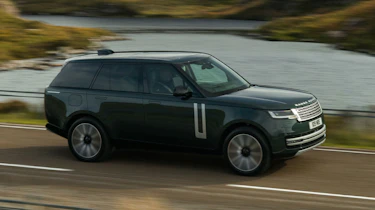
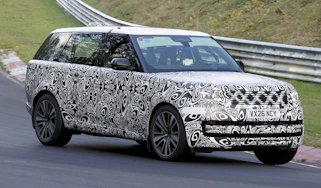
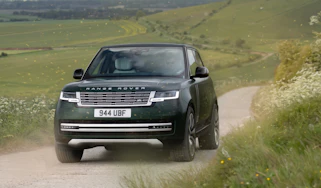
That’s not to say that further developments of the Range Rover and Sport are off the table. The fifth-generation Range Rover was launched back in 2022, but with the arrival of the electric version the plan is for a few more years to elapse before we see an all-new model.
“We’re always looking forward,” says Matt Becker, JLR’s vehicle engineering director. “We’re always optimising and developing the cars for as long as we can, but there will come a point when you need to start looking at future architecture.
“This architecture was conceptualised 11 years ago and it’s starting to get towards the end, I would say. But it’s got at least another five years.”
First we’ll see chassis tweaks and other technology enhancements developed for the Range Rover and Range Rover Sport EVs find their way on to the petrol and diesel models as part of a significant facelift. A more affordable, less powerful EV450 version of the Sport is also due to hit the UK.
Beyond that, improvements to the EV’s battery may be an area the brand looks to explore in the longer term. “We’re locked and loaded on the battery chemistry we’re using right now, but obviously a battery is a given size, it has a given package space. Could you develop it in future and look at different chemistries? For sure.”
We won’t see Range Rover follow Jaguar in a drive even further upmarket, though. In a sense, the EV’s arrival in itself – starting at £110,000 for the Sport or £154,000 for the full-blown Range Rover – has elevated the range. The brand offers the SV Ultra trim level in the Range Rover, which is designed for buyers to spec their own truly high-end model. Prices are ‘on application’, but taking this route to a long-wheelbase Range Rover with all the bells and whistles will get you into the rarefied ballpark of the Bentley Bentayga, if not the Rolls-Royce Cullinan. That’s the very pinnacle of the luxury SUV market where Range Rover feels it belongs.
Don't miss the best of Auto Express on Google! Make us a preferred source. Click here...