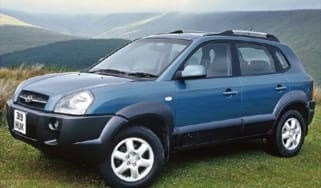
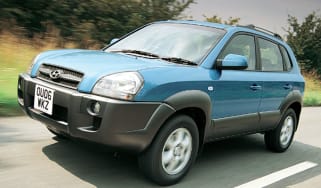
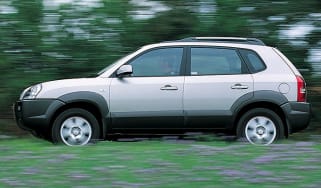
Hyundai Tucson review
The Hyundai Tucson combines refinement, space, style and hybrid technology to create a mid-size SUV that’s hard to beat

Our opinion on the Hyundai Tucson
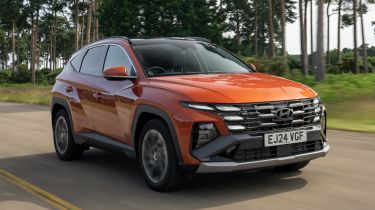
The latest Hyundai Tucson means business thanks to its intuitive on-board tech, premium-feeling cabin, and striking looks that help it stand out in the mid-size SUV class. But the Tucson is a car that appeals to the head with its hybrid technology, high level of standard equipment, and a roomy cabin with a boot large enough to rival that of an estate car. We think Hyundai has created a family car that’s as desirable as it is sensible.
About the Hyundai Tucson
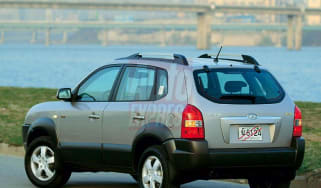
Let’s cut straight to the chase – the previous Tucson was a car that primarily sold on practicality, modest pricing, and a decent level of standard kit helping to make up for its distinct lack of flair.
However, this fourth generation Tucson is a different proposition, establishing itself as a premium offering for families that value style and refinement, as well as the more prosaic qualities of overall load space and day-to-day functionality.
We’ve pitted the Tucson against multiple rivals over the years, and even when faced with the popular Ford Kuga and previous generation Vauxhall Grandland in our real-world group test, the Tucson came out on top. The hybrid Tucson has also gone up against the Renault Austral and beaten that rival, too.
Hyundai Tucson prices and latest deals
How much does the Hyundai Tucson cost? Well, official ‘on the road’ prices range from £30,255 to £43,690 but you can currently save an average of £5,643 through the Auto Express Find A Car service, where prices start at £26,235. You can lease a Hyundai Tucson from £320 per month or buy a used model at prices starting from £11,495.
Check out our latest new car deals, leasing deals and used car deals for the top offers available now on Auto Express. And don't forget we can help you sell your car, too.
Performance & driving experience
Pros |
|
Cons |
|
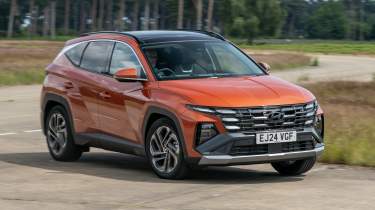
The regular hybrid powertrain in the Tucson works well at both motorway speeds and around town. We noticed that the six-speed automatic transmission is keen to shift up early, but because the engine becomes slightly thrashy when worked hard, that’s not such a bad trait. Keeping the can in its Eco drive mode also helps with keeping the revs low.
Used - available now

2025 Hyundai
Tucson
24,464 milesAutomaticPetrol1.6L
Cash £22,984
2023 Hyundai
Tucson
37,510 milesAutomaticPetrol1.6L
Cash £18,710
2023 Hyundai
Tucson
29,635 milesAutomaticPetrol1.6L
Cash £22,649
2023 Hyundai
Tucson
17,696 milesAutomaticPetrol1.6L
Cash £22,256Choosing the Sport function modifies the throttle response and improves assistance from the electric motor, but it means the car hangs onto lower gears for longer and revs higher, which doesn’t sit well with the Tucson’s refinement.
The hybrid model’s ability to cut engine power when you lift off the throttle at speed not only improves refinement but also boosts efficiency. It manages this in a smooth and effortless manner, to the extent that you might not even feel the system working at all.
The plug-in hybrid Tucson weighs around 200kg more than its conventional petrol or hybrid alternatives, but it’s also the most powerful model in the range. We didn’t find that the extra weight had much impact on how the Tucson performs or handles.
| Model | Power | 0-62mph | Top speed |
| Tucson 1.6T | 148bhp | 9.5 seconds | 121mph |
| Tucson 1.6 Hybrid | 236bhp | 8.2 seconds | 116mph |
| Tucson 1.6 Plug-In Hybrid | 249bhp | 8.2 seconds | 116mph |
Performance, 0-60mph acceleration and top speed
The 148bhp 1.6 TGDi petrol-only model delivers a reasonable 0-62mph time of 9.5 seconds, while the fast acting dual-clutch automatic version cutting it to 9.4 seconds. The top speed for both is 119mph.
The hybrid cranks out 236bhp and trims the 0-62mph time to 8.2 seconds, although its top speed is reduced to 116mph, which is the same as the plug-in hybrid.
The plug-in hybrid is even more powerful with 249bhp, but its extra weight means its 0-62mph is only slightly quicker at 7.9 seconds for the two-wheel drive, or 8.1 seconds for the four-wheel drive version (the latter available on N-Line Edition, N-Line S, and Ultimate). The electric motor of the Tucson PHEV fills in for the 1.6-litre petrol engine under the bonnet when needed, with all its torque available as soon as you hit the accelerator. As a result, the car surges forward with a willingness unlike any other Tucson.
Town driving, visibility and parking
The Tucson’s light steering makes it easy to manoeuvre in town. Opting for the PHEV brings up to 43 miles of pure-electric driving for the two-wheel drive model and 39.1 miles for the four-wheel drive version. Being able to drive using electric power makes this version of Tucson particularly quiet.
Whichever Tucson you choose, it shouldn’t feel too imposing when facing narrow roads or parking spaces. It’s pretty easy to place thanks to good all-around visibility, and every model comes with a rearview camera.
Country road driving and handling
The Tucson has decent agility through the corners while keeping it controlled and composed over rough sections of tarmac. You wouldn’t use the Tucson for a fun Sunday morning blast, but it does provide relaxing and refined transport.
Motorway driving and long-distance comfort
Every Tucson (including the heavier PHEV) does a good job of ironing out bumps, with imperfections in the road heard more than they’re felt. Accelerating to motorway speeds is a hushed and refined experience for the most part, although the petrol engine’s roar will make itself known when pushed hard.
MPG & running costs

Pros |
|
Cons |
|
The cheapest version to buy is the 148bhp 1.6 T-GDi petrol-only model, and with a six-speed manual gearbox, it manages a respectable 39.8mpg, while CO2 emissions are 161g/km. Go for this engine with an automatic transmission, and the fuel efficiency improves to 40.9mpg, and emissions drop to 157g/km.
Moving up to the full-hybrid powertrain boosts the WLTP combined efficiency figure for the Tucson up to a maximum of 50.4mpg. When we tested this model against the equivalent Ford Kuga and Vauxhall Grandland, the Hyundai returned an average of 42.6mpg, which is some way short of its official claim. In comparison, the Vauxhall managed 46.2mpg, while the Ford led the pack at 48.6mpg.
The most efficient (and expensive) variant is the Tucson Plug-in Hybrid. According to Hyundai, the Tucson PHEV claims up to 282.5mpg and CO2 emissions as low as 22g/km with the combined efforts of the engine and electric motor. Using just the engine, we managed an economy figure of 43.4 mpg for the two-wheel drive model on a mixed driving loop of urban, countryside and motorway driving, and 40.4mpg for the one with four-wheel drive.
| Model | MPG | CO2 | Insurance group |
| Tucson 1.6T | 39.8mpg | 161g/km | 16 |
| Tucson 1.6T Hybrid | 49.5mpg | 130g/km | 23 |
| Tucson 1.6T Plug-in Hybrid | 282.5mpg | 22g/km | 23 |
Electric range, battery life and charge time
The Tucson plug-in hybrid uses a 13.8kWh lithium-ion battery to offer a WLTP combined pure-electric driving range of up to 43.5 miles in two-wheel drive form, or 39.2 miles when equipped with four-wheel drive.
We managed 33.2 miles of electric driving from the two-wheel drive model, which is useful, but not as good as the 58 miles we got from a Volkswagen Tayron eHybrid we drove as part of the same test, helped no doubt by its higher capacity 25.7kWh (19.7kWh usable) battery.
Unlike Volkswagen’s eHybrid system, the Tucson doesn’t have rapid charging capability, but its 7.2kW on-board charger means you can fully recharge the battery in under two hours if you use a suitably fast home wallbox or public charging point.
| Model | Battery size | Range | Insurance group |
| Tucson 1.6T Plug-in Hybrid | 13.8kWh | 43.5 miles | 22 |
| Tucson 1.6T Plug-in Hybrid 4WD | 13.8kWh | 39.2 miles | 23 |
Insurance groups
Insurance premiums start from group 16 for the entry-level petrol Tucson in Advance trim, which is two groups lower than the entry-level Volkswagen Tiguan Life.
Opting for the more powerful full-hybrid or plug-in hybrid model pushes the Tucson up to at least group 22.
Tax
All Hyundai Tucson models are liable for the standard rate of VED road tax. However, if you want to avoid the luxury car tax, you’ll need to stick towards the lower end of the Tucson line-up, because you can surpass the £40,000 mark without much effort.
Business buyers will be better off choosing the PHEV because this incurs less Benefit-in-Kind (BiK) company car tax, but fully electric cars still offer the very biggest savings. If you’d prefer to go down the EV route, the Hyundai Ioniq 5 is one of the closest alternatives.
Depreciation
Our market data suggests that the Tucson range will retain between 52 and 58 per cent of its list price after three years and 36,000 miles of ownership. This is better than the big-selling Nissan Qashqai, which holds on to 47 to 49 per cent after the same amount of time. The Tucson’s sibling, the Kia Sportage, manages 48 to 51 per cent.
To get an accurate valuation on a specific model check out our free car valuation tool...
Interior, design & technology
Pros |
|
Cons |
|
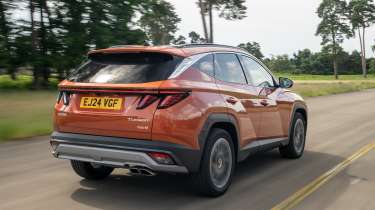
The designers of the revised Tucson have wisely chosen not to tone down its attention-grabbing exterior, only making subtle changes to the grille and lower portion of the bumper. At the back, the Hyundai badge now resides behind the rear window, which looks much tidier.
Inside, the interior has been dramatically altered to give it a look more in keeping with the cabins of the smaller Hyundai Kona and electric Hyundai Ioniq 5.
Standard equipment is generous, with the entry-level Element trim including 17-inch alloy wheels, dual-zone climate control, cruise control, a rear-view camera, front and rear parking sensors, heated and folding door mirrors and the usual Bluetooth, wireless smartphone connectivity with a wireless charging pad, and DAB audio set-up.
We would recommend upgrading to Black Line because this adds:
- 19-inch alloys
- Heated front seats
- A more advanced autonomous emergency braking system with junction turn assist
- Ambient interior lighting
- Privacy glass
- A 12.3-inch digital instrument cluster
You get some sportier styling both inside and out with N Line Edition trim, plus three-zone climate control, matrix LED headlights, an electric tailgate, and rear sunblinds in the back doors – ideal for keeping the sun off of children travelling in the back.
Both the N Line S and Ultimate trims cost the same and have similar features; the former just has sportier styling than the latter. Each trim has electric front seats with ventilation, heated rear seats, a panoramic sunroof, a 360-degree camera system, and blind spot monitoring with rear cross traffic alert.
Interior and dashboard design
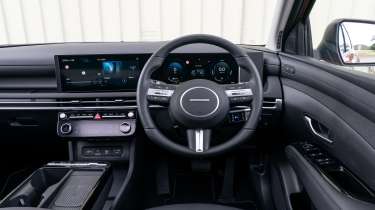
Once you’re in the driver’s seat, a smart-looking 10.25-inch digital instrument cluster (on Black Edition trim and above) greets you. The rest of the interior sports a clean, simple layout, and we particularly like the physical dials for the climate controls, which are much easier to get on with compared with the touch-sensitive controls of the pre-facelift Tucson.
The only major downside is that you’ll need to stretch to reach the controls on the far corner of the central screen.
Cars with a manual gearbox have a different centre console design, while automatic models follow the aforementioned Kona and Ioniq 5 in using a gear selector mounted just behind the steering wheel on the right, freeing up more console storage space.
Materials and build quality
The solid feel of the pre-facelift Tucson carries through to the revised model, although our previous note of a sombre colour palette for most trim levels remains, despite the odd strip of fabric across the dash to break up the expanse of soft-touch plastic.

Infotainment, sat-nav and stereo
Every Tucson model features a 12.3-inch touchscreen with fast loading times and clear graphics, plus built-in sat-nav (which works well), along with Apple CarPlay and Android Auto if you would prefer to link up your smartphone.
The central touchscreen might not match the display sharpness or loading times of the Renault Austral’s Google-powered set-up, nor is it as big as the one in the Kia Sportage, but it’s still clear and easy to read. The main menu displays all of the key features in two rows of shortcut icons, and most of the sub-menus are fairly well thought out.
Hyundai has improved navigation to the driver-assistance menu, which is a blessing considering that the car can bleep at you incessantly as you’re driving along. You used to have to delve into various menus within the touchscreen, but now there’s a shortcut button on the steering wheel that sends you straight to the correct menu. You can easily silence the speed limit warning (a system that beeps when it detects you’re exceeding the speed limit) by pressing the mute button for a few seconds.
A second 10.25-inch display sits ahead of the driver in Black Line trim cars and above (the entry-level Element misses out on a fully digital screen). The stats are easy to select via steering wheel-mounted buttons, and the colours and graphics adjust based on the chosen driving mode.
If you enjoy listening to music in your car, the upgraded Krell stereo available with N-Line Edition, N Line S, and Ultimate trims is worth considering.
Boot space & practicality
Pros |
|
Cons |
|
The driver’s seat and steering wheel have plenty of adjustment for rake and reach, but you’ll need a high-end N-Line S or Ultimate version for electric front seat adjustment.
The Tucson’s versatility benefits from a standard-fit 40:20:40 split-folding rear seat, plus there are front and rear armrests with cupholders and extra storage for assorted oddments. You’ll also find USB ports front and back to keep devices charged.
N-Line Edition and above feature an electric tailgate.
Dimensions and size
The Hyundai Tucson measures 4,525mm in length, 1,865mm wide (excluding door mirrors), and 1,653mm tall. As a comparison, the Volkswagen Tiguan is longer at 4,539mm, although the Tucson is 13mm wider.
| Dimensions comparison | |||
| Model | Hyundai Tucson | Kia Sportage | Nissan Qashqai |
| Length | 4,525mm | 4,540mm | 4,425mm |
| Width | 1,865mm | 1,865mm | 1,835mm |
| Height | 1,653mm | 1,645mm | 1,625mm |
| Wheelbase | 2,680mm | 2,680mm | 2,665mm |
| Boot space | 620-1,799 litres | 587-1,780 litres | 436-1,598 litres |
Seats & passenger space
The latest Tucson’s wheelbase is marginally longer than the previous model’s, but Hyundai has been clever with the car’s packaging to ensure that the cabin can easily accommodate two tall front passengers.
There’s plenty of headroom, even with a panoramic roof thrown into the equation. However, those looking for memory settings for their driver’s seat will have to look towards the range-topping Ultimate trim.
It’s a similar story for rear passengers because taller occupants won’t be left wanting for room. There is also space for a third rear passenger, but the raised central floor prevents them from finding a truly comfortable position. The seats are supportive, and there’s plenty of space under the front seats for the rear passengers’ feet.
Boot space
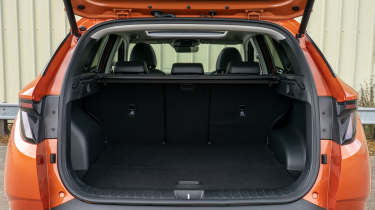
The Hyundai Tucson offers a family-friendly 620 litres of boot space in petrol manual form with the seats up, expanding to 1,799 litres with the seats down. That's around 30 litres more than you get in a Kia Sportage and a whopping 116 litres more than the Nissan Qashqai.
However, it’s worth noting that the hybrid and plug-in hybrid Tucson models have a reduced boot capacity of 556 litres with the seats up, and 1,721 litres with the seats folded, although that’s still much better than a plug-in eHybrid Volkswagen Tiguan, which only has 490- to 1,486-litres of capacity.
We think a few more hooks and individual storage compartments would be helpful, but overall, the space and flat floor should be fine for most needs. The Tucson also has a modest, but still handy amount of under-floor boot storage.
Towing
The weakest models of the Tucson range are the two PHEVs, with a braked towing capacity of 1,210kg. The full-hybrids are a bit stronger at 1,510kg, while the pure-petrol cars can take on 1,650kg.
“The boot load lip is fairly high – especially when compared with the Ford Kuga – but at least the bumper isn’t deep.” - Alex Ingram, special contributor.
Reliability & safety

Pros |
|
Cons |
|
The Tucson's standard safety kit includes plenty of active safety systems, but you’ll need to upgrade to N-Line S or Ultimate trim for blind spot collision warning, forward collision avoidance assist, and rear cross traffic collision avoidance – the latter helps you avoid any potential hazards as you reverse out of a driveway or parking spot.
Crash safety experts Euro NCAP awarded the Tucson five stars in 2022, receiving an 86 per cent score for adult occupant protection and 87 per cent for child occupants, although protection of the driver's chest was assessed as being only marginal.
| Euro NCAP safety ratings | |
| Euro NCAP safety rating | Five stars (2021) |
| Adult occupant protection | 86% |
| Child occupant protection | 87% |
| Vulnerable road user protection | 66% |
| Safety assist | 70% |
The Hyundai Tucson placed 9th overall in the 2026 Driver Power survey with a score of 86.18%, a strong result for this big-selling family SUV. The interior ranked 1st out of all 50 cars in the entire survey and the Tucson came 3rd for Practicality & Bootspace, underlining its credentials as a practical family car. Ride & Handling placed 17th and Safety Features 13th. The weakest category was Economy & Running Costs at 40th. Hyundai ranked 13th out of 30 brands in the manufacturer standings with a score of 85.03%.
| Hyundai Tucson | Position | Score |
| Overall | 9 | 86.18% |
| Powertrain | 17 | 87.44% |
| Exterior | 15 | 89.34% |
| Interior | 1 | 88.50% |
| Practicality & Bootspace | 3 | 88.46% |
| Ride & Handling | 17 | 89.27% |
| Safety Features | 13 | 84.91% |
| Economy & Running Costs | 40 | 76.51% |
| Quality & Reliability | 13 | 87.91% |
| Infotainment | 21 | 84.42% |
| Value | 34 | 82.86% |
What owners said
- “Roomy, reliable and well equipped. Very happy with the hybrid powertrain.”
- “Great family car with excellent safety features. Running costs are higher than expected.”
- “Love the interior space and the tech. The infotainment system is intuitive.”
- “Really pleased with the build quality. Economy on the hybrid is very good.”
If you own a Hyundai Tucson or any other car, let us know what you think of it: Take the Driver Power survey today
Buying and owning
- Best buy: Hyundai Tucson 1.6T Hybrid Black Line
The Tucson offers good value for money, but higher trim levels can be expensive. Stick with the mid-range Black Line trim, and you’ll get a decent helping of useful kit for your money, and you’ll avoid the luxury car tax, no matter which engine option you pick.
We prefer the full-hybrid powertrain for its respectable running costs and performance.
Hyundai Tucson alternatives
The mid-size SUV market is massive, with plenty of rivals to choose from, including the Ford Kuga, Kia Sportage, Mazda CX-5, Nissan Qashqai, Renault Austral, Skoda Karoq, Vauxhall Grandland and Volkswagen Tiguan.
In addition to that are an ever-increasing list of fully electric SUVs you can choose from. The Hyundai Ioniq 5, Kia EV6, Renault Scenic, and Tesla Model Y are all strong competitors in this field, but there’s also the Auto Express Car of the Year to consider, the Skoda Elroq.
Hyundai Tucson owner reviews
| What they like | What they don't like |
| “This is my fifth Tucson. They’re great – just right for the family, or I can drop the seats down for all of my fishing tackle.” | “I don’t like the colours (there’s no Dark Knight Grey, which I liked before), and the lack of upholstery options is disappointing.” |
| “The list of attributes is impressive. It’s well made, reliable, attractive, practical, comfortable, and good value.” | “The view through the back window when reversing is poor." |
| “The boot was important to me because I have to carry several disability aids. The Tucson carries them easily. Even with two tall people in the front, there’s still lots of space in the back for tall adults.” |
Hyundai Tucson pictures
Key updates of the Hyundai Tucson review
1 May 2026: Real-world efficiency and electric range of the plug-in hybrid version
13 April 2026: Inclusion of the revised trim structure of Element, Black Line, N Line Edition, N Line S, and Ultimate.
23 January 2026: Addition of owner opinions from our Driver Power survey data.
Frequently Asked Questions
The Sportage is actually 15mm longer than the Tucson.
Deals on the Tucson and alternatives