Annoying car safety tech is a big 'turn-off' that must be stopped, says Euro NCAP
Advanced Driver Assistance is critical but flawed. Euro NCAP’s Matthew Avery vows to make it better


New cars are packed with groundbreaking safety systems but it’s led to a huge, unintended problem: their ham-fisted interventions provoke drivers to turn them off. “That’s no good for anybody. Imagine drivers just turning their airbag off – or their seatbelt!” says Matthew Avery. But the director of strategic development at Europe’s vehicle safety testing organisation, Euro NCAP, is working on a solution. “Our mission is to banish bings and bongs. We want to make Advanced Driver Assistance Systems more usable and user-friendly, and that’s not an area Euro NCAP has [explored before].”
Avery has been working on crash safety for more than two decades. He first saw ADAS’s benefit when assessing Volvo’s pioneering automated emergency braking system, City Safety, for the insurance company-funded Thatcham Research. “Suddenly, there was a brave new world of mitigating or even preventing a crash, and that started the journey,” he recalls.

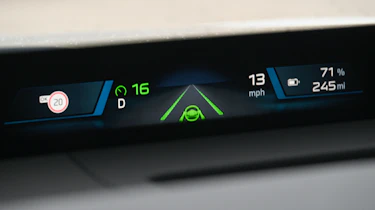
Fast forward to 2024 and mandatory monitoring systems that watch drivers for distraction, cameras that relay the speed limit and alerts that reveal if a car strays onto lane markings have led to an epidemic of warnings – the ‘bings and bongs’ Avery dreads. His answer? “We’ll assess vehicles for their annoyance factor. We’re putting car manufacturers on notice that we’re coming for them.”
Euro NCAP has long assessed cars’ passive safety performance in crash tests, before expanding into active safety that aims to prevent collisions. It has a complex scoring system awarding points for occupant protection from the chassis and airbags, as well as marking a host of ADAS systems and even what the car does post-crash (such as calling the emergency services). But the safety chief admits the assessment criteria need tweaking. “If a driver-monitoring system is far too sensitive, we’ll take points off.
If a lane-support system is too assertive, we’ll take points off.” He says car makers fitting crude equipment can no longer expect good marks: “The problem is they annoy the driver so much the system gets turned off.” The strategy chief is clear about what will fix the problem: “Threat-based detection systems – they really are the next seatbelt.”
BMW’s latest system monitors drivers in an attempt to understand intent: have they crossed a white line intentionally? This is overlaid with the car’s understanding of its surroundings: what might they be avoiding, and are there any threats such as oncoming traffic? If ever thing is deemed safe, there’s no need for clumsy steering intervention. “With threat-based systems, we want to get to the situation whereby the driver doesn’t experience
ADAS, because the system’s so dialled back it only intervenes if you’re about to run into the back of a car or run a child over,” says Avery. Good driver monitoring should also effectively assess if a driver is tired, or under the influence of drugs and alcohol, and respond with accurate warnings in a timely manner.
This year, Euro NCAP has introduced a new, 2,000km (1,200-mile) on-road vehicle assessment. It will measure and score the effectiveness of Intelligent Speed Assist, as well as collect data on how driver monitoring, lane support and automated emergency braking interventions perform, and note ADAS false alarms.
But the world of crash safety is the same as car engineering: making well informed, evidence-based changes takes time. “We’re collecting data because in 2029 we’re going to start rating these systems. So we need tens of thousands of kilometres of driving,” explains the Euro NCAP director. He notes that NCAP is undertaking a version of Auto Express’s tests but on a supersized, scientific level.
This will help prove the effectiveness of lane-keeping assist and Intelligent Speed Assist (ISA), which drivers tend to ignore. “We know in theory they should be working, and we know the relationship between speed and crash risk. But the jury is out, and some of that is down to the application.”
Avery asserts that Level 2 motorway assistance – Adaptive Cruise Control – reduces crash rates by between 30 and 40 per cent, particularly by keeping cars a safe distance apart. “In motorway accidents, cars tend to run off the road if drivers aren’t watching what they’re doing, or they run into the back of the car in front.” ACC with steering assist can help in both cases. It pays to use it: even true car nuts do. A case in point, who enables it every time he’s on the motorway? Matthew Avery.
More from our ADAS car safety special
- ADAS warning and safety tech tested (pt 1)
- Hands-free self driving systems tested (pt 2)
- Best and worst ADAS 2026/2027: megatest verdict
- What is ADAS? Advanced Driver Assistance Systems explained
- 2027 will be the UK’s year of the self-driving car
- Future of car safety: smart seatbelts, robotaxis and bringing back buttons
Don't miss the best of Auto Express on Google! Make us a preferred source. Click here...