Car ADAS megatest: today's top driver assistance tech tested and rated
Speed assist and driver-monitoring systems are making car owners mad. We test seven big-selling cars to reveal who does the tech well – and badly

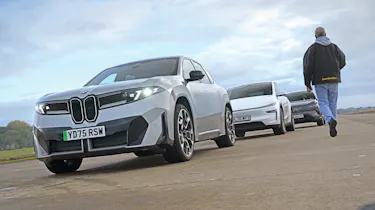
I have a confession to make. Being in charge of testing at Auto Express means that I’m in and out of new cars on an almost daily basis – and too often I’m triggered to deactivate a vehicle’s ADAS (Advanced Driver Assistance Systems) safety warning technology.
I’m not driving around without the electronic safety net on purpose, like some sort of Evel Knievel about to jump a line of buses; it’s more to do with keeping my sanity. When there are electronic nannies keeping an eye on your speed, your lane discipline and whether you’re generally paying enough attention to the road ahead, a modern car can throw up all sorts of audible alerts during even the shortest drive.
While every warning beep is rightly meant to be a reminder to focus on driving, the systems can be quite overzealous in their warnings. It’s enough for them to become more of a beeping frustration than the beeping hazards they’re trying to beeping warn you about. And with some cars, even the slightest beeping transgression can cause the beeping to commence. Frankly, it’s a beeping nightmare.
Being driven to deactivating them is even more of a nightmare: it endangers the driver, occupants and other road users. It’s also triggered some soul-searching at Europe’s vehicle safety testing body, Euro NCAP: Matthew Avery, director of strategic development, admits he is surprised that car companies have installed clumsy, intrusive systems that infuriate their customers.
Always-on camera systems keep an eye on the road ahead to monitor speed limits and any changes, but can bombard you with beeps and flashing messages for any infractions. The technology detects lane markings and the roadside to help prevent you wandering out of line – but can then pinball you towards oncoming traffic. Then there’s the in-car camera that constantly monitors the driver and possibly other occupants. This beady eye can detect when you’re looking away from the road – often to control a function on the touchscreen – and will admonish you for doing so.
The European Commission’s GSR2 regulation made Intelligent Speed Assist (ISA), lane keep assist and driver monitoring mandatory on every new car sold in Europe, from 2024. Buy a new model and there’s no escaping them.
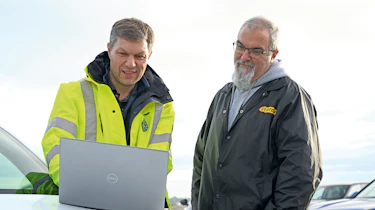
So we’ve pulled together seven big-selling cars incorporating some of the best – and worst – systems. With the help of my co-pilot, Liam Barnett from Apollo Vehicle Safety, we’ll drive each of them on a 37-mile Northamptonshire test route taking in urban streets, country lanes and motorways.
The goal? To inform consumers thinking of buying these cars whether their safety warning systems might smoothly save the day – or just drive you mad.
Scroll down for the results of our Advanced Driver Assistance Systems test and don't forget to read part two, where we examine the hands-free self-driving systems on the same cars, then check out our full test verdict page where we rank the best and worst ADAS overall.
BMW iX3 50 xDrive M Sport Pro
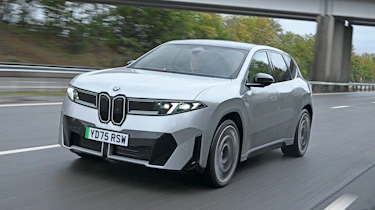
- Price: £61,750
- Selected ADAS: Standard Driving Assistant Plus, including Active Cruise Control, Steering and Lane Control Assistant, Intelligent Speed Assist
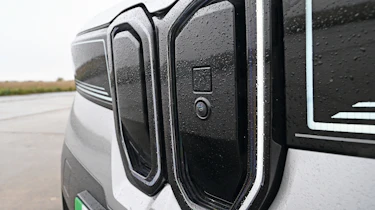
- Driver monitoring: One central camera, capacitive steering wheel sensors
- Optional upgrades: £925 Motorway Assistant, includes L2+ hands-off motorway driving and automated lane changes
The first car on our test route was BMW’s iX3 – and it went like a dream. The Neue Klasse architecture that underpins the iX3 has already impressed us in many ways, but here it’s the way this Software Defined Vehicle integrates its safety systems with the rest of the driving experience that really stands out. Rather than intervene and overreact to any infractions, the BMW’s system was smart enough to know what was going on and offer assistance only when it was needed.
Every speed limit on the route was read correctly, landing the iX3 a 100 per cent score on our test. Exceeding the limit triggered a subtle bong that wasn’t at all unpleasant, although it did activate at just 1mph over the limit, so was quite strict with its regulation.
Even more impressive was the lane assist set-up. As with other more sophisticated systems from rivals, there are two levels of steering wheel feedback depending on whether you’re breaching a dotted or solid white line, with the latter actively steering the car away from the road marking. But the iX3 takes things to another level courtesy of its driver-monitoring camera and can interpret when a motorist is crossing a lane on purpose.
It can detect subtle head movements, so if you’re looking in the correct direction when changing lanes on the motorway, the lane assist warning won’t necessarily activate if you don’t indicate. This also applies when the sat-nav is active, with the lane assist staying dormant when taking the slip road off the M40 without using the indicators.
Drive briskly on a twisty B-road, and the system offers a degree of flexibility when crossing the centre line, while on narrower, unlined roads, it keeps a check on the edges of the road, but otherwise remains dormant.
The monitoring system itself is the most unobtrusive set-up we’ve ever tried, so much so that we wondered if it had been turned off by accident. We didn’t encounter any alerts on our test route, so we had to take it onto our Upper Heyford test runway to check it was working correctly. It was: looking away from the road for a prolonged period triggered an alert.
Liam’s expert view on the iX3
“The iX3’s systems were faultless on our drive and demonstrated how they can work with the driver, rather than against them. The only quibble was that the intelligent personal assistant activated twice when it falsely detected its ‘Hey BMW’ activation prompt during regular conversations between Dean and myself.”
Volvo EX60 92kWh Single Motor Plus
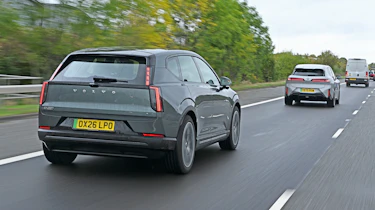
- Price: £60,490
- Selected ADAS: Standard Pilot Assist with Active Cruise Control including steering and lane change assistants, speed adaptation for junctions and curves and undertaking prevention over 50mph. Map and camera-based Intelligent Speed Assist with throttle intervention and sound alert when Pilot Assist is active. Direct and indirect monitoring of drowsiness and distraction, visual alerts and via steering wheel. Lane change assist above 40mph
- Driver monitoring: Two cameras, one on steering column, one on dash covering whole cabin, capacitive steering wheel sensors
- Optional upgrades: None
Any Volvo comes loaded with the preconception that safety is high on the agenda, and the EX60 certainly lived up to the stereotype. It was the only car to feature a pair of driver monitoring cameras – one directly ahead of the motorist, plus another cabin monitor at the base of the windscreen – and there were no false alerts about being distracted. As with the BMW, we tested it on track by driving in a straight line while purposely looking out of the side window to ensure it was functioning properly.
We experienced one false speed limit change on the A43 dual carriageway when passing a layby, although there was only a brief period when the system believed it was a 60mph limit and not 70mph. When you do overspeed, the Volvo has a unique pedal-based system that can be used instead of a warning beep, or deactivated. This can reduce throttle response for a couple of seconds without you lifting off the pedal, although that will confound drivers who prefer a direct link between throttle response and actual acceleration, and you can use an audible warning instead.
The lane assist function worked well, operating at different strengths on solid and broken centre lines, with the system dormant on lanes with no markings.
Liam’s expert view on the EX60
“When set to an audible warning, the overspeed system could be heard at all speeds, while the software would cancel the warning if the driver reduced their throttle input just a little bit.”
Ford Puma Gen-E 42kWh Premium
- Price: £32,185
- Selected ADAS: Cruise control with intelligent speed assist and BlueCruise hands-free steering (motorways only), stop-start cruise control with lane centring and predictive speed assist, driver drowsiness detection above 40mph via camera and cumulative driving data, driver distraction above 12mph
- Driver monitoring: Single central camera, steering wheel sensors
- Optional upgrades: None
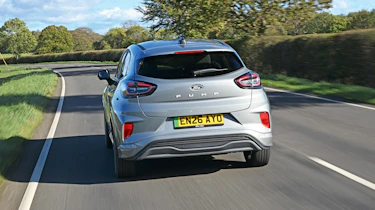
While BlueCruise offers innovative hands-free motorway driving (a message flashes on-screen to encourage you to use it wherever possible), it’s obvious that Ford has put plenty of effort into integrating the rest of the safety systems into the way the Puma Gen-E drives. As with the pricier BMW and Volvo, its lane keep assist had two levels of resistance, with mild steering vibration over dashed lines, but strong wheel resistance when approaching a solid line or the side of the road.
The driver’s display shows when the system is active, with two white lines on either side of the Puma graphic on-screen that glow brighter when the system is ‘live’. On twistier roads, the lines brighten and fade with the amount of steering lock you apply, and anything more than around five degrees off centre deactivates the system. This lets you cross the centre line without fear of the system trying to rein you in.
We experienced a few false readings from the speed limit warning. One showed 40mph in a 30mph zone, two other incidents produced a lower figure than the prevailing limit, while on another occasion the system was slow to react when the limit changed from 50mph to 30mph.
It also failed to recognise an advisory 20mph limit when driving through Banbury that other cars detected, although the system did pick up on the reinstated 30mph limit both times. When exceeding the limit, the Puma has an audible warning, although it has a fixed volume that means it’s drowned out by motorway road noise.
The Puma’s driver monitoring camera is positioned between the air vents on the dash, and we didn’t have any false activations during our test. But the driver drowsiness warning did fire up twice, and Liam explains why...
Liam’s expert view on the Puma
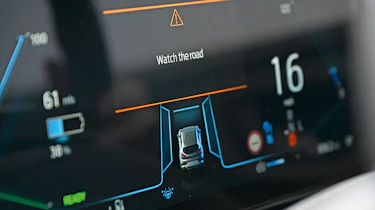
“We can forgive the Ford’s drowsiness warnings because the system measures driver inputs, which would have been triggered by Dean’s repeated changes in lane position and lack of indicators when trying out the lane departure warning systems. This can lead the system to classify the driver as drowsy or impaired.”
Tesla Model Y Long Range RWD
- Price: £49,180
- Selected ADAS: Traffic Aware Cruise Control (adjusts speed to conditions), Traffic Light detection and adjustment, Auto Steer and Auto Lane Change, Lane-Keep Assist above 40mph, Drowsiness warning above 40mph, Speed adjustment using nav data. Camera and map-based speed-limit assist with average speed zone regulation
- Driver monitoring: Single central camera, steering wheel sensors
- Optional upgrades: Enhanced Autopilot (£3,400), Tesla Assisted Driving (currently in Beta testing, £99 per month on a subscription)
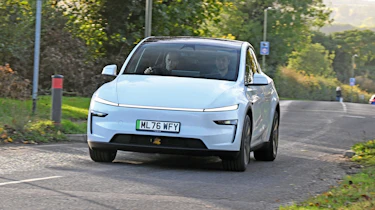
Full self-driving has been Tesla’s target for more than a decade, but while this is in Beta mode, the Model Y’s standard systems hold up well. Yet we didn’t have confidence that would be the case in the first 100 yards of our test.
Upon exiting Upper Heyford, the first part of the route took in a narrow country lane with no road markings, but this seemed to flummox the Model Y’s systems and it threw up an emergency lane intervention when it detected a non-existent white line. Tesla’s camera system offers a live feed to the main touchscreen that shows occupants a digital recreation of what the camera ‘sees’, and here it was misinterpreting a tarmac ridge. With no clear definition to the edge of the road, we can only assume the electronics thought we were halfway off the tarmac.
Apart from this one occasion, the Model Y behaved itself. It also has two levels of lane warning, with vibration on dotted lines and strong counter steering when nearing solid lines, while the rest of our driving along country lanes passed without incident.
The driver distraction system uses a camera that monitors the whole interior, but it didn’t activate at all on our test route. As with other systems, we tested this on track where it functioned as expected when we looked away from the windscreen for a prolonged period.
We counted three incorrect speed limit suggestions, one after a junction where a 60mph limit increased to 70mph (it eventually changed around 20 seconds later), as well as at two 20mph advisory signs. The Model Y has UK-specific software that means there are only visual warnings when the speed limit changes or if you overspeed, rather than warning beeps.
Liam’s expert view on the Model Y
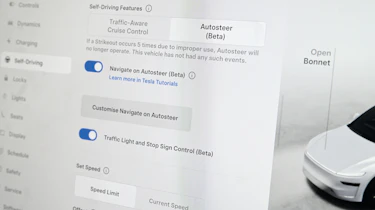
“There’s a paragraph in the electronic owner’s manual that says the UK uses a version of Intelligent Speed Assist that doesn’t provide audible warnings, just a greyed-out visual guide. I don’t know of any other brands that provide UK-specific ADAS software that’s different from the rest of the EU.”
Volkswagen T-Roc 1.5 TSI Style +Tech Pack
- Price: £39,795
- Selected ADAS: Standard Adaptive Cruise Control, Steering and Lane Control Assistant, Intelligent Speed Assist at speeds over 12mph. Driver Drowsiness via cumulative driving data. Driver Distraction warning above 12mph. Lane Assist at speeds over 40mph. Lane Departure Warning via audible alert or steering wheel vibration
- Driver monitoring: Single camera in rear-view mirror, steering wheel sensors
- Optional upgrades: Tech Pack is a £1,045 extra that includes predictive adaptive cruise control, steering and speed assist, undertaking prevention and lane-change assist over 42mph
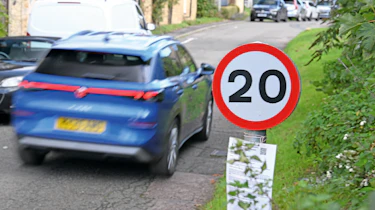
The T-Roc is one of a vast number of VW Group cars that use the same safety systems, but the set-up proved to be less sophisticated than some of its rivals’. The speed limit detection software delivered three false readings, including a rise from 30mph to the national limit, and falsely showing 20mph when it detected an advisory, rather than the actual speed limit. It wasn’t the only car to do this, and is not a deal-breaker.
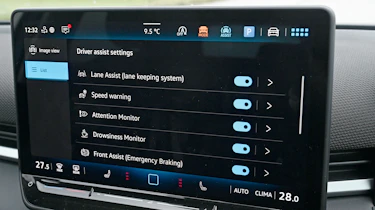
Strangely, the T-Roc allows you to adjust the threshold of the overspeed warning by up to 5mph, thus giving you respite from the warning beep if you stray slightly over. Given that excessive speed is often a factor in road accidents, this is a mixed message.
Lane assist proved to be a disappointment, with just one setting offered that delivered strong counter steering whether you were encroaching on dotted or solid white lines, while a warning activated when negotiating the twisty country road near our Upper Heyford base. Better was VW’s V2X system that shares data with other vehicles, alerting us to roadworks on our route.
The driver monitor system didn’t deliver any warnings on the road, but then it didn’t work properly on the test track either. The monitoring camera is located behind the rear-view mirror, but it appeared to struggle with my glasses.
The T-Roc’s system failed to acknowledge that I was looking away from the road when I had them on, and only functioned when I removed them and looked away.
Liam’s expert view on the T-Roc
“The VW wasn’t alone in misinterpreting the 20mph advisory limit on our test route, and it’s probably down to the car’s hardware. Most current ADAS cameras record in black and white, so can’t differentiate between an official speed limit with a red circle and an advisory limit such as this, which was circled in green. The latest, high-end ADAS cameras are in colour and able to spot the difference.”
Jaecoo 7 Hybrid Pure
- Price: £28,700
- Selected ADAS: Standard Adaptive Cruise Control for speeds above 9mph, with Curve Speed Control, Stop and Go, Overtake Assist above 43mph and Intelligent Avoidance. Intelligent Speed Control (to speed limits only, not road conditions). Lane Departure Prevention above 40mph
- Driver monitoring: Single camera on top of the steering column
- Optional upgrades: None
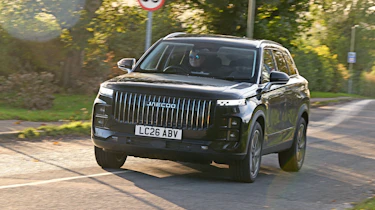
While the BMW and Volvo were uneventful drives, all hell broke loose in our two Chinese contenders. Both cars emitted more beeps and bongs than a pinball machine, with the slightest provocation sending their safety systems into overdrive.
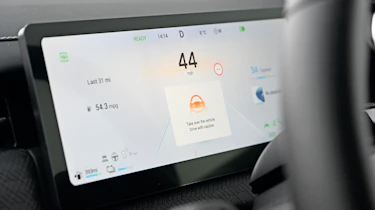
The Jaecoo 7 is a common sight on UK roads these days, but how long that lasts will likely depend on how patient owners are with its assorted safety alarms. Ironically, the biggest distraction was the distracted driving alarm. The 7 has a sensor mounted behind the steering wheel on top of the column, but while other cars needed a run on the test track to confirm the system was working, the Jaecoo didn’t, because it registered six occasions on the road route where it deemed I was looking away from what lay ahead.
These times included an extended glance in the door mirrors when pulling out to overtake on the M40, while there were other instances when I was looking at the touchscreen or to the side when approaching a junction. The fact the systems couldn’t account for my behaviour confirmed how well BMW has integrated its camera. Lane-keep assist reacted the same whether we crossed a solid or broken white line, and unlike the more sophisticated systems in the BMW or Ford that relaxed their sensitivity on country roads, the Jaecoo gave us two unwanted lane departure warnings while travelling in the countryside.
The speed limit information warning was largely accurate, only missing three changes, with one revision from 20mph to 60mph long after we had entered the new zone. The overspeed alert proved to be the loudest on test, which is sure to increase stress levels among Jaecoo 7 owners.
However, one quirk of the system revealed that while the speed limit warning in the digital driver’s display relayed information ‘seen’ by the camera, the main touchscreen appeared to use a different source to provide more consistent (and accurate) speed limits. That’s all well and good, but it’s the driver’s display that is easier to read, especially if you don’t want to draw the wrath of the model’s distracted driving alert.
In response to our test findings, a spokesperson for Jaecoo said: "Jaecoo takes the performance, quality and real-world usability of its Advanced Driver Assistance Systems (ADAS) seriously. We continue to refine these systems through regular software updates.
"The latest version debuts on the Jaecoo 7 Luxury+ and is expected to roll out free of charge across the Jaecoo 7 range from early 2027."
Liam’s expert view on the 7
“The Jaecoo 7 demonstrates the clear distinction between those cars that have been engineered to make their safety systems part of the driving experience, and those that have them fitted as a box-ticking exercise to meet legal requirements. The distracted driving alerts need to be less sensitive.”
Leapmotor B10 70kWh
- Price: £32,685
- Selected ADAS: Standard Adaptive Cruise Control with three distance options, Lane Centring Control at speeds from 19-93mph, Intelligent Speed Assist with driver confirmation, Lane Departure Warning and Lane-Keep Assist at speeds above 37mph
- Driver monitoring: Single camera on driver’s A-pillar
- Optional upgrades: None
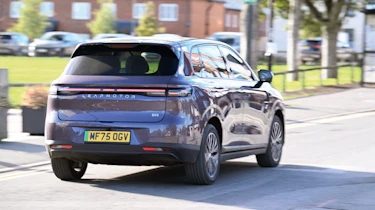
While the Jaecoo offered the poorest performance when it came to distracted driving alerts, the Leapmotor B10 didn’t activate once. It was only when we returned to Upper Heyford and ran along the runway that we saw the system working. The set-up relies on a sensor at the base of the driver’s A-pillar, and looking away activated the alert, which consisted of a barely audible warning and a nearly illegible small yellow diagram on the driver’s display’s pale background. For that reason, we couldn’t award the B10’s monitoring system any points.
The driver distraction system remained silent, but the speed limit and lane departure warnings made up for it. Starting with the speed limits, we experienced 11 incorrect activations on our route. There was no rhyme or reason to the changes, either, with one incident seeing the readout showing 40, 30 then 60mph in quick succession while negotiating a 30mph zone.
Another time, we entered a 30mph zone that the camera didn’t pick up on, and the car’s display fluctuated between 40mph and 60mph three times. As with the Jaecoo 7, the speed limit on the main touchscreen remained consistent at the correct 30mph during all of these events. When exceeding the limit, the B10 emitted a bong, but this was drowned out by road noise at higher speeds.
The lane departure system was also overzealous, with a total of 12 activations, all of which occurred on country lanes where the edge of the road wasn’t clearly defined. It appears that Leapmotor’s engineers simply fitted the system without thinking about calibrating it for different road conditions, while the lane departure warning consisted of a pulse through the steering wheel and a relatively quiet beep.
In response to our test results, a spokesperson for Leapmotor said: "At Leapmotor, we take customer and industry feedback very seriously, and we’re continually updating our products and technology at speed through over-the-air (OTA) updates. Based on customer and expert feedback, we recently released an OTA update for the Leapmotor B10, featuring more than 10 new technologies or updates to existing ones, with another one already in the works. We’re happy to work with Auto Express to review their findings more closely so that we can better address them for our customers."
Liam’s expert view on the B10
“The system details in the Leapmotor’s menu confirmed the navigation and ISA were working from different map databases. When using a smartphone, it’s not unusual for a navigation app to show a different limit to the ISA system because these are not easily integrated. But this is the first time I’ve seen an ISA system that’s not connected to the integrated satellite navigation.”
Verdict
It’s clear that you really do get what you pay for when it comes to safety kit. The Leapmotor’s systems were a tale of extremes; hyperactive with its lane alerts and erratic speed limit information, but subtle to the point of non-existent driver monitoring.
The Jaecoo’s driver overseer had no such qualms about telling us off for looking away from the road, which was frustrating. Lane assist struggled with our country B-roads, but the J7 missed the same number of speed limit changes as the Volkswagen and Tesla, albeit at different locations en route.
Tesla’s camera-only sensor suite was fine in most circumstances, save for the odd limit missed and one unwanted lane departure alarm. The bespoke UK-specific speed limit visual warning eliminates unwelcome beeps but is easier to overlook.
The Ford and VW almost vied for our final podium spot, but we’d argue that the Puma’s system felt better integrated than the T-Roc’s, with smoother interventions and no issues with our driver wearing glasses, either.
That leaves our two premium electric SUVs. If it wasn’t for one speed limit glitch on the dual carriageway, the Volvo EX60 would have scored 100 per cent like the BMW, but overall the iX3’s felt the better integrated set-up. It’s engineered to work in sync with the rest of the driving experience, which is what you would expect from the German firm. Rivals could take a leaf out of BMW’s book, because then we’d all have a calmer, beep-free experience that would make motoring mellower.
| Position | Vehicle | ISA Accuracy | Lane Assist Alerts | Driver Monitor Alerts | Total |
| 1st | BMW iX3 | 100% (7 pts) | 0 (7 pts) | 0 (7 pts) | 21 |
| 2nd | Volvo EX60 | 96% (6 pts) | 0 (7 pts) | 0 (7 pts) | 20 |
| 3rd | Ford Puma | 84% (2 pts) | 0 (7 pts) | 0 (7 pts) | 16 |
| 4th | Volkswagen T-Roc | 90% (5 pts) | 1 (4 pts) | 0 (6 pts) | 15 |
| 5th | Tesla Model Y | 90% (5 pts) | 1 (4 pts) | 1 (3 pts) | 12 |
| 6th | Jaecoo 7 | 90% (5 pts) | 2 (2 pts) | 6 (2 pts) | 9 |
| 7th | Leapmotor B10 | 73% (1 pt) | 12 (1 pt) | 0* (0 pts) | 2 |
More from our ADAS car safety special
- ADAS warning and safety tech tested (part 1)
- Hands-free self driving systems tested (part 2)
- Best and worst ADAS 2026/2027: megatest verdict
Don't miss the best of Auto Express on Google! Make us a preferred source. Click here...