Plug-in hybrid cars are essentially pointless and in 2025 it’s high time we all accepted that
Alex Ingram explains why he believes that PHEVs aren't all they're cracked up to be

I’m a big advocate of electric cars, especially if they’re small and energy efficient. I am also a petrolhead, so I hope that the cars enthusiasts love can continue to live on through more sustainable fuels.
But try as I might, whether I’m looking at them from a financial point of view or an environmental one, I can’t see the point of plug-in hybrids. Having driven almost all of the new options on sale today, I know that without religious battery charging, they just become overweight, thirsty internal combustion-enginged cars.
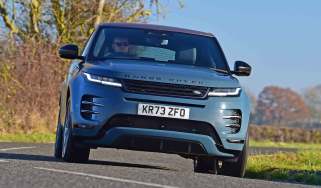
We’ve found this out first-hand on many occasions; an Alfa Romeo Tonale PHEV we ran on our long-term fleet averaged just 35.3mpg over the course of roughly 4,500 miles, and we struggled to get 30mpg out of a Range Rover Evoque PHEV once its battery energy depleted.

In-depth research suggests that many plug-in drivers don’t charge up their cars as often as they could, either. A study by the European Commission on real-world fuel consumption and emissions data covering 623,861 post-2021 petrol, diesel and hybrid vehicles showed that petrol PHEVs’ CO2 emissions were a staggering 238 per cent higher in everyday driving than the official WLTP data. Diesel PHEVs were even worse, at 312 per cent over.
While petrol and diesel cars also didn’t live up to their WLTP numbers, they came significantly closer, being on average 21.2 per cent less efficient than the claimed figures.
So not only are PHEVs creating more emissions than official figures state, but that also means that the customer is spending far more money on fuel if they forget to plug the car in regularly – or simply cover journeys that exceed the car’s electric range. The discrepancy in the numbers above is so bad that the European Commission intends to revise how PHEV emissions are assessed from 2025 onwards.
All of this shows that having a home charger is absolutely vital to get the most out of a PHEV. But if a home charger is readily available, then why not just get a fully electric car instead? And if home charging isn’t possible, then regular internal combustion-engined cars (and even mild and full hybrids) are much cheaper than PHEVs to buy up front, and it’s unlikely you’ll be able to recoup the difference in cost in fuel savings any time soon.
I also want to make it clear that I’m not bashing mild and full hybrids here; they use far smaller and lighter battery packs to achieve figures that aren’t far shy of PHEVs in the real world.

Of course there are one or two very special plug-in hybrid exceptions. The new Toyota Prius is stunningly efficient even when its battery charge has run its course, while the McLaren Artura Spider is a game-changing supercar. But even in the case of the latter, the Artura’s electrification enhances the car’s performance more than it tries to trim pennies from its fuel bills.
On the whole, I hope that those in power will soon see most PHEVs for the worst-of-both-worlds compromise that they are and remove any incentives as soon as possible. If they really saw sense, I’d like to see governments incentivise only small EVs and, to a lesser extent, compact petrol cars. But I fear that amount of common sense is wishful thinking.
Should PHEVs face the axe? Tell us your opinion in the comments section below...