Used Aston Martin DB7 (1994-2004) buyer’s guide: British icon is now less than £20k
A full used buyer's guide on the Aston Martin DB7 that was on sale in the UK between 1994 and 2004

Verdict
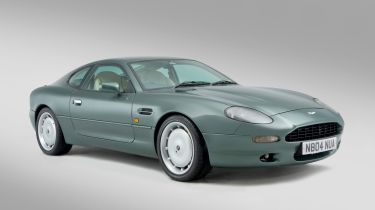
As you’ll have read, the Aston Martin DB7 isn’t the best driver’s car, it wasn’t made to the highest standards, and if you’re tall, you’ll struggle to get comfy – or even to fit in at all. Running costs can also be high if you buy a bad example, so overall the DB7 sounds like a lemon. But it looks glorious and it sounds even better if you buy a V12 edition –though the supercharged straight-six is rather alluring too. Then there’s the ability to despatch long-distance drives with ease, and the fact that it’s an Aston Martin. Sure, you have to buy with care (and we’d recommend investing in an inspection if you’re buying privately), but find a good DB7 and you’ll love it.
The DB7 is the car that saved Aston Martin, and it was also the first to be built by the company in significant numbers. When the model burst onto the scene in the mid-nineties, production from Aston’s Newport Pagnell factory had slowed to a trickle. The company was a basket case that needed massive investment, which new owner Ford could provide.
Designed by Ian Callum to replace the XJS, the DB7 was originally intended to be a Jaguar. But when the XK8 was chosen instead, Aston snaffled the DB7 design for itself. It was a great move because waiting lists quickly built, and over the next decade the DB7 became more desirable as convertible and V12 editions were introduced.
By the time production ended, 2,461 six-cylinder cars had been made along with 4,100 V12s, and now the DB7 makes a great modern classic buy – if you can find a cherished example.
History
The DB7 coupé made its debut at the 1993 Geneva Motor Show, with a 335bhp 3.2-litre supercharged straight-six engine, but the first cars weren’t delivered until 1994, initially with a manual gearbox only. After five months an automatic became available.
Used - available now

2024 Volkswagen
Tiguan
51,949 milesManualPetrol1.5L
Cash £14,268
2024 Volkswagen
ID.3
14,929 milesAutomaticElectric
Cash £17,997
2023 Hyundai
Kona Electric
39,890 milesAutomaticElectric
Cash £15,299
2026 Audi
A1 Sportback
22,502 milesAutomaticPetrol1.0L
Cash £21,499The DB7 Volante appeared in 1996, with an electrically operated roof, then in 1999 the V12-engined Vantage superseded the six-cylinder DB7 coupé and Volante.
The run-out GT and automatic GTA went on sale in 2002, as did the DB7 Zagato, but no cars were delivered until 2003. Just 99 DB7 Zagatos were produced. Then in 2003 the Zagato-bodied Vantage Volante was unveiled: the DB AR1. Again, just 99 were made, most for the US, except for eight European cars; all but one were left-hand drive. The last DB7s (10th anniversary models) were built in 2004.
Which one should I buy?
There are open or closed cars, six-cylinder (i6) or V12 models, and manuals or autos, in any combination. A six-cylinder DB7 is far cheaper to run than any V12, and these earlier cars are also a lot easier to work on at home, because they lack the complex diagnostics of the later models, yet they’re also plenty quick enough.
Even these come in two forms, with Series 1 DB7s featuring a purer interior design than the Series 2 from 1996; these had airbags, comfier seats, softer damping, plus stronger brakes and headlights.
Six-cylinder DB7s were better rustproofed than V12 models, which is why the later cars can suffer from corrosion in the rear wheelarches and chassis legs; earlier cars tend to survive better.
Prices
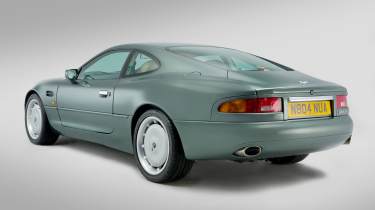
The cheapest DB7s are six-cylinder coupés. Good examples start at around £18k and the best ones fetch £30k, while Volantes carry a premium of around £2k, so good drop-top DB7s are worth £20-£32k. V12s cost £3k-£5k more than six-cylinder cars, making a Vantage coupé worth £22k-£35k, whereas a Vantage Volante fetches £25k-£40k.
The GTA is no quicker than a DB7 Vantage auto, but nice examples fetch up to 25 per cent more than an equivalent Vantage. The best examples command about £45k, while the most valuable is the manual-gearbox GT, which sells for £55k-£65k, and with just 84 made in right-hand drive, there’s not much chance of values falling significantly. There are cheaper cars than we’ve suggested, but buy one of these and it’ll probably cost you more in the long term.
Check the price of a used Aston Martin DB7 with our free car valuation tool...
On the road
The DB7 is a brilliant long-distance companion; in fact it’s much more of a GT than a sports car. The 420bhp V12 is significantly quicker than the 335bhp i6, but both are best on fast stretches, given that twisty roads aren’t the DB7’s forte.
That’s because the steering is heavy (albeit precise), and the automatic transmission is slow, which is one reason why manual-gearbox cars are so sought after. However, thanks to its strong brakes and a ride that’s far more comfortable than you might expect, the DB7 is an enjoyable car to drive, even though it isn’t scalpel-sharp dynamically.
Alternatives to the Aston Martin DB7
The Jaguar XK8 (1996-2006) is something of a performance car bargain, and its replacement, the aluminium-bodied XK (2006-2013), is even better. There were supercharged (XKR) and naturally aspirated (XK8, XK) versions.
The Porsche 911 has been a performance car standard for more than 60 years; the last of the air-cooled (993) and first of the water-cooled (996) generations overlapped with the DB7, with the former much more valuable than the latter. The Mercedes SL (R129) is a superb GT with six, eight or 12-cylinder engines, while the BMW 8 Series is an appreciating classic. The Ferrari 456 is epic, but running costs can be very high.
What to look for
Spot the rot
Scrutinise the jacking points, radius arm mountings and front bulkhead on any potential buy. Meanwhile, the scuttle and air-con drain tubes can block, leading to the double-skinned bulkhead rotting from inside.
Touch of glass
Inspect the car’s history and see if it’s had a new windscreen. If so, the plastic scuttle trim may have been incorrectly refitted. It often is, leading to water getting into the cabin and the floorpans rotting.
Raise the roof
Problems can arise with the Volante’s roof. The hood’s iron bolts in the rear quarters have rubber covers to protect the fabric, but these can come adrift, allowing the frame to wear holes in the roof.
Not cool
V12 engines use OAT (Organic Acid Technology) anti-freeze and nothing else; if the system is topped up with standard fluid, the two react and turn to jelly, wreaking havoc in the process.
Interior
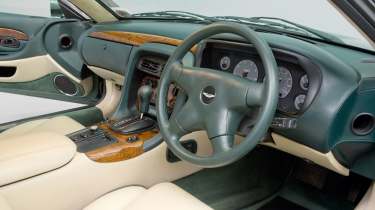
If you’re tall, you might struggle to fit, but it looks great even if some parts don’t wear well, and the Ford switches can grate. Ergonomically there’s room for improvement...
Practicality
The rear seats are suitable only for small kids; there’s zero legroom if a tall driver is in the front. The boot can stow from 150 (Volante) to 170 (coupé) litres.
Living with an Aston Martin DB7
The DB7’s build quality was initially poor and while things did improve, even late cars are far from bullet-proof. The problem is that many parts (including plenty of body panels) are no longer available, and lots of the bits that you can source are very expensive.
An air-con compressor is £2,800 for example, while a windscreen costs upwards of £1,800. Most owners love their DB7s, but the difficulty of sourcing parts and their high cost can spoil the experience, which is why it’s so important to find a car that’s had money lavished on it and which doesn’t need any immediate expenditure.
Running costs
Running a DB7 doesn’t have to be costly; expect to spend at least £2,000 per year, with i6 running costs significantly lower than for the V12.
The official service interval is every 7,500 miles or six months, but an annual service is usually sufficient. The key ones to watch out for are the 30,000-mile service for six-cylinder models and the 45,000-mile one for the V12, which are expensive. Road tax for pre-March 2001 DB7s is £375 per year; later ones cost £445.
Don't miss out! See more of Auto Express in your Google Top Stories. Click here...