Used Volkswagen Corrado (1989-1995) buyer’s guide: an overlooked gem
A full used buyer's guide on the Volkswagen Corrado that was on sale between 1989 and 1995

Verdict
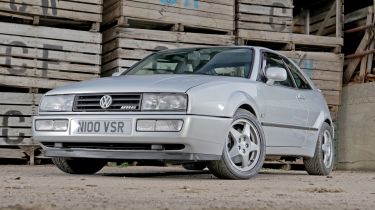
Collectors fawn all over the VW Golf Mk2, but for some reason the Volkswagen Corrado is one of those overlooked gems, and we can’t understand why. Sure, this Golf-based coupé isn’t massively thrilling in any way, but it’s easy to drive quickly, is comfortable, practical and it still has real presence on the road. The Corrado is also a very affordable modern classic that’s a breeze to own, thanks to the ready availability of parts, a mass of marque specialists across the country, and you can do plenty of maintenance on a DIY basis, too. There are enough good cars to go round at the moment, but that might change once word gets out, so we’d suggest you buy a belter soon, to beat the rush.
Coupes were big news in the seventies and eighties, but by the nineties the segment was shrinking fast, as car makers opted for hot hatches instead. Luckily for enthusiasts, Volkswagen did both, by selling the Golf GTI, the Scirocco and Corrado. The last two used the Golf’s floorpan and mechanicals, so they cut a dash with most of the benefits of a family hatchback.
While the world remembers the Scirocco, it has largely forgotten the Corrado, which is rather unfair because it’s a car with a broad range of talents, as you would expect of a Volkswagen.
History
The Corrado made its debut in May 1989, with a 134bhp 1.8-litre 16-valve engine. Two years later the 160bhp Corrado G60 arrived, with a supercharged 1.8-litre eight-valve engine.
Used - available now

2015 Mercedes
GLA
64,307 milesAutomaticDiesel2.1L
Cash £8,900
2015 Renault
Grand Scenic
139,735 milesManualDiesel1.6L
Cash £1,995
2021 Skoda
Octavia
51,925 milesManualPetrol1.0L
Cash £10,600
2024 Citroen
e-Berlingo
57,511 milesAutomaticElectric
Cash £11,270In March 1992 the 1.8-litre engine was replaced by a 136bhp 2.0-litre, with a catalytic converter and anti-lock brakes becoming standard. The front track was widened, along with the wheelarches, to accommodate improved Golf Mk3-derived suspension. In September 1992 the 190bhp Corrado VR6 replaced the G60, and this new engine brought an automatic gearbox option. Within a month there was a revised dash layout and new switchgear.
A new entry-level eight-valve Corrado 2.0 arrived in April 1994, with 115bhp and an auto gearbox option. Time was called in May 1995 when the run-out Corrado VR6 Storm went on sale, with heated front seats, 15-inch alloys, Sony CD player, leather trim and
a choice of Mystic Blue or Classic Green paint. Just 505 were made.
On the road
The eight-valve Corrado 2.0 offers underwhelming performance, but any of the other engines feel decently perky, with the VR6 positively frisky. An added bonus with the six-cylinder engine is a much fruitier soundtrack than the four-cylinder units can provide.
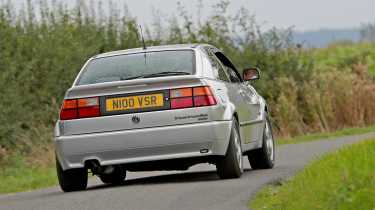
The Corrado is based on the Golf Mk2 floorpan, so it’s fairly safe rather than truly exciting, but the car’s driving position is excellent, the engines are free-revving, its brakes are strong and the ride quality is good. And while the handling is on the safe side, it’s
a lot better than you might think, making B-road blasts quite fun.
Which one should I buy?
You need to buy the best car you can find; don’t worry too much about the spec – they’re all good, apart from the 115bhp 2.0-litre edition, which feels lacklustre to drive. It still handles well and is also the most affordable edition, so if you’re on a budget but crave a Corrado, it could be the ideal route.
Naturally aspirated four-cylinder Corrados with a catalytic converter aren’t as frisky as earlier models, while the G60 is more flexible than the regular 1.8, but not much faster. That leaves the VR6 version, which is the one to have because its extra power allows the Volkswagen’s brilliant chassis to really shine.
It’s the limited-edition Storm that Corrado collectors really want, though, and these fetch a premium over a regular VR6. But the changes are only cosmetic, so there’s not much point buying a Storm for regular use, unless you want the extra luxury and don’t mind paying a disproportionately large sum extra for it.
Prices
Low-mileage Corrados are unusual, and most buyers want originality, although aftermarket exhausts are common because originals haven’t been available for years. You can buy a high-mileage and scruffy project with potential for £3,000 or so, but these are rare.
You’re better off buying a Corrado that’s up and running, and prices for these start at £5,000 for something that’s done more than 150,000 miles. The 1.8 and 2.0-litre Corrados are priced according to condition rather than spec; okay cars cost from £6,000, while a good G60 is at least £8,000. A worthwhile VR6 will cost from £9,000, while the best G60s can run to £16,000; an equivalent VR6 can fetch up to £20,000 if superb and with low miles.
A mint Corrado Storm can fetch up to £25k, but very few examples command this sort of money.
Check the price of a Volkswagen Corrado with our free car valuation tool...
Alternatives to the Volkswagen Corrado
Most of the Corrado’s rivals hailed from Japan. None have survived in big numbers, but the easiest to find now is the Toyota Celica in Mk5 and Mk6 forms (1989-1993 then 1993-1999).
Nissan’s 200SX is also relatively easy to find, but many have been heavily modified for track use. The production dates of the fourth and fifth-generation 200SXs match those of the Celica.
The Corrado was initially up against the Mazda RX-7 Mk2 (1985-1992), but the Mk3 arrived in 1992 and lasted until 2002. The Honda Prelude Mk4 (1991-1996) is a rarity, as is the Ford Probe (1992-1997), but the Vauxhall Calibra (1990-1998) is a bit more plentiful.
What to look for
Bodywork
All of the panelwork was galvanised, so corrosion shouldn’t be an issue, but check the sills, wheelarches and front valance all the same. If a sunroof is fitted, ensure the mechanism works, because these can fail.
Engines
The engines are strong, but after 100,000 miles or so the timing chain on the VR6 might need to be replaced. Most owners opt to have a new clutch fitted at the same time, meaning a bill of around £1,200.
All the gears
All Corrados have the same 02A gearbox, which is very durable, but officially sealed for life. The occasional oil change will do wonders for the transmission’s durability, as well as the quality of the gearchange.
Keep in trim
The Corrado’s interior trim wears well, but if anything is worn or damaged you’ll probably struggle to find replacement parts in good condition, except maybe on a used basis.
Practicality
There is enough space for four adults to fit into the Corrado, with reasonable space in the back seats. Boot capacity is 300 litres
Interior
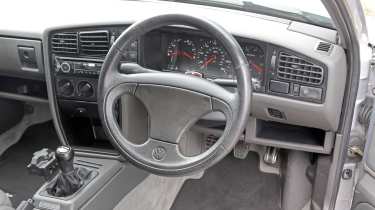
It seems basic now, but that’s a good thing because everything is controlled by a switch and it’s all logically laid out. The build quality is good, but a bit plasticky; cars with leather trim look more premium. Practicality is good, with reasonable rear-seat space for two adults and a large boot, while the rear seats fold down to boost usability.
Living with one
These are tough cars that last if they’re looked after. But if you buy a project or any Corrado which needs replacement parts, be prepared to search for anything that’s Corrado-specific, such as panels or interior trim. All of the running gear was shared with the Golf, and some of it with other VWs too, so it’s all readily available.
Some electrical parts are also scarce, such as headlight switches (which fail), while the ventilation controls can break and the pop-up rear spoiler can seize, but lubrication normally fixes things.
The headlights aren’t great, but an upgraded wiring loom gets rid of the voltage drop of the original. Fit one of these with some Osram Nightbreaker 150 H4 bulbs and night-time visibility will be dramatically improved.
Running costs
There's nothing too costly about running a Corrado if you buy a good example. They all cost £360 per year for VED (road tax), and because most people insure their Corrado on a classic-car policy, annual cover tends to be very low. That’s despite the fact that using the old 20-group insurance system, the VW sat in groups 16-18.
Fuel economy isn’t a strong point though; the best you’ll see is about 32mpg from the four-cylinder engines, while the VR6 is officially rated at 26mpg. Maintenance shouldn’t break the bank. The official schedule is every 12 months or 10,000 miles, while all four-cylinder engines have a cambelt that needs to be replaced every five years or 40,000 miles, for which you can expect to pay around £400. Most Corrado owners use a VW specialist and pay £200-£300 per year for routine servicing.
Did you know you can sell your car through Auto Express? We’ll help you get a great price and find a great deal on a new car, too.