Toyota Prius Plug-in vs Vauxhall Ampera
Does the new plug-in electric technology make the Prius efficient enough to rival the Ampera?

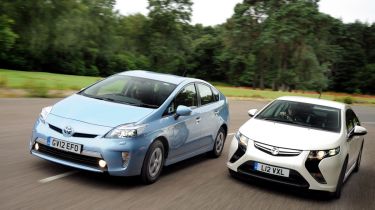
Toyota is the undisputed king of hybrids, with its petrol-electric Prius proving a huge sales hit. But until now, the brand has stuck with using proven nickel-metal hydride battery technology, and hasn’t yet produced a purely electric model. However, it has been forced to respond to the serious challenge set by the arrival of a new breed of range-extending electric vehicles – like the Vauxhall Ampera.
These cars manage better economy and emissions than any of the current Prius line-up. And with the lowest possible Benefit-in-Kind tax rate of five per cent, the Ampera will be a tempting company car choice.
The new Prius Plug-in counters this with efficient lithium-ion batteries and mains electricity for the first time, to increase the all-electric range from 1.2 miles to around 15.5 miles. This means short journeys can now be made emissions-free, but the tech has also pushed up the asking price. So is this Prius a genuine challenger to the Ampera?
Verdict
Toyota claims that, after an extensive trial period, it found most city journeys are less than 12 miles long. Yet even driving that short distance in these two cars is enough to convince you which one is better.
Although the Prius Plug-in is over £2,000 cheaper than the entry-level Ampera, and has a more practical interior, overall it trails in this test. It just doesn’t do enough to justify the premium over the normal Prius.
The extended electric range offered by the new battery technology means it’s smoother and more efficient in town, but once the petrol engine hums into life, the Plug-in drives like any other Prius. While the Ampera can be driven like an EV at all times – with strong, near-silent, virtually instant performance – when the Toyota’s battery runs flat it feels just like a normal Prius, which means it lacks the refinement and comfort you expect in a car costing nearly £28,000.
Toyota sees this kind of hybrid as a stop-gap until battery range improves, but by choosing to sit in the middle, the Plug-in offers many of the drawbacks of a range-extender with little – if any – of the benefits. On that basis it finishes a distant second here.
Company car buyers who do high mileages will be better off in a diesel, but for urban commuters who occasionally stray further afield, the Vauxhall is a compelling alternative and claims a deserved win.