What is an Atkinson cycle engine? Pros, cons and how it works
All you need to know about Atkinson cycle engines and why you might want a car that uses one

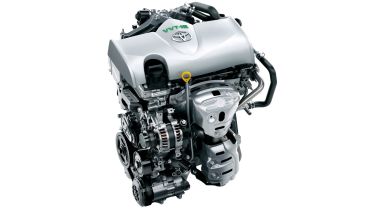
You might have heard of an Atkinson cycle engine, or even own a car with one fitted - after all, plenty of car models have them. The Atkinson cycle engine is nothing new, as the man it’s named after, James Atkinson, died in 1914. His name lives on, however, attached to this more efficient engine design. Read on to find out everything you need to know, explained in easy-to-understand language with no technical jargon.
How an Atkinson cycle engine works
Let’s quickly go over how a normal engine works, with what’s called the Otto cycle. This is the name for the most common combustion cycle that engines use, and by ‘combustion cycle’ we mean the sequence of events that turn fuel into motion.

There are four stages to the combustion cycle, often called suck, squeeze, bang and blow - in that order. Each engine cylinder sucks in air and fuel through a valve, squeezes it together, ignites it with a spark (which pushes the cylinder down to create power and motion), and then blows the exhaust gas out of another valve. Then the combustion cycle all starts again and happens thousands of times per minute.
The key difference with an Atkinson cycle engine key occurs when the engine is squeezing the fuel and air together. In a normal engine the valve that lets the mixture into the cylinder is fully closed when this happens, but in an Atkinson cycle engine the valve stays open for a bit longer. It means the cylinder has less resistance (lower pressure), so it completes the stroke more easily - saving fuel in the process.
Because the valve stays open longer, some of the fuel-air mix is pushed back up through the valve, but since it will enter the engine again on the next stroke, it’s not wasted. James Atkinson’s engines in the early 20th Century used complicated mechanical parts to achieve this, but modern engines use electronics and hydraulic valves instead.
What are the drawbacks of an Atkinson cycle engine?
The main reason why all cars don’t use this fuel-saving technology is that it causes a reduction in power. The loss of power is significant enough that driving a car with an engine like this on the road would be unpleasant, as it would feel very lacking when you tried to accelerate from a stop or up a hill, compared to a conventional Otto cycle engine.
If your car has an engine with the Atkinson cycle system, it’s likely to be a hybrid car. This is because the electric motor in a hybrid fills in the weak spot in the car’s power delivery. While the electric motor is powerful for low-speed driving but not as efficient for cruising, Atkinson cycle engines are less good at strong acceleration but great at a constant speed for saving fuel. It’s a great match.
Toyota and Lexus hybrids have become heavily associated with Atkinson cycle engines and they are very economical while still being good to drive. The first car to use the cycle with the modern electronic method was the Toyota Prius from 1997.
It’s not just hybrids that can use the Atkinson cycle, though. Some modern engines are actually able to adapt on the fly, using the Otto cycle for normal driving and switching to the Atkinson cycle using software and electronics when the car is cruising. This is a way of getting the best of both worlds without the need for hybrid assistance.
Subscribe to the UK's favourite car magazine: get Auto Express delivered every week...