Pothole damage claims: How to report a pothole and claim for repairs to your car
Need to report a pothole or make a claim for pothole damage? Our handy guide explains the process
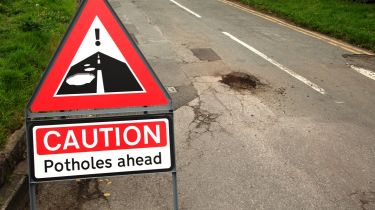
Potholes have been the bane of UK drivers’ lives for generations, and we regret to inform you that the problem doesn’t appear to be going away any time soon. While most potholes will simply cause an unpleasant jolt to ruin your otherwise smooth journey, the more severe ones can potentially damage your car. If this happens to you, you might be able to make a pothole damage claim and get some cash to cover repairs.
Just like claiming on your car insurance, though, the pothole damage claims process requires a number of steps and plenty of evidence to back up your case. No need to fret, though, as we’re here to explain what you need to do.
How to claim for pothole damage
If you’re looking to make a claim for pothole damage compensation, we’ve outlined the process in five simple steps below.
1. Take notes and photographs at the scene
When it’s safe to do so, pull over and make a note of the exact location of the pothole which has caused damage to your car. Record the size, depth and shape, as well as the contact details of any witnesses. Quickly taking these pictures can be a huge help towards supporting your claim later down the line. However, trespassing on motorways is a criminal offence, so this may not be possible.
2. Repair the damage to your car
If you need immediate roadside repairs then you can’t do much else but follow the advice of your breakdown service or the technician that you’ve called out. If the repairs can wait, it’s worthwhile getting several quotes from different workshops so you can demonstrate as part of any subsequent claim that you’ve acted to achieve the best price. Keep any receipts, invoices or advisory notes as part of the evidence for your claim.
3. Report the pothole
It’s also important to do your bit by helping to make sure that fellow motorists don’t find themselves in the same unfortunate situation. You can do this by alerting either the local council or the Highways Agency about the pothole, depending on the size and location of the road.
4. Submit your claim
Write a letter to your local council, or fill out the claim form that many now provide, outlining the incident where damage was caused, the extent of the damage, and that you hold the council liable. Be sure to include all photographic evidence, advisory notes and receipts. The council should respond within a couple of weeks, most likely with a Section 58 defence (more on that below), but there’s a small chance that they’ll admit liability straight away.
5. Decide whether to pursue your claim
If your claim is rejected, you may need to do some investigating to determine whether the council has indeed fulfilled its statutory Section 58 obligations. You are entitled to ask relevant questions about the scheduling and quality of inspections and repairs on the road in question. You must subsequently determine whether you have a realistic case for pursuing your pothole claim.
If you decide to go ahead, write again to the council and outline your grounds for argument. It may be that the council agrees to pay up on receipt of your evidence, but if they don’t, you are then faced with the choice of court action. A small claims court action is very cheap and easy via GOV.UK’s web-based system, but whether it’s worth pursuing or not will depend on the cost of the repairs, the amount of time you can afford to spend, and the level of your moral outrage.
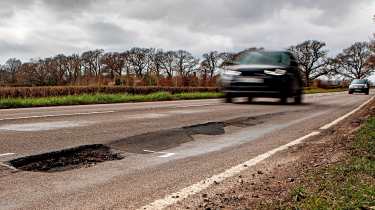
How can I report a pothole?
Reporting a pothole in the UK isn’t as straightforward as you might think as there isn’t a singular website, contact number or point of contact for the entire country. To begin with, you will need to work out whether to contact the local authority or the relevant highways agency:
- England: If the pothole is on a major highway, such as the motorway or A-road in England, you will need to contact Highways England. This can be done 0300 123 5000 or by emailing info@highwaysengland.co.uk.
- Scotland: For potholes on a major highway or A-road, call Traffic Scotland on 0800 028 1414 or report via the MyGov.Scot website.
- Wales: If a pothole is on a major highway or A-road, contact Traffic Wales on 0300 123 1213 or by emailing contact@traffic-wales.com
- Northern Ireland: You will need to contact the Department for Infrastructure on 028 9054 0540 or by emailing info@infrastructure-ni.gov.uk.
For any other road, or if you need further information, you need to contact the relevant local council. All information on which councils control which areas can be found via the GOV.UK website.
Will my pothole damage claim be successful?
A freedom of information request in 2023 found that councils had been refusing to pay-up for pothole damage, and paid out less than £1 million in compensation in 2022. Some councils have even attempted to skirt the pothole problem by increasing the minimum ‘official depth’ of a qualifying pothole from 40mm to 60mm in an attempt to defer essential pothole repairs until the problems worsen.
As we’ve already indicated, local authorities typically refuse all claims as a first step, quoting Section 58 of the Highways Act 1980. Section 58 offers a ‘catch all’ defence, and means the council is saying it took all reasonable steps to maintain the road, and that potholes were dealt with in a timely manner. Unfortunately council officers use Section 58 routinely in rejecting claims, even when they know this isn’t true. They do so on legal advice, as lawyers know most pothole damage claimants will give up at the first hurdle.
From then on, it’s down to you to do the detective work to determine whether the council has indeed carried out its inspections and maintenance to the required standard – which generally means in accordance with the Well-Maintained Highways Code of Practice.
This may be time-consuming and difficult, as you’ll probably need to use Freedom of Information requests to determine whether the council has failed in its statutory obligations.
What kind of damage can be caused by potholes?
Potholes and poorly maintained roads can cause significant damage to your vehicle. Depending upon the pothole size, there are four main component groups that are likely to be damaged – suspension, wheels, tyres and steering.
Damage can range from wheel alignment issues, buckled and cracked alloy wheels and broken ball joints, to damaged struts or shock absorbers. Any damage inflicted to these components can affect the car’s handling, it may make the car pull to one side or cause vibration within the cabin or through the steering wheel - as well as knocking or banging noises.
Some damage may not be immediately noticeable. Damage to tyres can be instantly apparent, such as punctures or cuts that can lead to deflation which would need attention on the side of the road. Bulges and cracks in tyres may not be seen straight away but these can weaken the structure of the tyre, increasing the likelihood of a dangerous tyre blowout.
This could have serious consequences for you or other road users, so performing a regular tyre safety check is important to keep you safe and your vehicle roadworthy. Certainly, if you hit a pothole hard but notice no obvious change to the feel of the car, make sure you do a careful visual check of the wheels and tyres when you reach your destination.
Buy a car with Auto Express. Our nationwide dealer network has some fantastic cars on offer right now with new, used and leasing deals to choose from...