I’d never buy a car without checking its engine, and neither should you
News editor, Jordan Katsianis says the devil is in the detail when you pick an engine in your new car.

You walk into a dealership and see the car you’ve been looking at online in the showroom, paintwork gleaming, new-car smell thick in the air. You want it, so you take a test drive. It’s brilliant and once you’re back inside, the sales reps give you a price for a model just like the one you’ve been driving. It seems a good deal.
But before you sign, take a moment to go over the specifications of what you’ve been offered. It’s now that you need to establish precisely what engine is in the car they’re tempting you with, because it could completely change the cost of ownership.
While most people might see this as a vital step in the car buying process, there are plenty of others who don’t really care about the technical details of an engine.

It’s easy to see why. Most modern engines can seem to be roughly the same size and technical layout. Turbocharging is the new measure of performance, and the metrics that once defined whether a car was fast or slow are now essentially irrelevant.
More than ever, though, different engines result in totally different running costs, especially if you’re looking at a pure ICE car without the benefit of any fuel-saving hybrid technology.
A good example of this is the Audi Q3. Thanks to the company’s confusing naming strategy, it can be very difficult to notice any great difference between the 150 TFSI and 204 TFSI quattro options. Both use turbocharged four-cylinder petrol engines and neither is seen as a performance ‘flagship’, so they sit in the middle of the Q3 range. Models with these powertrains also look the same, and for the most part even drive pretty much identically.
However, while you won’t always spot the difference in power (roughly 50bhp), you will notice the variation in fuel economy. Choosing the more powerful 204 TFSI unit turns a decent 43mpg into 34mpg, which is pretty terrible for a car the size of a Q3 and will make a noticeable difference to your fuel bills. This isn’t just the case for Audis, of course, but all petrol-powered cars that offer various powertrains in a single model.
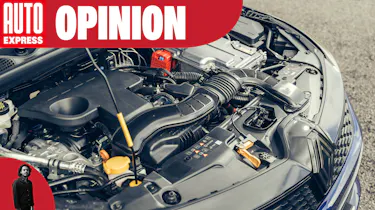
While you’re at the sales desk, there’s also a chance that for the sake of ease or availability, your sales rep will offer you a slightly different variant to the one you’ve just driven. This is not necessarily a problem, but before you sign on any dotted line, take an extra moment to consider exactly what engine is under the bonnet. Failure to do so could see you landed with a gas guzzler that will cost you big-time in the long run.
Get the latest and best car news and reviews, first! Follow Auto Express on Google today