Zip-merging is fairer, faster and recommended by all the experts. So why do UK drivers refuse to do it?
Steve Walker is completely flummoxed as to why UK drivers can’t get their heads around this simple principle.

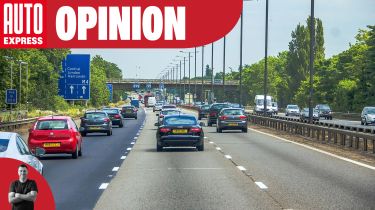
When two lanes of traffic are reduced to one, there is virtually complete agreement over what drivers should do. All the experts and analysts who study these things recommend what is known as zip-merging.
Zip-merging is a simple process. You drive up to the point where vehicles in the lane that is ending have to move across into the lane that is continuing ahead. Drivers in the continuing lane then make space for those in the ending lane to move across in an alternating pattern. Because it looks like the teeth of a zipper coming together, it’s known as zip-merging.
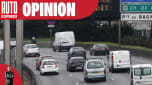
What actually happens when two lanes merge – whether the cause is a fixed road layout, temporary roadworks or even an accident – is usually a complete mess. Drivers tend to revert to two main types: Driver type one sees the road markings or signs indicating that the lanes merge at some point ahead. Out of caution or the irresistible urge to join an orderly queue that rests in the heart of every British citizen, they start to get twitchy. The signs might be saying that the lanes combine a mile or more in the distance, but they instinctively start to drift over early into the lane that is carrying on. If traffic is heavy enough, this creates a line of slow-moving or stationary cars.
The motivations of driver type two are less clear. They may be zip-merging enthusiasts who have heeded the pleas from motoring organisations over the decades and are intent on doing what’s right. They may simply see two lanes, one clogged with traffic and one flowing freely, and choose to drive down the latter.
The premise of zip-merging is a simple one: you use all of the available road space. That’s it. Filling one lane with a queue of stationary cars and leaving one empty is inefficient. It’s much quicker for everyone to have a shorter queue using both lanes with an orderly zip-merge filtering the two lanes together at the point where one of them closes.
Not only does the formation of the queue in lane one delay drivers unnecessarily, it causes all manner of unnecessary strife. We’ve all seen and felt it. Lane one is full of ‘type one’ drivers who have decided to queue, but they’re getting increasingly agitated by ‘type two’ drivers tearing up the empty lane next to them and, in their eyes, committing the cardinal sin of ‘jumping the queue’.
There will also be type two drivers stuck in the queue lane who would actually quite like to get out and jump the pointless queue themselves. Depending on how freely the traffic is moving in the other lane, this can be a risky manoeuvre as they try to pull out into small gaps in traffic that’s moving much faster than they are.
You also have waverers in the freely moving lane who are having second thoughts. They’re getting pangs of guilt about queue jumping, so rather than continuing to the end of the lane for a nice zip-merge, they decide to try and pull in early. The indicator goes on and if there’s no gap forthcoming, they roll to a halt. Now the lane without a queue has got one, too.
Finally, in what I think is a newer trend, you have ‘type one’ drivers who take the self-righteousness to a new level and actually try to straddle both lanes. Their thinking, presumably, is that they can sit in the queue while simultaneously blocking the other lane and preventing the scourge of queue jumping. You couldn’t make it up.
This is just how we do it in the UK. Everyone gets to where they need to go a little bit more slowly and gets irate with everyone else in the process. It could be so much simpler and I've seen zip-merging doctrine followed religiously in other countries (predominantly Germany, as you would probably have guessed), but it seems to be an incredibly tough message to get across.
As another bank holiday weekend approaches and UK motorists look down the barrel of the usual chaos on the roads, there’s no doubt that more widespread adoption of zip-merging would help. It would be good to see more signage explicitly telling drivers the recommended course of action and better information from motoring organisations. This rant is my tiny contribution.
There might be different types of driver, but there’s one common aim for everyone on the roads – to get where they are going. With a bit of thought and zip-merging, we can all do it a little more easily.
Did you know you can sell your car through Auto Express? We’ll help you get a great price and find a great deal on a new car, too.