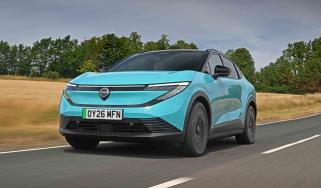
The Nissan Leaf redefined mobility. To save itself, the brand must be daring again
Andy Palmer, former Nissan COO, explains why Nissan's latest EV is a crucial one


In 2010, Nissan stunned the automotive world with the launch of the Leaf, the first mass-market electric vehicle. At a time when other major automakers hesitated, hedged, or outright dismissed electric vehicles as niche curiosities, Nissan took the bold step of positioning itself as the industry’s electric pioneer.
When I began leading the team that eventually delivered the Leaf, I remember an industry rival telling me I was better off throwing the four billion dollars required to deliver it, into the Pacific.
Today, however, despite its visionary past, Nissan finds itself playing catch-up, overtaken by rivals who capitalised better on the electric shift the company itself initiated.
To understand Nissan’s current predicament, one must first recognise its pioneering efforts. The Leaf was Nissan’s answer to the Toyota Prius hybrid that was performing strongly. Did Nissan seek to go toe-to-toe with a hybrid itself, or go the full hog with fully electric? Carlos Ghosn, CEO at the time, backed the bolder EV plan.
As Chief Planning Officer and then Chief Operating Officer during this critical period, I was immersed in the ambition and the internal excitement generated by our commitment to electric mobility. The Leaf quickly became the best-selling EV globally, illustrating Nissan’s ability to lead innovation convincingly. It had done similarly bold innovation with the Qashqai, Juke and GT-R.
Yet, pioneering a market carries significant risks, and for Nissan, two challenges stood out. Firstly, Nissan misread the pace of battery technology advancements. The Leaf was groundbreaking, but the early bet on a 24kW air-cooled battery quickly became a limitation, restricting range improvements compared to competitors like Tesla. Nissan also failed to quickly embrace more adaptable battery technologies (such as NMC and LFP chemistries).
This was symptomatic of the coup d’etat by ‘the accountants’, the short term thinkers that Ghosn came to rely upon to meet his corporate plans from mid 2014. The average life cycle of the product portfolio doubled as investments were cancelled. The electric Infiniti, portfolio expansion and Leaf replacement were cancelled or delayed along with replacements for the iconic Z and GT-R. Ghosn conceded to the internal EV doubters and he squandered Nissan's clear leadership position.
Secondly, and now famously, the arrest and internment of Ghosn in Japan for alleged salary irregularities; the consequential break-up of the Renault-Nissan Alliance and the lack of leadership bench-strength under Ghosn’s rein, all acted as a distraction to producing and selling great cars.
Today, Nissan is grappling with the consequences of that lost momentum. Nissan’s new CEO, Ivan Espinosa, has the hardest job in the industry as he grapples with a lack of hybrids for the US and EVs for Europe and China. The brand struggles to compete effectively with newer, more dynamic rivals who have since refined EV technology and created vehicles with superior range and desirability. The challenge now is not just technological, it's reputational and strategic.
So, how does Nissan regain its footing?
Firstly, learn from its own history. Nissan must return aggressively to the innovation that defined it. This means investing deeply in next-generation products and battery technologies. Buried in Atsugi, Nissan has some of the most talented engineers, scientists and product planners in our industry; but they need to be re-empowered.
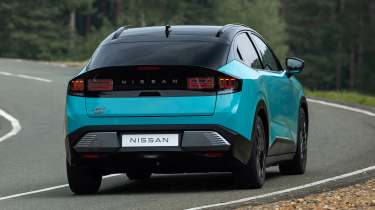
This strategic pivot requires courage and clear, decisive investment decisions, alongside strategic partnerships with key players in this space. Incremental changes or cautious spending won't suffice, Nissan needs bold leadership to seize back the initiative and that means expelling the accountants from the Product Decision Meetings and reclaiming the mantra of “Innovation that Excites”.
Secondly, Nissan must decisively reassert its brand identity around electrification. The Leaf legacy provides an authentic narrative foundation. Nissan should leverage this history, transparently acknowledging past missteps while clearly communicating an aggressive strategy for future leadership in EVs. Credibility comes not from perfection, but from honesty and direction.
Lastly, Nissan must reinvigorate internal culture, empowering its global talent to innovate without excessive bureaucratic restraint. During the launch of the Leaf, Nissan's success was driven by a bold vision coupled with empowered teams. Restoring that spirit of confidence, creativity, and calculated risk-taking is essential.
Have no doubt that the automotive industry is in a profound transition. Electrification is not merely an option, it's a commercial necessity. Adapt or die.
Nissan has the foundational advantage needed to lead again, but only if it moves swiftly and decisively. Reclaiming leadership in electric vehicles is possible, but not easy.
Nissan was once bold and thoughtful and dared to redefine mobility with the Leaf. Now, it must dare again to save itself.
Want to bag the outgoing Nissan Leaf before it's too late? Take a look at our latest Nissan Leaf deals...