Is the local garage doomed? Spiraling costs and mobile repairs threaten small car service centres
The garage industry is complaining about the existential threat of spiralling costs, with some companies touting on-demand mobile mechanic services as the future

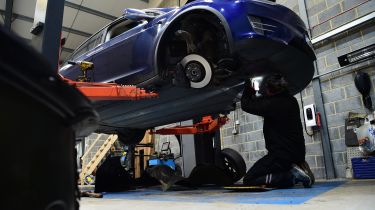
Are the local garage’s days numbered? The question gets conflicting answers, but the final result will ultimately shape how vehicles are maintained in the future, with some firms already trying to get ahead of the curve when it comes to customer preference and logistics.
At the beginning of 2026, the Motor Ombudsman said that local garages face a “convergence of challenges”, requiring businesses to “be adaptable, innovate and stand out from the crowd in what is a very competitive sector”. On the other hand, the chairman of the Independent Garage Association, Jon Douglass, tells Auto Express that garages “are incredibly well positioned at the moment to be exactly what the consumer needs”.

At first glance, it appears that UK garages have very little to worry about. In its 2024 report, the Society of Motor Manufacturers and Traders said that there are over 36 million cars currently registered on the nation’s roads, with the average example being nine-and-a-half years old and almost a third (31 per cent) aged over 12 years. This means that there’s a significant pool of customers who will need the services of garages – both independents and main dealers – to help maintain the country’s ageing fleet.
These figures only provide half of the picture, though, since they’re accompanied by what looks like an insurmountable accumulation of problems shaped not only by the economy, but also by the transition to EVs. The Motor Ombudsman says the greatest issue facing nine in 10 garages is rising operational costs; successive annual hikes in the National Living Wage, plus increasing business rates and energy costs are making running a garage more expensive than ever.
EVs force up training and equipment costs
On top of this, garages are having to invest in the extra training and equipment required for mechanics to work on EVs, both of which could be unaffordable for many small businesses. According to a 2025 report by the Institute of the Motor Industry (IMI), just one in four qualified technicians in the UK have the certification to work on an electric vehicle. Although the vast majority of cars on our roads still have petrol or diesel internal-combustion engines, almost one in 20 are full-electric, and the demand for work on this type of vehicle will only continue to grow.
The head of research and policy at the IMI, Emma Carrigy, warns that “the pace of training is misaligned with current and future demand, and is likely to fall short of what is needed to support the UK’s Zero Emission Vehicle targets”.
Douglass, however, insists: “This [kind of] evolution has happened before, it’s just that the consumer didn’t notice. It’s really not a new thing for technicians to have to adapt to changing technology.” Yet, while there has been significant technical innovation and change in the industry, it’s hard to deny that the EV transition is like nothing we’ve seen before and the investment required from garages to stay afloat is immense.
Shortage of trained mechanics

All of this is compounded by a shortage in the UK’s mechanic workforce. There are around 19,000 vacancies at the time of writing – and this figure is set to rise, because the IMI estimates almost half (47 per cent) of the UK’s automotive workforce is over 45 and expects roughly 144,000 technicians to retire by 2032.
As older mechanics stop working, fewer new ones arrive to take their place, with a shortage of roughly 44,000 EV-qualified mechanics expected by 2035. This isn’t helped by the industry’s male-dominated image; fewer than one in five UK automotive roles are held by women, with a similarly low representation of people from non-white backgrounds. Some also feel it could be exacerbated by the stereotype that garages are dirty and unwelcoming places for both employees and customers alike.
Is mobile car servicing the future?
It’s clear, then, that the industry needs a bit of a rethink and the RAC believes it might have the solution. In 2022, the firm launched its new Mobile Mechanic service aimed at taking routine and emergency car maintenance out of the workshop and onto your driveway.
“Following the Covid-19 pandemic, [the likes of] Amazon have conditioned us to have everything come to us,” explains the RAC’s chief executive for service and repair, Paul Coward. “We’ve been towing to garages for 128 years, so we thought: why not bring the garages to the customer?”
The concept of mobile mechanics is far from a novel invention, but the RAC believes launching such a service will appeal to modern consumers’ desire for convenience and transparency. Customers, be they RAC members or not, can report a problem and have someone appear at their doorstep to resolve the issue in as little as 24 to 48 hours. As such, the demands on the customer in terms of time are greatly reduced.
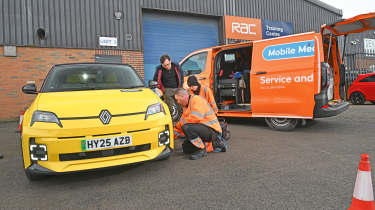
Also reduced are many of the overheads; aside from the cost of the technician’s van and fuel, there are few of the outlays associated with running a garage such as rent and energy costs. As a result, and with much greater catchment areas than a traditional garage, the RAC says it can price its services to be roughly on par with an independent garage, but less than a main dealer. That’s without, Coward emphasises, “the hidden costs of getting your car serviced, such as the price of getting a taxi home, booking the day off work or ensuring the kids are taken to school”.
Of course, while being a garage technician is typically not a customer-facing role, a mobile mechanic might have an owner peeking over their shoulder asking questions while they work on the car. For that reason, the RAC gives its mobile mechanics customer-service training with the aim of making the experience much more personable than at an old-school garage.
Naturally, mechanics who have experience dealing directly with customers are few and far between. Thankfully for the RAC, it has enough cash to fund an apprenticeship scheme where trainees can be built from the ground up to match the business needs.
Tony Cullum, head of the RAC Academy, says: “We don’t necessarily look for people with experience in the motor trade, just those with an interest. If there’s a blank canvas, we can teach them the correct way of doing things.”
Curiously, while the industry often complains about a workforce shortage, the RAC says that it has no lack of applicants for its apprenticeship scheme. After recently advertising for 15 roles in the south-east, the firm said it had well over 450 applicants, with Cullum identifying the problem as “more of a lack of opportunity”.
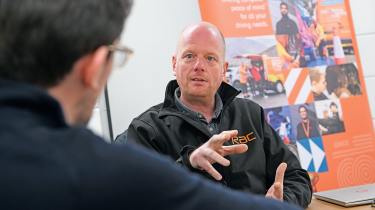
Alex Dunlop is one of the apprentices at the RAC Academy and he says: “Being in a garage all day could get a bit boring. Being a mobile mechanic, you’re driving around and talking to customers. You’re not just doing the dirty work.”
As of the time of writing, the RAC has 300 mobile mechanics across the UK, with more to come through the apprentice scheme and regular recruitment. With service and repair being the biggest growth area for the business, Coward has lofty goals. He tells us: “I’d love to have 1,600 mobile mechanics out there – the same number of patrols as we have doing breakdowns. The market for repairs is 10 times that of breakdowns, so it’s still a really small fraction.”
Exclusive Auto Express poll
Our exclusive polling indicates that the idea of mobile car repair services is likely to be popular with drivers; one in four (25%) of the 960 motorists we polled say they would pay more for a mechanic to come to their home for car MOTs and basic repairs. One in 16 (6%) said they don’t like going to garages at all.
The poll also revealed that less than a third of motorists feel confident when dealing with a garage - when asked to rate confidence from 1 to 5, just 32% said 5. The average score was 3.4, suggesting many drivers may feel more reassured using franchised dealers servicing facilities or national providers rather than independent garages.
Manufacturers are certainly aiming to tighten their grip on the aftersale market, using service plans, extended warranties and subscriptions to keep customers returning to franchised dealer networks for longer when they would previously have gone to cheaper local garages.
What’s the future for local garages?
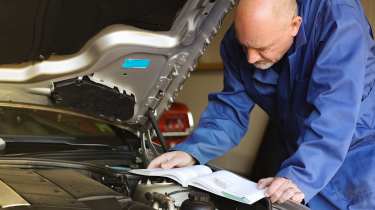
Yet, while the likes of iTunes and Spotify popularised the on-demand nature of music, there will always be a place for more traditional means of listening. It’s a similar story with on-demand mechanic services like the RAC's, with Douglass keen to point out: “You can't fit
a garage in the back of a van. There has to be limitations to a non-garage-facility service, just based on the fact that you can’t carry everything you need to do everything that needs to be done.”
The RAC insists that its mobile mechanics are able to deal with over 4,000 different types of complex repairs and can work on both internal combustion and pure-electric cars. Yet while things as diverse as brake discs and EGR valves can be replaced on someone’s driveway, owners who have no off-road parking or need more complex repairs will still be required to go to a traditional garage to get the necessary work done.
And so garages’ ability to survive remains important and may arguably be harder than ever given the raft of new competition from crisper, more convenient mobile mechanics, plus the aforementioned cost pressures. While the latter are already starting to bite, pushing up the price to consumers, the sector appears to be keeping its head above water, with no mass closure of independent garages. “Anecdotally, you've got as many people opening up new businesses as you've got closing them down,” Douglass explains. “It's not like the pub industry, for instance.”
Yet as our roads electrify further, costs will only continue to spiral for garages. While a traditional service on an electric car is no more complex than on a petrol or diesel car – in fact, it’s even easier – repairing and replacing battery modules, for example, is an immensely sophisticated procedure, requiring huge investment that will inevitably be unaffordable for some businesses.
It could be the case that, unless they’re able to find a niche, the smallest businesses may be priced out of the sector, with only main dealers and independent chains able to afford to provide the services customers need.
Did you know you can sell your car through Auto Express? We’ll help you get a great price and find a great deal on a new car, too.