UK public EV charging plan aims to drastically slash costs
Drivers could soon be able to charge usage of local public EV infrastructure to their home tariff, potentially saving up to 20p per kWh

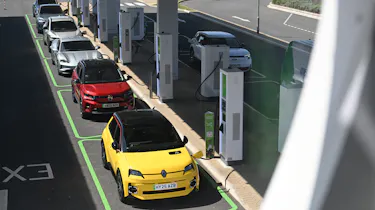
Alongside the annual Autumn Budget, the Government has published the findings of its review into the cost of public EV charging. Proposed measures such as the ‘porting’ of charging fees to domestic energy tariffs, as well as targeted financial support for operators, are said to have the potential of lowering local public charging costs by up to 20 pence per kilowatt-hour – or the equivalent of £12 for a full charge of the typical EV.
For some time now, the electric car charging industry has called on the Government to reduce the VAT on public charging from 20 per cent to match the five per cent rate of domestic electricity. However, despite legal challenges earlier this year, Labour says it will enshrine the current rate within law as part of the Finance Bill 2026-27.

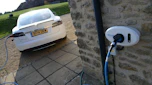
Instead, the Review, led by chair of the Government’s EV Energy Taskforce, Philip New, touts a different approach of tariff ‘porting’, whereby EV drivers would be able to charge their car using public infrastructure and bill the cost directly to their home energy tariff, thus benefiting from lower rates.
Under current proposals, this wouldn’t include rapid chargers; instead, porting would be exclusive to AC infrastructure rated below 50kW. Eligibility for porting could also be restricted to the local area – i.e not infrastructure on the other side of the country to where you live – and would also likely be subject to an access fee in order to pay for the installation and maintenance of the chargepoint itself. Such an idea has been likened to spreading the cost of a home charger for those with off-street parking – e.g paying £200 per year over five years.
With porting potentially allowing drivers to tap into rock-bottom off-peak energy rates, the report claims that, alongside other proposed changes, it could reduce the cost of local public charging by anything between 15-20 pence per kilowatt-hour. For reference, the current average cost to use a public Standard or Standard Plus AC EV charger currently stands at 54 pence per kilowatt-hour, according to ZapMap.
CEO of transport research firm New AutoMotive, Ben Nelmes, said: “It is not fair that people who cannot charge their electric car at home must pay significantly more for their electricity. It is good to see the Chancellor taking steps to allow drivers to use their home electricity tariff at their local charge point. It is vital that this work moves at pace to end Britain's driveway divide.”
The review has also provided more suggestions which it says could reduce public charging costs “more generally by up to 10p/kWh”. Key to this is the £100 million in financial support that was announced by Chancellor John Healey as part of the Autumn Budget.
The vast majority of this cash will once again go towards subsidising low-speed local charging infrastructure to “help make EV ownership more attractive for the third of drivers without access to a driveway”. Whether or not this cash will be distributed, however, is “dependent on clear pass through to consumers”, with operators required to report their prices to ensure they aren’t inflating them to take the extra cash as profit.
Other recommendations include a central pricing data platform, a la Fuel Finder, to allow users to compare public charging prices, as well as improved signage for EV infrastructure. Financial support for operators to install battery storage for rapid chargers that will reduce strain on the grid at busy times, thus avoiding peak electricity rates, was also suggested.
Despite this, chief executive of EV charging trade body ChargeUK, Shane Brennan, claimed the plans “will do serious damage to the EV transition”.
Brennan said: “Instead of listening to the call of EV drivers for fairness on VAT, the Government has slammed the door shut on ending a rank unfairness between at home and out of home charging.
“The industry asked for simple measures to address the foundational cost issues for public charging – VAT, soaring operator standing charges and renewable fuel credits. The review recommends action on the latter point, but overall amounts to warm words and an open ended taskforce – not meaningful action.”
Don't miss the best of Auto Express on Google! Make us a preferred source. Click here...