Car crashes jump 8% when the clocks go back
The AA has revealed that claims handled by its Accident Assist service jumped by around eight per cent in the two weeks following last year’s clock change

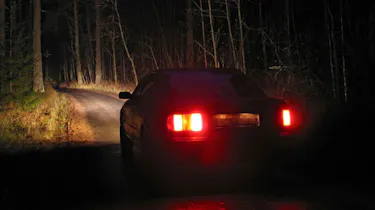
It can be pretty disheartening when the clocks go back and you return home from work in the dark, but as data from the AA suggests, it’s more dangerous as well as bleaker.
The AA Accident Assist recovery and claim management service has revealed that when the clocks went back in 2025, the claims it handled in the following two weeks went up from 2,949 in the fortnight before to 3,178. That’s an increase of 7.8 per cent, although this is an improvement, with the AA reporting an 11 per cent increase each year from 2022-2024, albeit when measured for the following three weeks rather than two.

The AA is using the data to raise awareness of the more challenging driving conditions brought on by the change, ahead of the clocks going back this Sunday on 25 October.
Previous research from the motoring organisation showed that 50 per cent of the 10,500 drivers it surveyed found it difficult to see cyclists and pedestrians in some autumn driving conditions, with 52 per cent claiming other drivers do not use their lights correctly. 40 per cent voiced a dislike for driving on darker mornings and evenings, with the same percentage claiming to “regularly see other vehicles with defective lights”.
Along with the darkness causing issues, some 73 per cent said their biggest problem with autumnal motoring was the low position of the sun. On the occasions it is visible, of course.
AA Accident Assist managing director Tim Rankin said: “An eight per cent increase in claims after the clocks went back last year is a timely reminder that drivers need to adapt as autumn takes hold.
“The clocks changing can mean a sudden difference to our regular journeys. A commute home that was made in daylight just a few weeks ago can suddenly be made in darkness, while autumn can also bring low sun, rain, slippery roads and poor visibility.”
Driving tips for darker months
Keep sunglasses in the car
That low-lying sun can really hamper your visibility, and sometimes your car’s sunblinds just don’t go low enough. Keep some shades in the car to keep you safe. And looking cool, of course.
Prepare your car
Check that all your lights are working, and rectify if necessary. Make sure your headlights are clean and also clear – on older cars, the plastic can go hazy up over time, reducing their effectiveness and also putting you at risk of an MoT failure. Specialised headlight restoration kits are easy to use at home and can make a massive difference, making your clusters go from looking milky to factory fresh.
Smeared windscreens are much more of a problem in low light conditions and when the low sun is shining through, so make sure yours is clean inside and out. On that subject, you’ll be using your screenwash a lot more as the roads get greasier, so make sure the tank is topped up, and while the bonnet is open, you might as well check your coolant and oil levels to lessen the chance of a breakdown, which won’t be much fun in the colder months.
Leave bigger gaps
Roads will almost certainly become wet and possibly icy as the temperatures drop, making it wise to leave larger gaps to the car in front. Even if it’s bone dry, having the extra thinking and braking time is important when there’s something you might have initially missed owing to the reduced visibility.
Get your eyes checked
If you’re overdue for an eye test, you should be extra motivated to get it sorted and ensure you have the best visibility possible in the darker months. When buying a new pair of specs, it might also be worth paying extra for anti-reflective coatings – research suggests drivers are increasingly concerned with bright, modern LED headlights dazzling them when behind the wheel.
Did you know you can sell your car through Auto Express? We’ll help you get a great price and find a great deal on a new car, too.