Smart motorways declared a “catastrophic waste of money”
Only three of the 16 smart motorway projects undertaken by National Highways are on track to deliver good value for money

Most smart motorway projects are not providing good value for money: that’s the damning assessment provided by National Highways as part of its review into the controversial schemes that have cost taxpayers billions of pounds.
Of the 16 five-year Post Opening Project Evaluations (POPE) published by the authority, just three say the road is on track to deliver the anticipated value for money. The remainder are either in line with pessimistic early forecasts or expected to cost the taxpayer even more cash.
“The reluctant release of these documents, without any announcement, feels like an attempt to bury bad news,” said AA president, Edmund King.
“This has been a catastrophic waste of time, money and effort. Many of the schemes have slower journeys, which causes traffic jams, loses the country cash and worsened the safety record of motorways.”
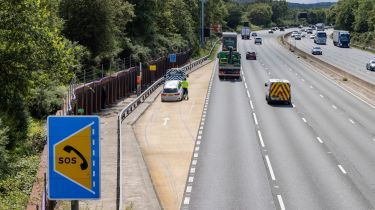
Smart motorways were designed to be a more cost-effective option than widening motorways as part of an effort to ease congestion. Rather than simply adding another lane, smart motorways in effect transform the hard shoulder into an additional motorway lane, utilising overhead gantries to enforce varied speed limits and even close lanes if an obstruction is detected.

However, while National Highways is keen to advocate how smart motorways “overall, in terms of deaths or serious injuries, remain our safest roads”, these types of road nevertheless have attracted heavy criticism.
The AA points out how the all-lane-running section of the M3 between junctions 2 and 4a in Surrey and Hampshire, for example, has seen an increase of almost a third in the number of people killed or seriously injured. Other schemes also saw similar, if not quite as dramatic, rises in the number of fatal collisions, despite the supposed safety benefits of smart motorways.
With public opinion having turned against smart motorways, the previous Conservative Government under Rishi Sunak cancelled any future projects all the way back in 2023. Since then, several schemes have been undertaken to improve the safety and effectiveness of smart motorways; with these improvements now complete, National Highways, says that smart motorways “are delivering safety benefits in line with or above those originally forecast”.
Nevertheless, King and the AA reaffirmed that future motorway expansion projects should focus on traditional widening, rather than something akin to the smart motorway system. “Motorways which have been widened, the hard shoulder kept, and safety technology added have proved the most successful,” King said. “We have been calling for this standard for so long and urge any government that looks to improve motorways to use this style as the blueprint.”
Don't miss out! See more of Auto Express in your Google Top Stories. Click here...