eVED pay-per-mile road tax explained: will it make EVs pricier than petrol?
From April 2028, EV drivers will be forced to pay three pence for every mile they drive, over and above their annual road tax fee

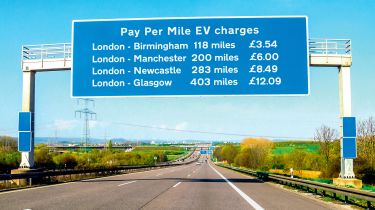
In roughly two years, drivers of electric and plug-in hybrid cars will be subject to a new pay-per-mile form of road tax, known as eVED (Electric Vehicle Excise Duty). This will force motorists to pay, on average, an additional £200-£300 per year on top of their standard annual road tax, calculated by tallying up how far they’ve driven.

The system has been designed to replace fuel duty, which will become a diminishing revenue stream for the UK Government as more people switch to cleaner, greener EVs. As you’d expect, though, the plans have elicited mixed reactions across the political landscape, from the car industry and among the general public.
With this in mind, and to answer some of the most pressing questions you might have, we’ve put together a full guide on eVED, doing the necessary maths and speaking to the public to get an overall view of the scheme’s perception and potential effects.
Who will pay the eVED pay-per-mile tax?
From April 2028, drivers of electric cars, ranging from SUVs such as the Tesla Model Y, to superminis such as the Renault 5 will become liable for eVED which, if current plans remain in place, will cost three pence per mile driven.
Those driving a plug-in hybrid (PHEV) such as the Jaecoo 7 SHS-P, Kia Sportage Plug-in Hybrid and Volkswagen Tiguan eHybrid will also have to pay, but at a rate of one-and-a-half pence per mile – both this and the EV figure will increase annually in line with the Consumer Price Index from the financial year 2029/30. All of this will come on top of Vehicle Excise Duty, which currently stands at £200 per year, but is likely to have increased by the time eVED comes into force.
The table below shows how the costs will mount up on some typical UK journeys.
| Journey | BEV (Battery-Electric Vehicle) eVED cost | PHEV (Plug-in Hybrid Vehicle) eVED cost |
| London to Birmingham | £3.54 | £1.77 |
| London to Manchester | £6 | £3 |
| London to Newcastle | £8.49 | £4.25 |
| London to Glasgow | £12.09 | £6.05 |
| London to Edinburgh | £12.09 | £6.05 |
| London to Cardiff | £4.47 | £2.24 |
Will pay-per-mile tax make EVs more expensive than petrol?
A key selling point of EVs has long been their low running costs. However, road pricing will narrow the gap between electric and ICE in terms of how much drivers spend on fuel.
Comparing a Volkswagen Tiguan with its electrified counterpart, the ID.4, our analysis shows that even following the tax’s introduction, running an EV will remain the cheaper option by far when charging at domestic off-peak rates.
According to the official WLTP combined cycle efficiency figures, an ID.4 Pure Match will set you back just shy of two pence per mile (plus three pence for the new tax) if charged at the average off-peak home electricity rate of eight pence per kilowatt hour (kWh).
Simultaneously, at the current price of fuel – 151.77p per litre for petrol and 165.80p for diesel – the Tiguan will cost either 15 or 14 pence per mile to run, respectively. However, the gap between internal combustion and full-electric running costs will grow as fuel duty rises in the coming years and the five pence temporary cut is unwound.
When plugging in at the current Ofgem energy price cap of 26.1p per kWh, things get a little closer; nine pence per mile with the mileage tax included would still make the ID.4 the cheaper option, but not by as much as before. Charge using more expensive public charging infrastructure, however, and the average is as high as 79p per kWh; at these prices, the ID.4 would cost roughly 20.5 pence per mile to run (with eVED included), making it more expensive than both the petrol and diesel models.
There are, of course, many variables in calculating fuel costs – let alone overall car running costs – but the pay-per-mile tax is going to make it less likely that the sums add up in the electric car’s favour.
Will EV and PHEV drivers pay more tax under eVED?
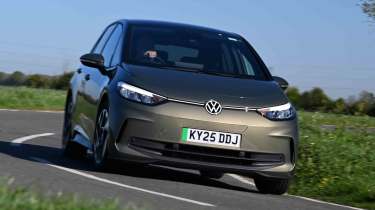
Introducing another form of taxation such as eVED understandably raises questions as to whether some drivers will face a heavier share of the tax burden than others. We’ve done the maths, and that certainly looks to be the case.
As mentioned, eVED is designed to fill the financial black hole left by dwindling fuel duty income as more drivers switch from filling up at the pumps to plugging into a charger. However, plug-in hybrid drivers will be forced to pay both, with eVED at a reduced rate on the assumption that PHEVs utilise the petrol and electric elements of their powertrains equally.
But our own testing shows that this very much isn’t the case in the real world; official WLTP figures have frequently stated PHEVs are capable of over 300mpg, only for this to look more like 45-55mpg over several hundred miles once the battery has run dry. Indeed, new Euro 6e-bis regulations have now been designed to account for this, testing cars on a much longer 1,000-plus-mile cycle.
Not all cars have undergone this revised testing, though, so we’ve utilised our own real-world mpg data to see how much EV, petrol and PHEV drivers will really pay out to the Treasury per mile. EVs will, of course, be charged at a flat rate of three pence per mile, while ICE drivers will be charged at least 57.95 pence for every litre of petrol they purchase following the ‘unwinding’ of the five pence cut next year – and that’s assuming the base rate of fuel duty doesn’t increase, despite the Government saying it will. We’ve used this to calculate the cost per mile for petrol and PHEV cars, adding 1.5p per mile on for PHEVs due to eVED.
eVED vs fuel duty: real tax cost examples
| Real World Fuel Duty vs eVED | EV | Petrol | PHEV | Petrol | PHEV | Petrol | PHEV |
| Model | MG HS GS6 1.5 DCT | MG HS Plug-in Hybrid | Volkswagen Tiguan 1.5 eTSI | Volkswagen Tiguan eHybrid 201 | Kia Sportage 1.6T GDi DCT | Kia Sportage Petrol Plug-in Hybrid | |
| MPG (Real-World Test Data) | 33.6 | 46.3 | 39.5 | 51.4 | 39.8 | 44.6 | |
| Tax pence per mile | 0.03 | 0.07827380952 | 0.07180345572 | 0.06658227848 | 0.06616731518 | 0.06608040201 | 0.07396860987 |
| Average annual cost (7,100 miles) | £213.00 | £555.74 | £509.80 | £472.73 | £469.79 | £469.17 | £525.18 |
As you can see, EV drivers paying eVED will pay less than half of what those with petrol cars will fork out in fuel duty. It’s a lot closer for plug-in hybrids, though, with the petrol model even paying less tax on one of our three examples. Of course, this doesn’t account for VAT paid on petrol/electricity, nor does it bear in mind the Benefit-in-Kind savings PHEV and EV company car drivers benefit from. However, it does highlight how running a plug-in hybrid as much as possible on electric power alone will be the key to saving money, and how the new system incentivises choosing a fully-electric car over a hybrid.
How will eVED pay-per-mile tax work?
How exactly the eVED pay-per-mile scheme will operate could change between now and its implementation in 2028, but the Government’s recent response following a consultation gives us at least some idea of how it will operate.
Each year as part of the eVED scheme, EV drivers will submit and pay for their estimated mileage at the same time they renew their standard VED road tax online. This will then be checked and verified at the following year’s MoT test, after which it will be determined whether they have overpaid or underpaid in tax. Those with newer cars will also be required to submit and pay for their annual mileage, but this will only be checked at the first MoT test, when the vehicle reaches three years old – annual mileage checks will not be required, unless fraud is suspected – with any discrepancies reconciled then.
If you have been found to have overpaid, the surplus will be credited to the following year and thus contribute towards any future payments. If you overpaid by more than £100 or can prove that your financial circumstances have changed – i.e. you have been hit by financial hardship – you can request cash instead.
If all this sounds complicated, drivers of newer EVs and PHEVs do have an alternative. Most cars sold post-2018 are equipped with eSIM technology which can transmit GPS data, and drivers can opt in to provide the Government access to this to obtain a more accurate mileage figure.
To be clear, the Government says cars won’t be tracked per se – only mileage data will be taken. However, this type of technology does help overcome the issue of mileage driven abroad; such a system could switch off when you pass the UK border so as not to charge you for driving in France – something the self-reporting system cannot account for.
It’s also possible that dealers selling new electric and plug-in hybrid cars may be able to pre-package a certain amount of eVED mileage within the cost of the car, much like those “xxx-miles of free fuel” offers you see crop up from time-to-time.
Will eVED slow down EV sales?
As mentioned, the pay-per-mile tax has received a rather mixed response. It’s designed to fill the financial black hole created by fewer people paying fuel duty in the switch over to EVs.
According to the Office for Budget Responsibility (OBR), which leaked the tax in a report prior to Chancellor Rachel Reeves even announcing it at the 2025 Budget, eVED could raise as much as £1.4 billion per year by 2029-30. This is despite the fact that the OBR also estimates that by the end of 2031 there will be 440,000 fewer EVs being sold than there would have otherwise been as prospective buyers are put off by the additional charges.
And that’s exactly the point: is now the wrong time to be introducing such a scheme, especially given that despite the introduction of the Electric Car Grant, it looks like the UK won’t hit the tough targets for EV sales set by the Government?
According to a survey of Auto Express readers, almost two in five (37 per cent) said they believed the charge to be fair, as opposed to a quarter (23 per cent) who saw it as an unjust attack on EV drivers. Roughly one third (32 per cent) said its introduction was poorly timed and will slow down EV sales.
To combat the potential loss in sales, Labour previously announced plans to raise the threshold above which the £440 Expensive Vehicle Supplement to VED is paid; from April 2026, only EVs costing £50,000 or more are liable, as opposed to the current £40,000 threshold, which will remain for other fuel types.
Nevertheless, a spokesperson for Ford UK said: “This sends a confusing message at a critical moment in the EV transition. Extra investment in charging and the Electric Car Grant is positive, but it cannot offset the impact of a poorly timed pay-per-mile charge on EVs and hybrids. Against a hugely challenging market, and compliance targets drifting out of reach, this is the wrong tax at the wrong time.”
Such a sentiment is mirrored by Delvin Lane, the CEO of charging firm InstaVolt, who pointed out how investment in roads and charging infrastructure is being “overshadowed by new cost pressures, including the introduction of pay-per-mile charging”.
Lane added: “Such policies risk reducing EV uptake and weakening the investment case for expanding the rapid-charging network.”
Get even more from Auto Express, follow our channels...
• Google
• Reddit
• Whatsapp