Future Mercedes petrol and EV cars will share style and tech from now on
Mercedes will converge its ICE and BEV models into single projects, but still offer both powertrains

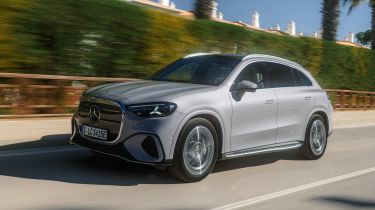
Mercedes will bring its battery electric and internal combustion engine models closer together in future generations, closing the gap in design, technology and image that exists in the ideologically distinct ranges today.
We spoke with Mathias Geisen, Member of the Board of Management of Mercedes-Benz Group AG, at the Beijing Auto Show, and he confirmed to us that the new plan is for the company to offer a ‘true Mercedes’ experience in each car regardless of the powertrain. Geisen said: “We overestimated the speed with which customers would be willing to switch over to electric mobility.
“It’s pretty clear that customers want to have the choice, and we can’t predict in a reasonable way how quickly that will happen. So we have changed our strategy, so that we are fully flexible in offering products according to the customer’s request.
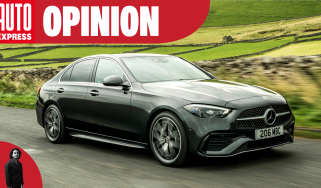
“But point two. Years ago, we were under the assumption that customers would appreciate a strong differentiation between the design of a combustion vehicle and the design of an electric vehicle,” he continued. “That has turned out not to be the case today. They tell us ‘We want the same iconic Mercedes design’, so we close the zip on that.”
However, while this confirmed that the car’s designs would converge, we wanted to clarify whether the technologies in both would also be combined into one, to which Geisen answered: “Step-by-step, they will come together.”
This could mean that future models with different powertrains will return to a single development programme, which is a policy that Mercedes has actually already set in motion. The company’s MMA platform, which underpins the new CLA and its other entry-level models, is flexible enough to accommodate both BEV and hybrid powertrains – and the electric model is one of the most efficient EVs on sale.
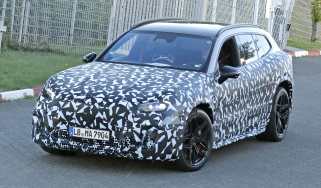
We already have a good idea what the first of these new converged models will become, because prototypes of the next E-Class electric appear to have identical styling and – crucially – proportions to the ICE models. The same will also be true of the S-Class, and we expect the next-gen GLE and GLS to follow this route, too.
In the latter half of this decade, it means we’ll see a switch between the two big German premium brands. As Mercedes closes the door on development of its pure-BEV programmes for its mainstream models, BMW is only just settling into its bespoke BEV platform to be used by the new iX3 and i3, and many more models after that.
If you’re interested in purchasing a high-end German car, make sure to check out the Auto Express Buy a Car service with fantastic offers on new, used and leasing deals to choose from...