Peugeot, Citroen and Vauxhall to “shock” with their future car design
Stellantis design boss lays out the plan for upcoming design revolution

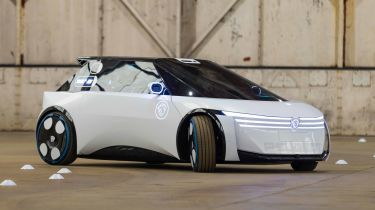
How important is heritage if you’re choosing a car in 2026? This is a question all so-called legacy brands are having to ask themselves in this new era of seemingly endless Chinese start-ups, all offering highly specified and sophisticated new cars, but ones without any real sense of place or soul. And it’s one that is particularly poignant for Stellantis – a conglomerate encompassing brands that, collectively, have hundreds of years of history behind them.
With new-ish leadership at the top, as well as a more streamlined and reactive set of decision-makers, Stellantis says it now has the drive and creative spirit to fully exploit the heritage of its brands.

Among that top brass is Gilles Vidal. And if the name sounds familiar, you’d be right. He was the architect of Peugeot’s design revolution that saw it go from frumpy to fabulous in the late 2010s, and after a small hiatus at Renault overseeing the 5, 4 and Twingo, he’s returned as head of European design for the whole Stellantis group.
Vidal’s new job is not just to oversee, but also to co-ordinate all the European brands’ design houses. He’ll work closely with Stellantis global head of design Ralph Gilles, who reports to the new CEO, Antonio Filosa. This near-direct line to the very top should help streamline decision making, and bring a new sense of power and independence to the design teams.
But this is a tough role, and Vidal arrives at a time of great pressure for Stellantis as it wrestles with profitability challenges that go to the core of this huge company.
There’s also been criticism of having too many synergies from a design and technical perspective across the different models. These were driven by Stellantis’ former boss, Carlos Tavares – a numbers man by nature. It seems the very soul of the brands is at stake, and Stellantis’ top brass know it. Under his remit, what can Vidal do to help adjust course?
To find out, we meet him in his main studio just outside of Paris, and it’s clear he’s very aware of the mountain he and his teams have to climb. First, there’s the strategy: the key reason for bringing such a wide-ranging group of previously diverse car brands – including Alfa Romeo, Citroen, DS, Fiat, Jeep, Peugeot and Vauxhall – into one conglomerate is the ability to streamline development and create large synergies.
Ultimately, that’s critical for any modern company to survive. But it also coincides with the seismic shift to electrification. Gilles said, “As you've noticed, we are living the biggest revolutions of the last few centuries in the industry, and in our world as well.

“So we need to adapt to that, we need to adapt accordingly,” he continued. “We are talking Stellantis as a company, but the general public doesn't care so much about Stellantis.
“You buy a Peugeot or a Vauxhall or a Fiat. You don't buy a Stellantis car. So we need to be super-sharp about what our brands stand for. The brands are the biggest asset of the company from the public perspective, even if we want to optimise Stellantis as a company and what it does.”
In order to deliver this, Gilles acknowledges Stellantis needs to push the variations between its brands much harder, saying: “We [now] have 100 per cent freedom to take it the way we want. So still within the limits of fitting the budgets and the programs and the briefs that we have, but the idea is to be super pushy [in order] to define what's right for the future.”
So how far can this variation go? “Either you have [multiple] platforms and they can adjust a little bit,” Vidal said. “Or maybe you have only one or two, and they are more flexible. Then you have interchangeable modules or components, like Lego Technic kind of thing. All to deliver more specific products. But what's true and clever for one brand [could be] stupid for another. So that's where we need to have flexibility.
“We are challenging all platforms for the future because we need to optimise everything that's not visible from the client's eyes. Ultimately in the end, everything deserves to be challenged,” he said.
“The fruit of those optimisations needs to be delivered to the cockpit experience, to more room inside or to a lower car so you reduce the weight and you make the aerodynamics better, so the range gets better. That's a true client-orientated outcome.”
How Stellantis will optimise design between brands
But there are still risks involved. Gilles continued: “We need to stand out from the crowd, which means finding breakthroughs [and] shocking ideas. Shocking in a good way. Not shocking in a bad way, but shocking in a world that accelerates more and more in terms of delivering very creative answers and solutions.
This variation and flexibility will, by extension, allow Gilles and his teams the technical freedom to execute the designs required from each brand, but this is far from a fix-all solution.
In the case of mainstream brands such as Peugeot, Citroen, Fiat, Jeep and Vauxhall, this level of modularity has worked well, but it’s not the same for all of Vidal’s brands. When it comes to those with more specific mandates, such as Maserati, Alfa Romeo and to a lesser extent DS, things are more challenging.
Does an ultimately more flexible, but less profitable platform need to be engineered – the sort that Jaguar has invested in for its new Type 00 GT, or the one Porsche has just cancelled after three years of intensive development? This is where Vidal acknowledges the issues, and confirms that Stellantis is yet to make any specific choices about how the jewels in its crown will finally receive the love they deserve.
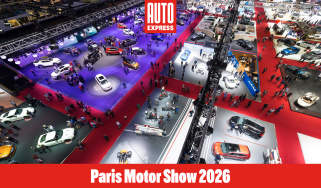
Stellantis says it will have answers for us with a huge presence at the Paris motor show this October. At that point we’ll get a real glimpse into where the brands, from Alfa Romeo to Vauxhall, are really heading.
If you’re interested in buying a Peugeot, Citroen or any other type of Stellantis car, check out the Auto Express Buy a Car service for some great new, used and leasing deals...