Land Rover Discovery Sport review
Updates have kept the ageing Discovery Sport feeling reasonably fresh, and it still offers unique levels of go-anywhere performance in the class

Our opinion on the Land Rover Discovery Sport
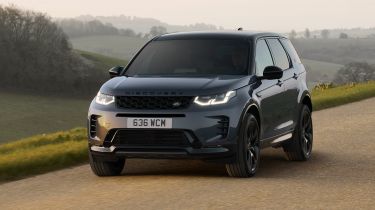
The Land Rover Discovery Sport may be a far cry from its rugged ancestors, but it’ll still beat its rivals off-road thanks to its standard four-wheel drive and nifty Terrain Response system. But this car also feels quite luxurious and offers much better practicality than its Range Rover Evoque sibling, making it a fine pick for active families.
About the Land Rover Discovery Sport
The Discovery Sport replaced the Freelander in the Land Rover range back in 2014. Land Rover has continually updated it since then with revised trim levels, new engines, and plenty of the latest high-end technology to help keep it competitive with rivals. It even has a useful plug-in hybrid version for company car drivers, and the option of seven seats in some versions for greater versatility.
We’ve tested numerous versions of the Land Rover Discovery Sport over the years. Our head of digital content, Steve Walker, even spent six months living with one in a long-term test.
Land Rover Discovery Sport prices and latest deals
With two mild-hybrid diesels and a petrol plug-in hybrid powertrain to choose from, there’s a decent level of choice on offer before you even consider the three trim levels: Dynamic S, Landmark and Metropolitan. The entry-level Dynamic S spec costs around £45,500, while our recommended mid-range Landmark trim comes in at around £49,000. The range-topping Metropolitan trim comes in at £56,000.
Used - available now

2023 Land Rover
Discovery Sport
48,087 milesAutomaticPetrol1.5L
Cash £21,300
2023 Land Rover
Discovery Sport
31,010 milesAutomaticPetrol1.5L
Cash £24,797
2023 Land Rover
Discovery Sport
24,643 milesAutomaticPetrol1.5L
Cash £24,839
2023 Land Rover
Discovery Sport
26,957 milesAutomaticDiesel2.0L
Cash £23,035You can build your ideal Discovery Sport with the Auto Express Buy a Car service now and get offers from dealers. We also have a range of used Discovery Sport models in stock, and can even help you to sell your car.
Performance & driving experience
Pros |
|
Cons |
|
Land Rover’s updates to the Discovery Sport have made it increasingly refined. In the latest cars, these improvements have significantly reduced tyre roar and suspension noise compared with previous versions and many rival SUVs.
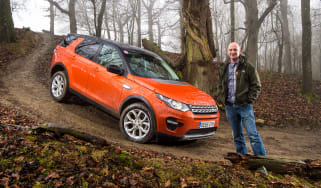
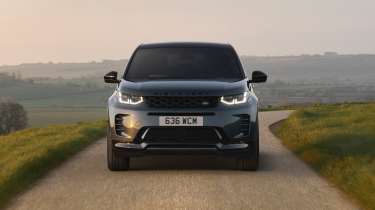
Where the Land Rover steals a march over rivals, such as the BMW X3, is off the beaten track. It has better ground clearance, and the front and rear overhangs are shorter and higher, making steep slopes easier to negotiate. Its Terrain Response system can adapt the four-wheel drive’s traction control to suit different conditions, helping the car go further than most owners would dare to take it. Choose between Normal, Mud, Sand, Rocks and Snow modes, then let the car’s sophisticated traction control system do the rest.
But that’s not all – you also get a variable hill descent control, an impressive wading depth of 600mm, plenty of ground clearance and excellent approach and departure angles. When the going gets tough, the Discovery Sport leaves its compact SUV rivals floundering.
Every model features four-wheel drive and a nine-speed automatic transmission. Though the gearbox is not quite as responsive as some rival systems, it’s very smooth and makes the most of the available performance by keeping engine revs in the mid-range, where the engines are most subdued.
| Model | Power | 0-62mph | Top speed |
| Discovery Sport D165 Dynamic S (5 Seat) | 160bhp | 10.2 seconds | 112mph |
| Discovery Sport D200 Dynamic SE 5dr Auto (5 Seat) | 201bhp | 8.6 seconds | 117mph |
| Discovery Sport P270e Dynamic SE (5 seat) | 265bhp | 7.4 seconds | 118mph |
Performance, 0-60mph acceleration and top speed
The least powerful Land Rover Discovery Sport powertrain is the D165 diesel mild-hybrid. This 2.0-litre four-cylinder engine is combined with mild-hybrid tech to produce 160bhp and 380Nm of torque. This results in a 0-62mph sprint time of 10.2 seconds in five-seat form, rising to 10.6 for the seven-seater. This is quite sluggish for a mid-size SUV with a premium badge.
The D200 ups this engine’s power to 201bhp and feels a lot more capable at higher speeds as a result. This shaves the 0-62mph sprint down to 8.6 seconds for the five-seater, and 8.9 seconds for the seven-seater.
For maximum power, you’ll need to go for the P270e petrol plug-in hybrid. This consists of a 1.5-litre three-cylinder petrol engine, which is combined with an electric motor to deliver a total power output of 265bhp and 540Nm of torque. In this model, 0-62mph takes only 7.4 seconds.
Town driving, visibility and parking
At times, the Discovery Sport does feel quite large, and this can be problematic on narrower urban streets and when parking. While the view ahead is great, the standard rear camera and parking sensors are essential when reversing – that stylish rear screen looks letterbox narrow from the driver’s seat.
Invest in the Technology Pack (nearly £2,000), and things are improved thanks to the fantastic ClearSight high-definition rear-view screen: a switch on the rear view mirror allows for live images – relayed from a camera mounted on the roof – to be displayed. It’s great in bad weather or if the rear seats are full of passengers, while the wide angle lens all but eliminates blind spots.
Country road driving and handling
The Discovery Sport isn’t the sharpest SUV to drive, but it handles as well as it’ll need to for most buyers. Body movement is well controlled, and there’s plenty of grip even on the standard fit all-weather tyres; the electronically controlled permanent four-wheel drive system delivers confidence-inspiring traction, even in the slipperiest conditions.
The steering feels fairly slow compared to a Mercedes GLC or BMW X3, but it’s precise enough. Combined with the high-set driving position and excellent visibility, it allows you to place the Disco Sport on the road with confidence.
Motorway driving and long-distance comfort
The Land Rover’s peaceful cabin is enhanced by a composed ride. There’s a firm edge to the suspension at lower speeds that means it's less cosseting than a Mercedes GLC (at least one on air suspension), but the multi-link rear axle comes into its own the faster you go. Most bumps and potholes are effortlessly smoothed out.
“People buying a Discovery Sport probably won’t regularly drive off road, but this mid-size family SUV easily overcame the various formidable-looking obstacles that the Eastnor Castle proving ground had.” - Steve Walker, head of digital content.
MPG & running costs
Pros |
|
Cons |
|
Both the D165 and D200 diesels benefit from the addition of mild-hybrid technology in the name of boosting efficiency. However, with WLTP combined averages of 43.1mpg and 43.2mpg respectively, the numbers are better described as reasonable than mind-blowing. There are more efficient options.
The 48-volt system used in these cars recovers energy that would otherwise be wasted when decelerating, stores it in a compact lithium-ion battery below the front seats, and deploys up to 140Nm of torque under acceleration to reduce the load on the combustion engine. It works alongside a stop/start system that’s able to switch off the engine below 11mph – allowing a few extra metres of fuel-free coasting. Land Rover reckons that the system boosts fuel efficiency by seven per cent.
| Model | MPG | CO2 | Insurance group |
| Discovery Sport D165 Dynamic S (5 Seat) | 42.7mpg | 173g/km | 28 |
| Discovery Sport D200 Dynamic S 5dr Auto (5 Seat) | 42.7mpg | 173g/km | 35 |
| Discovery Sport P270e Dynamic S (5 seat) | 190.4mpg | 33g/km | 38 |
Electric range, battery life and charge time
As you’ve probably guessed, the P270e PHEV is the most efficient Discovery Sport. Officially, this model can cover up to 37.3 purely electric miles on a single charge of its 15 kWh (11.97kWh usable) battery. However, Land Rover reckons it’ll cover around 28 miles in the real world. This will be useful in a number of ways, but that number pales in comparison to the BMW X3 30e’s 54 miles.
The P270e also has a WLTP combined average of 192.2mpg, but this involves a consistently charged battery and very specific laboratory testing conditions. Therefore, as with many PHEVs, it has to be accepted that this figure will be lower in the real world. Despite this, 50mpg and above won’t be out of the question.
Fully recharging the 15kWh battery in the plug-in model will take just over two hours from a home wallbox or nearly seven hours if you use a standard three-pin plug, which we don’t recommend relying on.
Unlike some other plug-in hybrids, the Discovery Sport PHEV features DC rapid charging capabilities, so you can recharge the battery from flat to 80 per cent in just half an hour if you use a 32kW public rapid charger.
| Model | Battery size | Range | Insurance group |
| Discovery Sport P270e Dynamic S (5 seat) | 15 kWh (11.97kWh usable) | 37.3 miles | 37 |
| Discovery Sport P270e Landmark (5 seat) | 15 kWh (11.97kWh usable) | 36.7 miles | 39 |
| Discovery Sport P270e Metropolitan (5 seat) | 15 kWh (11.97kWh usable) | 36.7 miles | 41 |
Insurance groups
Insurance groups range between 28 and 41 (out of 50), depending on your chosen powertrain and trim level, and this pretty much puts the Land Rover Discovery Sport on a par with its main rivals. For comparison, the BMW X3 resides in groups 32 to 42.
Tax
Due to the Discovery Sport’s premium nature (and pricing), it finds itself on the wrong side of the £40,000 combustion luxury car tax levy. This means you’re looking at an additional £440 on top of the annual VED road tax bill.
The P270e’s low emissions bring some Benefit-in-Kind (BiK) tax relief for business buyers, but they’ll still be far better off with a fully electric car. Zero-emission models like the Audi Q4 e-tron, BMW iX3, and Volvo EX40 attract the very lowest company car tax rates.
Depreciation
Our market data indicates that the Land Rover Discovery Sport holds up reasonably well in terms of deprecation. After three years or 36,000 miles, this premium small SUV is set to retain between 46 and 52 per cent of its initial value.
This is a similar outcome to the BMW X3 after the same amount of time and miles, as this rival holds on to 48 to 56 per cent. The Volvo XC40 is the strongest of the three (if only slightly) at 51 to 55 per cent.
To get an accurate valuation on a specific model check out our free car valuation tool...
Interior, design & technology
Pros |
|
Cons |
|
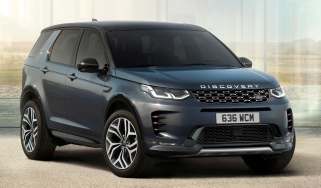
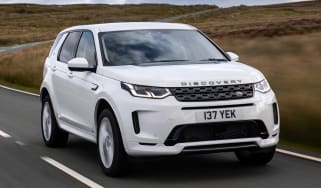
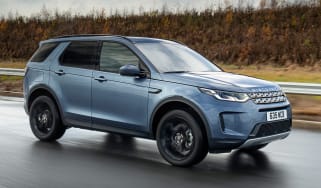
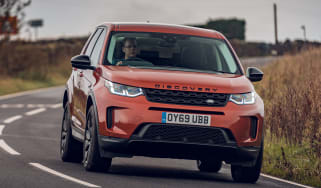
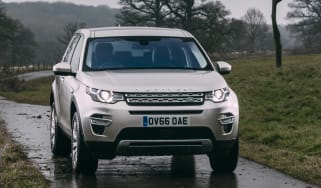
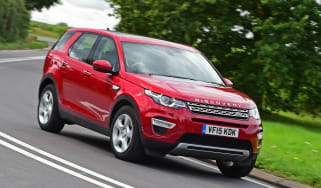
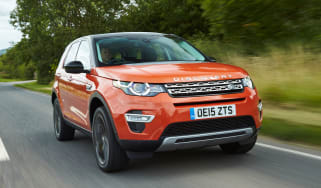
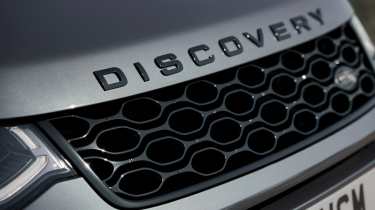
You only have to take a quick glance at the Discovery Sport to confirm that it’s a Land Rover product. A number of updates have given this compact model a few cosmetic changes over the years, but the overall design has remained much the same: stylish and sturdy.
There’s a distinctive clamshell bonnet, the option of a contrasting roof on higher-spec models, plus clean and simple body surfacing.
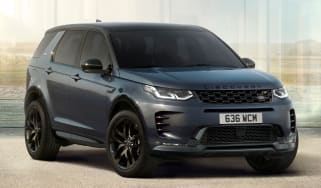
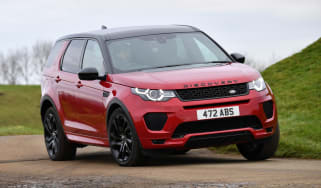
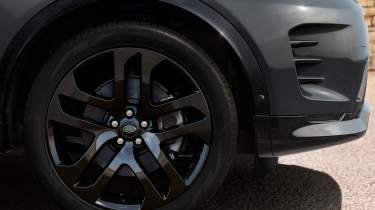
As per the Range Rover Evoque, you can personalise the Discovery Sport further. In addition to the contrasting roof there’s the option of the Black Exterior Pack which adds a black finish to the grille, door mirrors, and exterior trim.
Interior and dashboard design
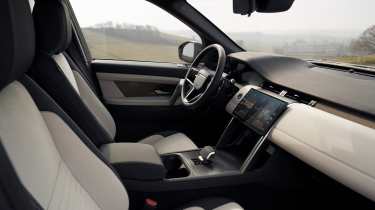
Inside, the Discovery Sport is pure Land Rover. There are plenty of sturdy elements, but these are adorned with a convincing garnish of soft and premium-feeling materials. Much like the rest of the Discovery Sport, the cabin treads a fine line between rugged and luxurious, although it leans a bit more towards the former, unlike the related Range Rover Evoque.
Materials and build quality
Overall build quality feels solid, but the sliding middle row of seats fitted to the long-term test car we ran tended to squeak and rattle.
Infotainment, sat-nav and stereo
Land Rover’s 2026 facelift saw the Discovery Sport’s infotainment system upsized to an 11.4-inch curved touchscreen. We’re already fans of JLR’s Pivi Pro software as it looks great, operates smoothly and is pretty easy to navigate. Now it looks even sharper thanks to this uprated screen.
Apple CarPlay and Android Auto continue to be standard fare, and a customisable 12.3-inch driver’s display delivers the most important information.
Unfortunately, physical knobs and switches have been all but eliminated over the Discovery Sport’s lifetime. The digital tech does work well, but we always prefer to see proper switches and knobs, especially for frequently-used functions like climate control.
“The seats in our model have perforated ‘suedecloth’ centre sections with something called Luxtec on the side bolsters. It looks like leather from a (quite long) distance and feels nice enough, but the fine weave means that dirty marks don’t brush off easily – a damp cloth or cleaning spray is called for.” - Steve Walker, head of digital content.
Boot space & practicality
Pros |
|
Cons |
|
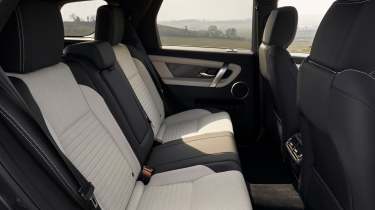
The Land Rover Discovery Sport is primarily a five-seater, but you can add a seven-seat package to the diesel models for around £1,500. This option is pretty rare in the compact premium SUV class, and while these additional seats are a little cramped for adults, they’re fine for kids.
In the seven-seaters, the two individual rearmost chairs can be pulled out of the floor of the boot in one movement, while a sliding middle row allows for easy access and increased legroom.
In every Discovery Sport you’ll find a number of handy hooks and a 12V power supply in the boot, and there’s also the option of an adjustable loading rail system.
Elsewhere in the cabin there’s plenty of useful storage, numerous cup holders and the availability of up to seven USB sockets – so everyone can charge their smartphones at once.
The use of an electric handbrake frees up space on the transmission tunnel for a pair of lidded storage boxes, while there’s a neat trinket tray set into the dashboard ahead of the front seat passenger.
Dimensions and size
The Discovery Sport looks a little rear-heavy in profile but, in fact, is shorter than the Lexus NX (4,660mm).
| Dimensions comparison | |||
| Model | Land Rover Discovery Sport | BMW X3 | Volvo XC40 |
| Length | 4,597mm | 4,755mm | 4,440mm |
| Width (width inc mirrors) | 2,069mm (2,173mm) | 2,132mm | 1,938mm (2,034mm) |
| Height | 1,727mm | 1,660mm | 1,657mm |
| Wheelbase | 2,741mm | 2,865mm | 2,702mm |
| Boot space |
780-1,574 litres (5 seats) 115-1,451 litres (7 seats) | 570-1,700 litres | 443-1,432 litres |
Seats & passenger space
The additional height compared to rivals endows the Discovery Sport with a feeling of space for all occupants and a commanding driving position. In general, there’s plenty of head-, leg-, and shoulder room for front seat occupants, but we have one minor niggle with the driver’s footwell, which is awkwardly shaped, so you might struggle to find a comfortable position for your left foot. All versions come with some form of electric front seat adjustment (although the optional efficiency pack swaps these out for manually adjustable seats) with driver’s side memory settings.
The middle row comprises three proper seats, and although the middle chair is a little thinner, the middle passenger won’t feel hemmed in. All three get plenty of knee- and foot space because the floor is flat, thanks to clever packaging of the transmission tunnel, and with the optional £450 manual sliding and reclining rear seat option on Dynamic S models (standard on mid-range Metropolitan trim and above) you can slide the second row back by up to 16cm backwards and forwards. The relatively flat chairs are soft and comfortable.
When fitted, access to the third-row seats is easy because the rear doors open almost to 90 degrees and the middle row tilts forward in one motion to provide wide access. Clearly, room is limited in these two chairs, but they’re fine for short distances.
Boot space
In five-seat form the Discovery Sport boasts a massive 780-litre luggage capacity – although this figure is measured to the roofline rather than under the load cover. In comparison, the five-seat BMW X3 ranges between 570 and 1,700 litres.
Where fitted, with the sixth and seventh seats in place, the luggage capacity in the Discovery Sport drops to 115 litres. With all five rear chairs down that climbs to 1,451 litres.
The Discovery Sport is a dream for the regular IKEA visitor because all the rear seats fold flat, while the remotely operated electronic tailgate of Landmark models and above is very useful when loading. Even without that latter feature, the boot is very well thought out – from basics like a square shape and flush lower lip, to the myriad hooks and optional rail system. If you specify the manual sliding and reclining rear seat option on entry-level Dynamic S (standard on mid-range Landmark and above), then the middle row folds in a 40:20:40 split.
Towing
The plug-in hybrid Discovery Sport is the weakest tow car of the range, only being capable of hauling a braked caravan or trailer weighing up to 1,600kg. This is still a pretty reasonable figure, but the diesels can both manage 2,200kg. Opt for the D200 in five-seater form, and you have the most capable Discovery Sport, with a capacity of 2,500kg. These numbers make the Land Rover one of the very best tow cars in its class.
“Storage in the Discovery Sport is superb. Each seat gets a door pocket that can hold a 750ml water bottle or a tablet computer. There’s a big bin in the centre of the cabin, a cubby with wireless charging under the centre of the dash, a couple of big cup-holders in front of it, and a usable glovebox.” - Steve Walker, head of digital content.
Reliability & safety
Pros |
|
Cons |
|
The Discovery Sport scored five stars when it was first tested by Euro NCAP back in 2014, and it retained its score when it was retested in 2022 under much stricter criteria.
Standard safety kit includes nine airbags, electronic stability programme, two Isofix points in the middle row, automatic collision prevention braking and anti-lock brakes. What’s more, the standard all weather tyres combined with four-wheel drive mean handling is more assured in all conditions compared to many family cars – and the Discovery Sport is especially confidence-inspiring in inclement weather, thanks to the various settings of the Terrain Response system.
Land Rover cars haven’t always had the best reputation in customer satisfaction surveys, but in the 2025 Driver Power survey, the brand placed in a very admirable fifth out of 31 brands on the best manufacturer table, although people still had issues with reliability, which wasn’t the brand’s strongest category.
| Euro NCAP safety ratings | |
| Euro NCAP safety rating | Five stars (2022) |
| Adult occupant protection | 84% |
| Child occupant protection | 89% |
| Vulnerable road user protection | 71% |
| Safety assist | 85% |
Buying and owning
- Best buy: Land Rover Discovery Sport D200 Landmark
Private buyers are still better off with the diesel in the Discovery Sport. Due to its strong performance and sensible efficiency, we’d advise you to look towards PHEV power if you’re a company car driver and don’t need to tow an exceptionally heavy trailer. Combine the P270e powertrain with the base Dynamic S trim, and you’ll still get a generous dose of standard kit, while keeping the cost sensible.
Seven seats are a nice thing to have in a car, but the rearmost seats in the Discovery Sport are tiny, so it’s not the end of the world that the plug-in hybrid P270e doesn’t come equipped with them.
Land Rover Discovery Sport alternatives
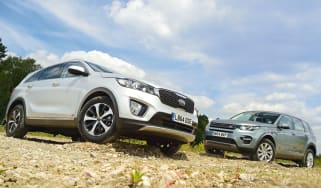
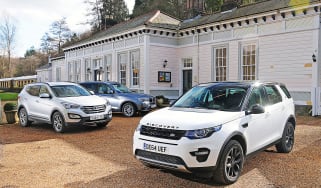
If you desire a compact premium SUV, the most obvious alternative to the Land Rover Discovery Sport is its slightly posher but less practical sibling, the Range Rover Evoque. Look further afield, and the BMW X3 and Volvo XC40 make a pretty convincing case for themselves. You may also consider the Alfa Romeo Tonale or Mercedes GLA, although neither are quite as accomplished.
If you’re considering going electric or are a company car driver looking to lower your BiK tax bill, you’re also spoiled for choice with cars like the Audi Q4 e-tron, BMW iX3, and Volvo EX40 to pick from.
Key updates of the Land Rover Discovery Sport review
15 June 2026: Latest driving impressions and 2026 facelift details.
Frequently Asked Questions
The Discovery Sport comes with a three-year, unlimited mileage manufacturer warranty and roadside assistance package as standard. The company offers an extended warranty package for after this expires. The corrosion warranty lasts six years, while the paintwork warranty is only three years, both of which are a little stingy.
Deals on the Discover Sport and alternatives