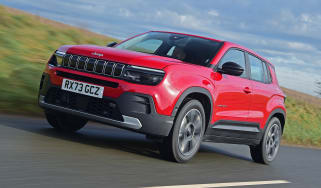
Jeep Avenger review
The Jeep Avenger is a stylish SUV offered with petrol, hybrid and electric power, though more practical rivals exist
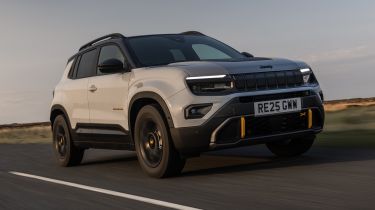

Our opinion on the Jeep Avenger
Whether you choose the Jeep Avenger in petrol or all-electric forms, you’ll get an enticing small SUV with hidden depths beyond its attractive exterior. We’ve no doubt that a few examples of Jeep’s little bundle of joy will be sold based solely on how it looks, but the Avenger boasts much better tech than any of the brand’s previous offerings we’ve tested so far, and the EV version offers a usable range.
Sure, it’s not the Jeep you’ll want for tackling the Appalachian trail, but it feels right at home in the hustle and bustle of packed city streets, and is decent to drive. The addition of petrol-powered models has also made the Avenger more accessible, not least by lowering the starting price. However, the limited space available for rear passengers will be a shortcoming that might rule this out for some potential buyers.
About the Jeep Avenger
The Jeep Avenger is the brand’s smallest car, and it shares its underpinnings with several other Stellantis SUVs including the Peugeot 2008 and Vauxhall Mokka.
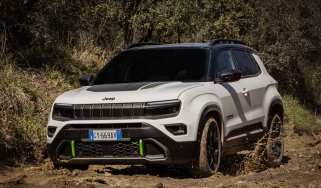
In order to prevent it from being a mere cut-and-paste car, Jeep has provided the Avenger with at least some form of off-road capability that fits in with the brand’s heritage. All models get several drive modes, including specific settings for Mud, Sand and Snow, as well as a hill descent system. These features enable this small SUV to handle at least some wet or slippery terrain if the occasion arises.
Used - available now

2026 Jeep
Avenger
20,943 milesManualPetrol1.2L
Cash £13,786
2026 Jeep
Avenger
25,329 milesManualPetrol1.2L
Cash £13,197
2026 Jeep
Avenger
25,599 milesManualPetrol1.2L
Cash £15,243
2026 Jeep
Avenger
28,525 milesManualPetrol1.2L
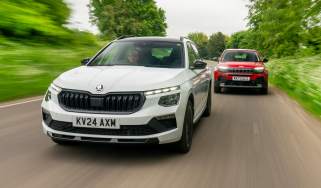
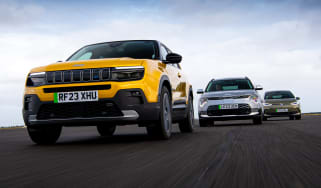
Cash £13,049We’ve pitted the baby Jeep against both the Kia Niro EV and Volkswagen ID.3 in a group test. We have also tested the petrol Avenger against the Skoda Kamiq in a separate twin test, and run an electric Jeep Avenger in Summit trim as part of our long-term test fleet.
Performance & driving experience
Pros |
|
Cons |
|
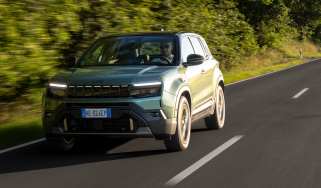
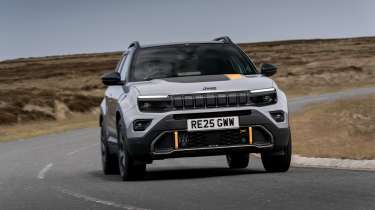
In keeping with the brand’s off-road heritage, the Jeep Avenger rides higher than some of its closest rivals and offers generous ground clearance to clamber over obstacles. There’s good all-round visibility thanks to the raised ride height, and a squared-off bonnet makes it easy to place the car on the road.
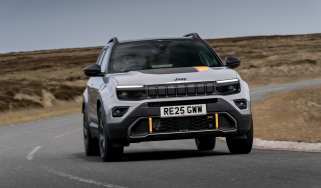
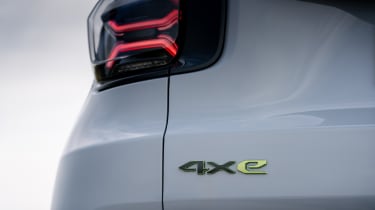
The vast majority of the petrol, hybrid and electric range is front-wheel drive, and those who desire or require a proper 4x4 will have to opt for the hybrid-powered 4xe. Four-wheel drive is quite rare for the small SUV class, with only a tight-knit group of rivals such as the Lexus LBX and Toyota Yaris Cross offering the benefits of all-wheel traction for slippery conditions.
In addition to the usual Eco, Normal and Sport drive modes, there are Mud, Sand and Snow settings, along with a hill descent system. Our experiences have been limited to lightly rutted dusty tracks, but we’d wager the Avenger could show its SUV rivals a clean pair of heels over wet or slippery terrain.
| Model | Power | 0-62mph | Top speed |
| Avenger 1.2 GSE 100 manual | 99bhp | 10.6s | 114mph |
| Avenger 1.2 e-Hybrid 136 4xe DCT6 auto | 134bhp | 9.5s | 121mph |
| Avenger Electric 156 auto | 154bhp | 9.6s | 93mph |
Performance, 0-60mph acceleration and top speed
The pure-petrol Avenger uses a turbocharged 1.2-litre three-cylinder (also used in the Peugeot 2008 under the ‘PureTech’ badge) engine that produces 99bhp and 205Nm of torque, and is paired exclusively with a six-speed manual gearbox. The official 0-62mph time is 10.6 seconds, which may sound slow, but the petrol Avenger provides a decent amount of punch, and doesn’t need to be worked very hard when accelerating up to motorway speeds. However, this engine has very little inertia, losing revs quickly when you dip the clutch during gear changes, and making it hard to shift smoothly unless you do it slowly; rushing things causes the car to lurch. This also becomes an issue downhill, where engaging a lower gear doesn’t result in a lot of engine braking.
The Avenger e-Hybrid’s mild-hybrid powertrain combines a 1.2-litre petrol engine with a small electric motor and six-speed automatic gearbox, and makes the same 99bhp combined as the regular petrol version. The electric motor is integrated directly into the transmission, and is powered by a small lithium-ion battery to provide instant torque to the engine, which is useful when accelerating away from a stop. According to Jeep, its 0-62mph time takes 10.4 seconds, while its top speed is the same as the pure-petrol model at 114mph.
The all-electric version uses a single electric motor to drive the front wheels. It pumps out up to 154bhp and 260Nm, which is enough to propel the Avenger from 0-62mph in 9.6 seconds. In Normal mode, the little SUV accelerates at a leisurely pace, clearly not in a hurry to go anywhere. Switching to Sport mode unlocks the maximum power output and delivers a big hit of torque when you first put your foot down, but after that initial performance boost, it feels much the same as its regular Normal driving mode. Either way, the electric motor feels punchy enough for most situations, especially when you’re in town. It’s only pulling onto motorway slip roads or when overtaking that the Avenger can feel a little short on shove.
The four-wheel drive 4xe, meanwhile, has 134bhp to play with. Thanks to this extra power compared to the regular petrol and mild-hybrid versions, this Avenger accelerates from 0-62mph in 9.5 seconds and reaches a top speed of 121mph.
Town driving, visibility and parking
The Avenger does a good job of dealing with harsh potholes at low speeds, because the suspension soaks them up without too much of the impact making its way into the cabin. We feel that the steering could do with a bit more weight and feel, but the upside of the light setup is that it makes the car super-easy to drive around town.
Although the least powerful petrol doesn’t look to offer the sort of shove off the line required to mix it with city traffic, in reality, it has a generous hit of low-down torque, so you can make it into gaps in the traffic without too much trouble. It could use a slicker six-speed gearbox, though, which isn’t as pleasant to use as the ones in the Ford Puma or Skoda Kamiq.
There is a brake regeneration system in the Avenger EV, but it isn’t strong enough to allow for one-pedal driving, which is a shame for a car so adept at city driving. In fact, it can be hard to discern when you’re driving in the regular ‘D’ mode, which allows the car to coast more, or the ‘B’ mode, which activates the regenerative braking, because its effects are so subtle.
Country road driving and handling
While the Avenger might be capable of dealing with potholes at low speeds, picking up the pace causes it to struggle compared to the Kamiq. It also lacks the body control of a Puma, and so the body of the Avenger leans more in corners. The little Jeep maintains a decent level of grip, but this isn’t the sort of car you drive quickly for fun.
This is also due to the steering, which isn’t brimming with feedback and seems a little vague around the straight-ahead position.
The Electric Avenger is responsive enough in its Normal mode to keep up with the flow of traffic on faster roads, but switching to its Sport setting sees throttle response become snappier, which takes a bit of getting used to. If you’re in Normal mode and need the extra power for an overtake, there’s an auto-style ‘kickdown’ in the pedal travel that unlocks maximum power.
Motorway driving and long-distance comfort
The Avenger provides decent comfort on longer journeys, with respectably low levels of wind and road noise for a small SUV. The regular petrol engine blends into the background, as does the EV version's electric motor. All versions feel stable at high speed, but the ride is a touch bumpier than rivals such as the Kamiq.
“On the road, the hybrid’s transition between petrol and electric is almost imperceptible – without the digital instrument cluster glowing blue, you really would be hard-pushed to tell when the engine drops in or out.” - Richard Ingram, deputy editor.
MPG & running costs
Pros |
|
Cons |
|
The base 1.2-litre petrol Jeep Avenger is rated to return up to 49.6mpg on the WLTP combined cycle. During our twin test between the petrol-powered Jeep Avenger and the Skoda Kamiq, the Avenger returned an average of 47mpg. This trumped the Skoda’s 45.3mpg, albeit only slightly.
The mild-hybrid Avenger e-Hybrid offers improved fuel efficiency over the pure-petrol model, with Jeep claiming it will return up to 57.1mpg. This version’s CO2 emissions are better when compared with the pure-petrol model: 111-114g/km compared with 127-130g/km.
Adding four-wheel drive to the 4xe’s mild-hybrid engine means it isn’t quite as efficient as the front-wheel drive e-Hybrid, but a WLTP figure of 52.3mpg isn’t bad, as is the 122g/km CO2 rating.
| Model | MPG | CO2 | Insurance group |
| Avenger 1.2 Summit | 49.6mpg | 129g/km | 24 |
| Avenger 1.2 e-Hybrid Summit | 57.6mpg | 111g/km | 24 |
| Avenger 1.2 e-Hybrid 4xe Upland | 52.3mpg | 122g/km | 27 |
Electric range, battery life and charge time
The electric Jeep Avenger uses the same battery and motor technology that powers the updated versions of the DS 3 E-Tense and Peugeot E-2008, among others. Under the floor is a 54kWh battery, of which 51kWh is usable. Jeep says it can provide enough juice to cover up to 248 miles across a mixture of driving conditions. That’s less than cars such as the Hyundai Kona Electric, but still competitive for this size of electric SUV.
During our twin test between an Avenger EV and the now-discontinued Mazda MX-30, the Jeep returned 4.3 miles per kWh, trumping the Mazda��s 3.6mi/kWh by quite some margin. We achieved that figure even after some long journeys on the motorway, so we expect to see even better numbers if you spend most of your time driving in town at low speeds. Either way, the Avenger EV comfortably provides 200 miles of range from a charge.
Speaking of which, the Jeep’s charging speeds are also on par with most of its main rivals, but again, not class-leading. The Avenger’s 100kW maximum charging speed is still enough for a 20-80 per cent top-up in 24 minutes, though. Fully charging a flat battery at home using a typical 7.4kW home wallbox should take around seven and a half hours.
| Model | Battery size | Range | Insurance group |
| Avenger e-Summit | 54kWh (51kWh usable) | 249 miles | 25 |
| Avenger e-Skyview | 54kWh (51kWh usable) | 249 miles | 25 |
| Avenger e-85th Anniversary | 54kWh (51kWh usable) | 249 miles | 25 |
Insurance groups
The electric Jeep Avenger sits in insurance groups 24 to 27 (out of 50), depending on which trim level and powertrain you go for. That means it attracts similar ratings to the Peugeot E-2008 (26 to 27), but it undercuts the Hyundai Kona Electric (31 to 33).
However, no model comes close to the Renault Captur, as this starts in group 10, meaning it could also be viable for new drivers.
Tax
Every Jeep Avenger, including the EV, qualifies for the standard rate of VED road tax. The electric models may also face the incoming eVED pay-per-mile tax should it be introduced as planned in 2028. Every variant, including the most expensive The North Face model, does at least sit below the luxury car tax surcharge.
Company car drivers will be best served by the electric Avenger, as EVs attract the very lowest Benefit-in-Kind company car tax rates.
Depreciation
According to our market data, the Jeep Avenger will retain between 36 and 43 per cent of its initial value after a period of 36,000 miles or three years, whichever comes first. Unlike some rivals there’s very little difference in depreciation between the petrol, hybrid and electric models.
The Renault Captur does a much better job of holding on to its value, as this retains between 48 and 53 per cent after the same period. The Skoda Kamiq fares slightly better, too, at 45 to 47 per cent.
Interior, design & technology
Pros |
|
Cons |
|
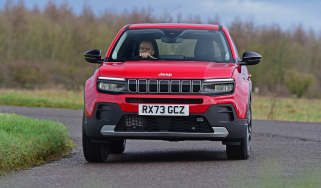
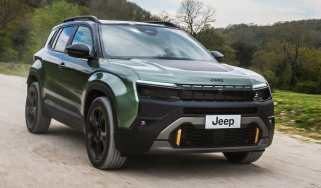
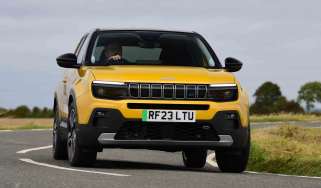
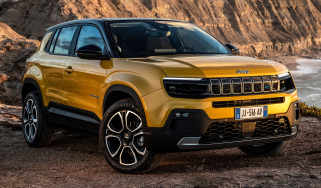
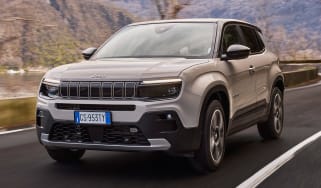
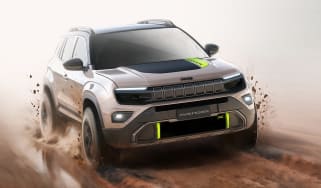
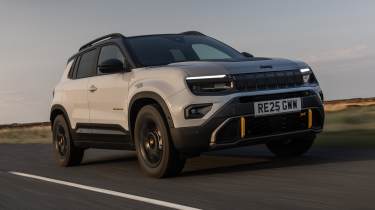
The design team’s brief for the Avenger was to fit “100 per cent of the brand DNA into four metres”, and frankly, they nailed it – even from 100 feet away, you know this is a Jeep. While other small SUVs feature curvaceous bodywork or a swooping roofline to look futuristic or improve aerodynamics, the Avenger has an unashamedly chunky, squared-off shape with a broad, planted stance to give it more attitude.
At the front is an evolution of Jeep’s iconic seven-slot grille, and overall, the Avenger does have a slightly aggressive face. But because of just how small it is, it reminds us of a puppy that enjoys growling at the postman in the morning.
There’s extensive cladding along the sides of the car and the wheel arches, which gives it the essence of a rugged off-roader and provides additional protection against knocks and scuffs. The rear is simple, with more black plastic and tail lights with an X-shaped motif.
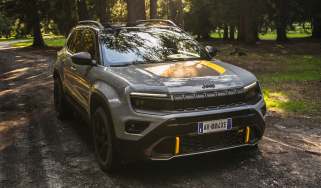
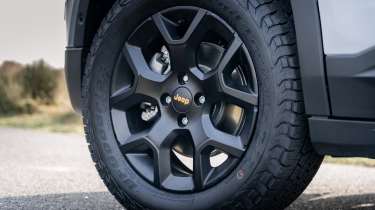
Jeep has also hidden numerous ‘Easter eggs’ around the Avenger, including seven-slot-grille motifs on the rims and front air intake, as well as a small illustration of the designer's son looking through a telescope at the stars in the corner of the windshield.
Interior and dashboard design
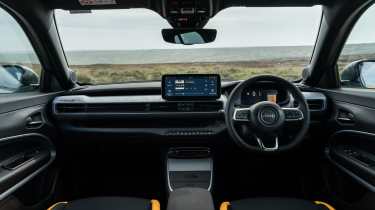
Inside, the cabin uses chunky toggle buttons on the dashboard, and a number of big buttons on the steering wheel and centre console. We’re not too fond of the interior light controls on the roof, though, because the unit looks like it came from the previous generation of Fiat Panda.
While we approve of the use of physical buttons in the Avenger to control frequently used features, such as the climate control, we prefer the simpler dial set-up used in the Kamiq. However, making small adjustments in the Avenger is still less distracting compared to the Puma, which has gone all in on touchscreen controls.
Materials and build quality
The swathes of hard plastic inside the Avenger may be rugged and reasonably hard-wearing, but overall it lacks the premium feel of something like the Skoda Kamiq. However, Jeep did make some efforts to close this gap as part of a mid-life facelift, where some fresh soft materials were introduced on the lower dashboard and doors.
Infotainment, sat-nav and stereo
The Avenger’s infotainment system is a significant improvement on older Jeep tech. The larger 10.25-inch screen we’ve tried so far is a good size, and it’s responsive. Standard-fit wireless Apple CarPlay and Android Auto ensure buyers can utilise apps from their phones. There’s a large storage cubby that lives below a row of climate controls, and a proper volume dial for the audio system.
There are physical ‘home’ and ‘settings’ buttons located just below the touchscreen; however, they’re small and not illuminated, so it may take a while to develop the muscle memory required to find these at night.
Boot space & practicality
Pros |
|
Cons |
|
Jeep claims there are 34 litres of storage in the front of the Avenger’s cabin – enough, apparently, to stash the contents of a carry-on suitcase among its various cubbies. The one below the central infotainment screen is handy and is accessed via a tablet-style magnetic cover on certain models. It’s deep and, in top-spec cars, hides a useful wireless phone charger large enough to accommodate even the biggest smartphones.
There’s also a handy shelf in the dashboard for your passenger’s phone, or perhaps to keep your wallet and keys in sight. The centre console features movable dividers that can serve as cup holders, with additional storage in a deep cubby beneath the armrest. The front door bins are on the thin side, though, and there aren’t any in the rear. There’s also just one USB-C charging port in the back, so kids might have to squabble over who charges up their tablet on longer journeys.
Dimensions and size
The baby Avenger lives up to its nickname by being shorter in length than both the Skoda Kamiq and Peugeot 2008. However, its chunky styling helps towards it being a bit wider than both of these rivals.
| Dimensions comparison | |||
| Model | Jeep Avenger | Skoda Kamiq | Peugeot 2008 |
| Length | 4,088mm | 4,241mm | 4,304mm |
| Width | 1,797mm | 1,793mm | 1,770mm |
| Height | 1,541mm | 1,534mm | 1,550mm |
| Wheelbase | 2,560mm | 2,650mm | 2,610mm |
| Boot space | 321 litres | 400 litres | 434 litres |
Seats & passenger space
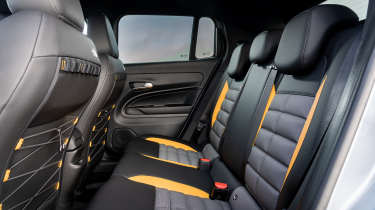
Visibility is good from the driving seat, and the squared-off bonnet makes the car easy to place on the road. Its boxy shape also allows for an impressive amount of headroom up front, with enough shoulder room for a pair of adults over six feet tall.
The seats are comfortable, with decent side bolsters, so you don’t feel like you’ll slide out of them through the corners. Even drivers who are six feet tall or above should have no problem finding a comfortable driving position thanks to lots of adjustment in both the seat and steering wheel.
However, rear legroom is somewhat on the tight side, and if the driver is tall, there’s only enough room in the back for small kids. With someone smaller in stature at the wheel, and the front seats a little further forward, you might just be able to accommodate two adults at a push, but we doubt the Avenger can seat five as Jeep has claimed. However, we like that the backs of the front seats are squishy, so rear passengers’ legs aren’t crushed against hard plastic if they need to squeeze in.
There are three sets of Isofix mounting points in the Avenger – one on the front passenger seat and the remaining two on the outer positions of the rear seats. However, the small rear door openings could make installing a child seat a little trickier than in some rivals.
Boot space
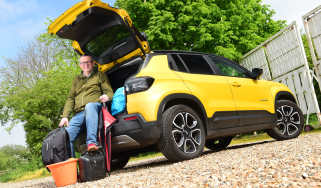
The Avenger offers 321 litres of space (282 litres in the electric version and 262 litres in the 4xe), which is slightly larger than a Vauxhall Corsa supermini, but somewhat shy of family hatchbacks like the Volkswagen Golf.
However, the one-metre-wide opening and nice square shape of the load bay also boost practicality, while folding the rear seats down gives you a total of 1,277 litres (1,252 litres in the electric version and 1,218 in the 4xe) of space to play with. There’s no ‘frunk’ or storage under the bonnet of the EV like you get in a Hyundai Kona Electric, but there’s enough space under the boot floor to keep the charging cable out of sight.
Towing
Those who need to lug a trailer or caravan will have to avoid the electric Avenger because this isn’t rated to tow. Instead, the pure-petrol model is the best choice due to a towing capacity of up to 1,200kg. The front-wheel drive hybrid isn’t far behind with a maximum 1,100kg, but the four-wheel drive 4xe only manages 920kg.
“The Skoda Kamiq is roomier than the Jeep in the back seats. There’s more leg and headroom, while the bench itself is a comfier shape for your back, and the headrests are better positioned, too.” - Alex Ingram, former chief reviewer.
Reliability & safety
Pros |
|
Cons |
|
The Jeep Avenger received a disappointing three stars out of a possible five from safety experts Euro NCAP when put through the updated test in 2024. That’s a shame when one of our favourite small SUVs, the Renault Captur, gets four stars.
The Avenger was criticised for not having a central airbag between the front seat occupants to protect them from striking each other in a side impact, and not having a rear child presence detection system. There were also concerns about the pressure on the chests of rear seat occupants in a head-on crash and the lack of an effective system for detecting vulnerable road users.
In terms of safety kit, every Avenger is equipped with six airbags, ISOFIX on the front passenger and rear seats, cruise control, lane departure warning, traffic sign recognition, drowsy driver detection, traction control and rear parking sensors. Mid-range Altitude-spec models add adaptive cruise control, a 180-degree rear-view camera, and automatic high/low beam, while range-topping Summit cars feature blind spot monitoring and, on automatic models (e-Hybrid and electric), lane centring and traffic jam assist.
The Avenger is yet to appear on the Driver Power best cars to own scoreboard, but the powers that be at Jeep have clearly been working hard to improve the brand’s reputation. With an eighth-place finish out of 30 in the Driver Power best manufacturer results table, Jeep is far ahead of rivals like Fiat (18th), Skoda (20th) and Kia (25th).
| Euro NCAP safety ratings | |
| Euro NCAP safety rating | 3 stars (2024) |
| Adult occupant protection | 79% |
| Child occupant protection | 70% |
| Vulnerable road user protection | 59% |
| Safety assist | 53% |
Buying and owning
- Best buy: Jeep Avenger Electric Summit
The cheapest Avengers are those powered by combustion engines, with petrol models starting from £30,400, with the e-Hybrid carrying a premium of around £1,000.
If you’d prefer the fancier 4xe, this starts from around £500 more than the standard e-Hybrid, while the EV kicks off from around £33,600.
It’s not the cheapest variant to buy, but the electric Jeep Avenger offers some of the lowest running costs, as well as some big tax savings for company car users. Being able to cover over 200 miles on a single charge should prove plenty for most daily needs, and this is easily one of the easiest SUVs to drive in and around town.
The fancier Skyview trim offers some useful added luxuries, but the regular Summit trim is over £2,000 cheaper and still comes with a good amount of kit. In order to save a bit of cash, we’d stick with this model.
If you're tempted towards the Jeep Avenger, we are here to help. You can use our Buy A Car service to configure your new Jeep Avenger and get the best offers from nearby dealers, check out top Avenger leasing deals or search for used Jeep Avenger models. Need to sell your current car? Cut out the hassle and get a great price by visiting our Sell My Car page.
Jeep Avenger alternatives
With a choice of petrol, hybrid and electric power, the Jeep Avenger has to compete with a vast array of small SUVs.
Petrol and hybrid competitors include the top-selling Ford Puma, as well as the Renault Captur, Nissan Juke, Volkswagen T-Cross, Skoda Kamiq and Hyundai Kona. There’s no shortage of rivals from within the Stellantis group, either, with the Vauxhall Frontera, Citroen C3 Aircross, Peugeot 2008, Fiat 600 and Alfa Romeo Junior Ibrida all vying for a piece of this lucrative market.
Take a step into the world of electric cars, and there are plenty of alternatives here, too. The Ford Puma Gen-E, Hyundai Kona Electric, Renault 4 and Volvo EX30 are all within the Jeep Avenger EV’s crosshairs. It has plenty of zero-emission siblings, too, in the shape of the Peugeot E-2008, Citroen e-C3 Aircross, Vauxhall Frontera Electric, Fiat 600e and Alfa Romeo Junior Elettrica.
Jeep Avenger pictures
Key updates of the Jeep Avenger review
31 July 2026: Latest line-up and pricing information.
Frequently Asked Questions
Every Jeep Avenger is covered by a warranty lasting for three years or 60,000 miles, whichever comes first. The electric model’s battery is also covered by a separate plan lasting for eight years or 100,000 miles.
Deals on the Avenger and alternatives