Used Jaguar XJS (1975 to 1996) buyers guide: elegant coupe has stood the test of time
Buy wisely to secure a cherished example and this upmarket British grand tourer makes a sensible classic purchase

Verdict
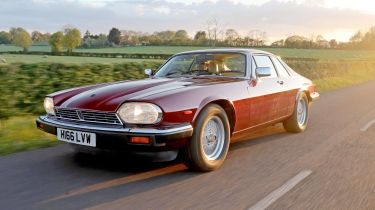
It’s ironic that it took decades for the XJS to be accepted, but now many enthusiasts reckon it’s one of the company’s high spots, especially now that Jaguar has turned its back on the combustion engine.
Jaguar built 115,413 XJSs and there are still thousands of them left in the UK, although many are not on the road. Values have been increasing for a while, but this is still a car that can represent spectacular value. Buy badly, though, and you could end up with a money pit, because repair costs can be high.
There are more cherished XJSs out there than ever though, and if you buy well you’ll have a superb long-distance cruiser for relative buttons.
Jaguar has come in for a lot of flack lately, but it isn’t the first time in the company’s history that people have struggled to work out what the brand is trying to achieve. In 1975 Jaguar introduced the XJ-S, with the grand tourer picking up where the E-Type left off.
Many people assumed that the XJ-S was a replacement for the E-type, but it was never intended to be; Jaguar reckoned that buyers wanted something more civilised than a sports car, so it came up with a grand tourer instead.
Used - available now

2023 Mercedes
GLA
68,500 milesAutomaticPetrol1.3L
Cash £18,990
2017 Nissan
X-Trail
83,400 milesAutomaticDiesel1.6L
Cash £9,250
2023 Polestar
2
23,400 milesAutomaticElectric
Cash £23,210
2014 Volkswagen
Polo
92,630 milesAutomaticPetrol1.4L
Cash £6,490The styling was controversial and the build quality of early cars was suspect, but it’s been a while now since the XJ-S (latterly XJS) came in from the cold. Over the Jaguar’s lifespan things improved, and with their classic status, these smart-looking coupés and convertibles can now make a great buy.
History
The XJ-S arrived in 1975 with a 5.3-litre V12 engine and automatic or manual gearboxes; the latter was dropped in 1979, then in 1981 the more efficient V12 HE (High Efficiency) engine made its debut.
A 3.6-litre six-cylinder engine was available from 1983, along with the XJS-C cabriolet, with a fixed roll bar. At first this came only with the 3.6-litre engine; by 1985 there was also a V12 option. In 1988 the Convertible replaced the XJS-C (with no roll bar), offering V12 power only, and the sportier XJR-S 5.3 coupé arrived.
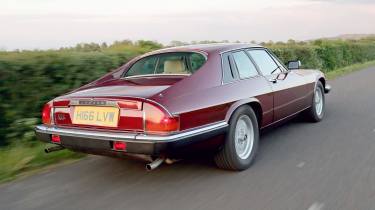
A year later the XJR-S got a 6.0-litre engine, then in 1991 a facelift brought a redesigned cabin, a restyled rear end and revised side glass. The model name was also changed from XJ-S to XJS.
A 4.0-litre straight-six replaced the 3.6-litre engine in 1992, with coupé or convertible bodystyles. A 6.0-litre V12 engine was also introduced in 1992, with a four-speed automatic transmission, then in 1995 the final XJS V12 was made. The last XJS of all was built in 1996, as the XK8 took over.
Which one should I buy?
Six-cylinder cars make the most sense, but if you want to indulge yourself, nothing less than a V12-powered XJS will do. However, twice the cylinder count can mean double the running costs, so make sure you have a healthy contingency fund if you buy a 12-cylinder model.
As the XJS evolved, it got more usable and maintenance costs reduced, especially for six-cylinder editions. Practical buyers want six-cylinder XJSs because they’re easier to maintain and cheaper to run, while collectors and those who use their cars sparingly will want a V12. A 4.0-litre auto is the best XJS for regular use, because it’s built to a higher standard and it has more oomph than the 3.6-litre models. And by the time the 4.0-litre cars were being built, Ford was in charge, which meant more reliable electrics.
On the road
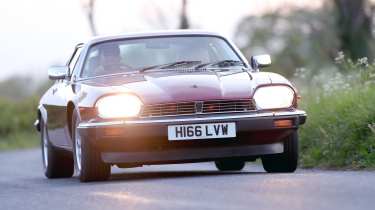
It was after the XJS went out of production that sportiness became the norm over comfort, so the XJS is a superb long-distance cruiser because the ride quality is so good. The downside is wallowing in the corners, which is why some owners stiffen things up a bit.
Be wary of such cars, though, because most buyers/owners want originality and the ride/handling balance from the factory was very good. The steering should be sharp and the brakes very strong, while the automatic gearboxes are silky smooth. Any car that doesn’t have these traits is probably in need of some TLC.
Prices
There’s a fairly even split between V12s and six-cylinder cars, there are three times as many coupés as convertibles, and autos are much more common than manuals. UK buyers favour open-topped cars; the cabriolet is better than the convertible because it’s far stiffer, but buyers prefer the later model.
Just £5,000 buys a running 3.6-litre automatic coupé, with the best examples worth £10,000 or so. A project 3.6-litre XJS-C fetches £5,000, while good cars are £10,000. There are plenty of pre-facelift V12 convertibles, but facelifted cars are rare; buyers generally prefer the later cars.
Worthwhile 4.0-litre and V12 convertibles (early or late) start at £10,000 and run to £25,000 for something nice, but the much rarer 6.0-litre examples can fetch £40k.
Alternatives
The BMW 6 Series was up against the earlier XJS, while the original 8 Series competed with the later XJS; it came in coupé form only, with straight-six or V12 engines. Three other German options are the Porsche 928 along with the Mercedes SEC and SL; for the latter choose from the R107 (1971-1989) or the far more modern R129 (1989-2002).
The Aston Martin DB7 offers excellent value, while the Ferrari 400 and 412 are more costly to buy and run, but they’re alternatives all the same. Among the other options are the XJS’s replacement, the XK8, and the Lotus Elite, although really good examples of this left-field British GT are hard to find.
Check the price of used Jaguars with our free car valuation tool…
What to look for
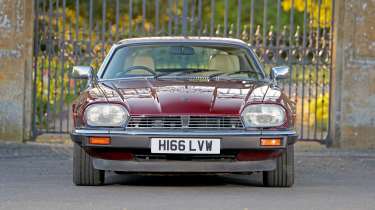
Top tips for choosing your XJS...
Rust
The bodyshell was galvanised from 1994. On earlier cars you need to check everywhere for rust, including the floorpans, sills, wheelarches and screen surrounds. Repairs can easily run into thousands.
Engines
The engines are generally tough and all parts are available for servicing and rebuilds. The six-cylinder engines can overheat; white emulsion on the underside of the oil filler cap betrays a blown head gasket.
Steering bushes
While the steering racks wear well, their mounting bushes do not, but new ones are available. The suspension isn’t weak, but replacing the Jaguar’s springs and dampers can transform the driving experience.
Brakes
All XJSs had discs all round and they work well; anti-lock tech arrived in 1988. Until 1993 the discs were inboard, so not very accessible, and as a result they’re often neglected.
Interior
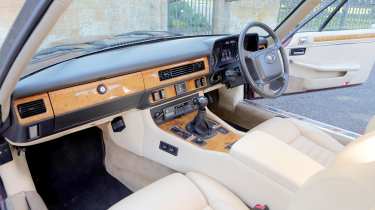
The XJS’s interior is pretty olde world with lots of wood and leather, and it’s all the better for it. The seats are comfy and supportive, the low-slung driving position is good (with room for tall drivers), but the rear seats are best suited to small children only. Boot space is plenty for a week away, with more than 400 litres available in all models.
Running costs
There’s a big difference in running costs between six and 12-cylinder editions. The latter cost a lot more in maintenance and fuel, but when it comes to servicing there’s a lot that you can do yourself. If you prefer to leave things to the professionals, there’s an army of highly regarded Jaguar specialists around the country.
The early V12 gives just 15mpg on a run; the 6.0-litre engine can return closer to 20mpg, while you can expect up to 25mpg from the 4.0-litre straight-six, which is more than
the 3.6-litre unit, which uses older technology – that typically gives around 20mpg. But insurance on a classic-car policy should be cheap, while road tax is inexpensive, too. Because all XJSs were registered before 1 March 2001, you’ll pay £375 for road tax each year whether you buy a car with six cylinders or 12.
Living with an XJS
You need to garage your XJS if at all possible, and at 4.82m long and 1.79m wide these are relatively compact cars in modern terms; a Mercedes C-Class has about the same footprint.
There are several big clubs that can help you with advice; seek out xjsclub.org, jec.org.uk and jaguardriver.co.uk, which are the main ones. It’s well worth joining one of these for guidance on the best specialist specialists to use, or how to maintain your XJS on a DIY basis, plus they offer lots of chances to get out and use your car.
Perhaps most importantly though, through each club’s forums you’ll be able to pin down the best source of parts (because quality can be variable), and discover all sorts of other ways to get the most out of your XJS ownership.
Driver Power owner satisfaction
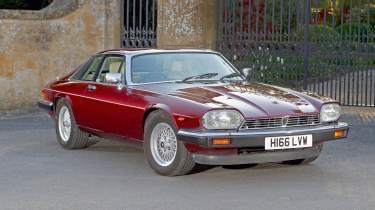
Be very careful about taking on an XJS that needs much work, because while you could be forgiven for assuming that most parts are available, even items such as outer panels are scarce.
Lots of used bits are available through specialists and clubs, but while many are cheap, labour costs to get work done tend to be high. Even a good car will need to have cash spent on it, but buy well and your outgoings shouldn’t be very high, and certainly far less than the depreciation on a modern car.
Did you know you can sell your car through Auto Express? We’ll help you get a great price and find a great deal on a new car, too.