Ford spills the beans on how it’ll build its £22k electric truck
Ford’s revolutionary new model will change the way it builds all its future cars

New information about Ford’s revolutionary $30,000 (£22,380) electric pick-up truck has been revealed, with fresh light being shed on how the American company will execute this ambitious program profitably.

Ford CEO Jimmy Farley hasn’t been shy about the fundamental transformation he thinks is required for legacy brands to remain competitive with Chinese rivals, and it’s one this new all-electric pick-up will introduce as part of a £3.8billion investment in the brand’s future.
The new pick-up will be flexible, efficient and inexpensive, but it won’t be reaching the UK in the short term – Ford needs to prove it can sell them first in North America. It will be similar in size to the existing Ford Ranger, although the two won’t be related under the skin.
How to build a profitable EV in 2026 and beyond
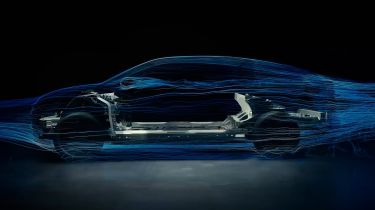
Ford will focus on two pillars in the new pick-up’s development, starting with the way it’s being designed and engineered. The first is to improve aerodynamics, not just for the sake of range, but also cost. With every mile of improved range, Ford can reduce the size of the battery. This reduces weight, cost and engineering complexity on all metrics.
Three examples of aerodynamic optimisation have already been detailed, starting with an aerodynamic bed cover in a teardrop shape that’ll significantly reduce high-speed drag. More compact door mirrors, with a one-piece mechanism that is similar to those seen on new Volvos and Polestars, shrink the size by 20 per cent without minimising the glass area, and unlock another 1.5 miles of range.
Finally, the underbody fixings have shallower mounting holes and flush heads, and there are new wind deflectors that push air around the rear wheels to reduce under-body turbulence – these are all small changes, but there’s another 4.5 miles saved.
The second is an introduction of Tesla-style megacastings, which reduce complexity around large, complicated parts for the chassis, such as the front bulkhead and axle. Ford says the Maverick, its current ICE-powered mid-sized pick-up, has 162 structural components in this area. The new EV version? Just two.
What will the Ford pick-up look like?

Some of the released imagery also revealed the beginnings of what this new pick-up could look like, and it’s nothing like any of Ford’s existing models. The bonnet is much shorter than the firm’s traditional ICE models, and creates a high scuttle point which is where the base of the windscreen sits. This then drops down to the windowline.
Simplified Ford script on the nose and thin vertical headlights can also be spotted on some early renders, along with a new four-spoke wheel design. These fundamentally shifted proportions suggest the new model will be far more contemporary-looking than its existing vehicles – a choice that other companies have made with varying degrees of success.
How will Ford build the new pick-up?
Ford will also create a new manufacturing process, after inventing the production line with the Model T 122 years ago. The new car will be built in a tree-like manufacturing process, with substantial sub-assemblies being made on separate lines before joining up at the end for final assembly. Ford is hoping this new way of building cars won’t just be relevant to its US operations, but to all its global manufacturing.
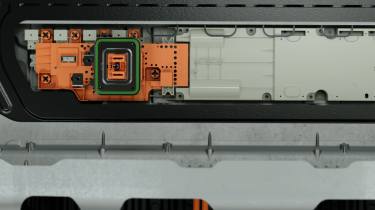
This innovation also expands to the LFP battery packs, which will be manufactured in a new battery plant in Detroit, with Ford promising that it’ll be able to achieve the same range with one-third less capacity. This has other benefits including less weight, lower material costs and better efficiency.
The entire platform is designed to be flexible and practical, but it’ll go beyond just a new pick-up truck. Ford will eventually expand this new architecture to include a number of family SUVs, crossovers and commercial vans. If you’re in the market for a pick-up, or any electric car, check out the Auto Express Buy A Car for all the latest deals.
The US brand will also integrate V2H (vehicle-to-home connection), which will be able to power your home in a black-out for up to six days from the car’s battery. This might be a niche benefit for somewhere like the UK, but is increasingly important to American customers.
Ford hasn’t confirmed if or when any or all of these new models will be available in the UK and Europe, but given that they will all run an electric powertrain, it’s not out of the question for the brand to sell its new generation of electric vehicles here. Even if the specific models don’t make it over, it would be foolish of Ford not to apply the same innovative thinking and execution to its European operations.
Tell us which new car you’re interested in and get the very best offers from our network of over 5,500 UK dealers to compare. Let’s go…