Best car news and reviews 2025: What happened in the world of cars?
We look back at the biggest moments of 2025 in the wonderful world of cars

2025 has certainly been a busy one, the new car announcements came thick and fast, we saw automotive technology make its usual giant strides forward, and our team of expert road testers covered thousands of miles to bring you the verdicts you can trust. Beyond that, the world of politics had an even bigger say on direction of travel in the automotive industry than usual. We had a mountain of taxes, tariffs and new legislation to contend with and explain.
Every month brought its fair share of surprises, whether it was the long-awaited return of Renault’s supermini or a major industry shake-up triggered by American government policy. Along the way, we’ve driven everything from affordable everyday hatchbacks to hugely powerful supercars, putting each one through our in-depth review process to see how it performs where it really counts.
Below is our pick of the key car news stories and reviews from January to June that made 2025 stand-out. Whether you’re here to reminisce, or simply catch up on what you may have missed, read on to discover our highlights, and let us know in the comments which 2025 moment stood out for you.
January
Toyota at work on a new MR2 sports car
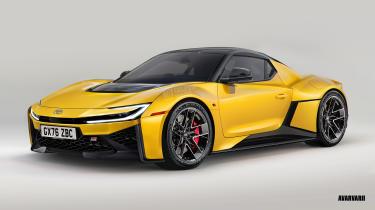
There’s been very little for sports-car fans to get excited about in recent years. Manufacturers have had to focus on low-risk family SUVs, but news of a new Toyota MR2 gave cause for optimism.
We scooped the story at Tokyo Auto Salon in January, where our sources suggested the maker was working on a low-slung sports car inspired by the 2023 FT-Se concept. It's based around a new, mid-mounted turbocharged petrol engine, and we could see the idea realised as soon as next year.
Citroen remains silent on retro-styled 2CV EV
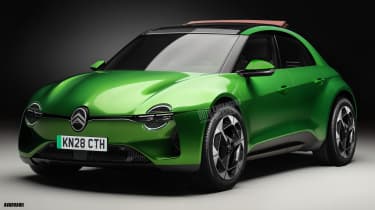
We don’t much like writing stories about cars that aren’t coming. We’d much rather write about models due for release in months and years to come. But in January we felt compelled to set the record straight after rumours began circling about a possible modern Citroen 2CV.
You see, we had it on record from CEO Thierry Koskas that the company had no plans to resurrect the snail shape for a new-age EV.
We revisited the story later in the year, visualising a couple of possible options, but the French maker is yet to hint at any retro remake.
Digital driving licences spark security fears

Back at the start of the year, we revealed the security fears surrounding plans to digitise the driving-licence process.
The Government insisted it could lead to a huge £45bn in overall efficiency savings, but concerns were raised, highlighting the risk of holding huge personal data in one place. Indeed, Infosecurity magazine insisted that the GOV.UK Wallet was “certain to become a target”.
Despite saying the scheme would be piloted this year and rolled out in 2027, there has been no public update to the process since January.
Tesla’s Model Y gets better
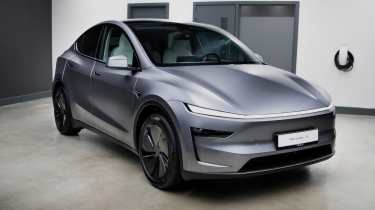
In typical Tesla fashion, news of the new Model Y broke online overnight and right on our deadline – and it’s testament to the Auto Express news team that we were able to turn it around in record time.
Major changes gave 2024’s best-selling car in the world a fresh new look, with a front lightbar inspired by the polarising Cybertruck pick-up. The rear was also tweaked with a much cleaner design – again focused around a full-width lightbar, with the number plate set low in the bumper. The slippery redesign also brought about a reduction in the car’s drag coefficient.
A new infotainment system, running through the same 15.4-inch central screen, lifted the tech offering inside – boosted by an additional eight-inch monitor in the rear. The Model 3’s controversial steering-wheel indicator switches were ditched in favour of a conventional stalk, but the drive selector was relegated to the edge of the main display. A new-look centre console and trim changes completed quite a substantial set of mid-life upgrades.
Changes under the skin brought gains in range and performance, while 250kW rapid charging would ensure the Model Y retained its edge when UK sales began. Tesla’s Supercharger network needs no introduction; even in 2025, it sets the benchmark all other providers strive to meet.
The Model Y ended up being a car we featured regularly in the pages of Auto Express in 2025. It triumphed against the Audi Q4 e-tron and Hyundai Ioniq 5 in April, before gaining additional plaudits in Rear-Wheel Drive guise when we tested that car in August.
The 460bhp Model Y Performance was announced in September, just ahead of our first drive on UK roads a few weeks later. Then in early December, the new entry Standard model was confirmed for the UK, costing under £42,000. There’s no avoiding the controversy that’s surrounded Tesla this year, but no matter what the criticism of Elon Musk, the cars shine.
Hot Skoda Superb Estate is loads faster
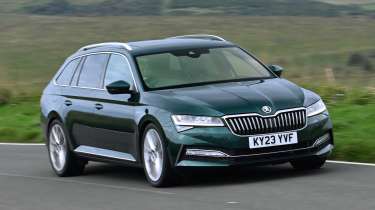
Skoda realised every petrolhead family-man’s dream when it threw us the keys to its Superb ‘Sleeper’ project: a previous-shape Estate in luxurious L&K spec. For the overhaul, the Czech maker turned to Swindon-based REPerformance, who fitted a bigger turbo, high-spec intercooler and uprated exhaust. The 477bhp and 661Nm of torque made it “one of the fastest real-world cars you can buy” according to Steve Sutcliffe. New suspension and AP Racing brakes worked wonders for the handling, too.
Kia K4 shows promise
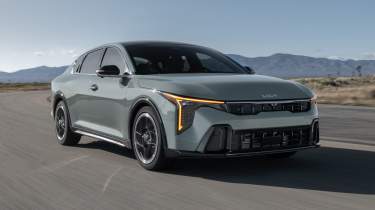
We were among the very first international media to try the all-new Kia K4, which is being billed as a replacement for the Ceed hatchback, early in 2026.
Despite being a US-spec car with a 1.6-litre turbo petrol engine, it was obvious from the outset that it was a huge improvement on the outgoing model. A “larger, more premium machine”, it really impressed us during our first encounter. We can’t wait to try the car on more familiar European and UK roads very soon.
XPeng G6 SUV makes good first impression
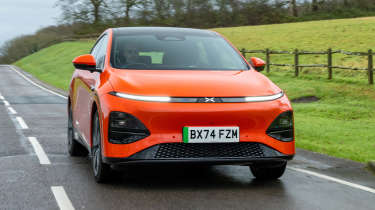
While not enamoured by its looks, we couldn’t help but be impressed by XPeng’s first UK car: the G6 SUV that's designed to rival the Tesla Model Y.
We hailed it “good to drive, relatively efficient and fast to charge, with plenty of kit and room for the children” when we drove it back in January. We even stuck our necks out and suggested that XPeng deserved its place in a market that continued to be flooded by Chinese newcomers. Progress has stalled somewhat since then; the larger G9 and luxurious X9 MPV are due in 2026.
February
MINI puts Oxford EV switch on hold due to slow global demand
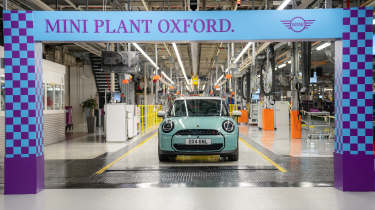
MINI had long been gearing up to move production of its Mk2 electric hatch to Oxford, as part of a £600m investment in the plant. However, as we exclusively revealed back in February, those plans were shelved this year due to “slow global take-up of EVs”.
The news came as a huge blow to UK car production and cast doubt on parent company BMW’s plans to make the Oxfordshire factory electric vehicle-only by 2030. Apparently, continuing production in China made more financial sense than shifting things to the UK.
Mazda CX-6e SUV scoop
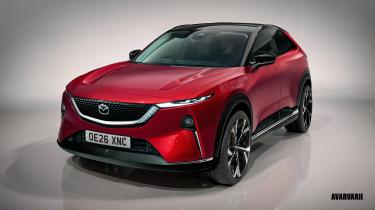
Mazda doesn’t like to follow the crowd. Yet when it announced its first proper EV – ignoring the slow-selling MX-30 – was going to be a BMW 3 Series-sized saloon, rather than a more popular, more profitable SUV, it raised a few eyebrows.
There were questions for Mazda’s top brass and Auto Express was the first to ask them. Sitting down with UK MD Jeremy Thomson in February, we discovered that following the launch of the 6e, Mazda would turn its attention to the more obvious SUV shape; the Brit boss told us the maker would “start plugging all of the gaps” with “the mainstream kind of cars you expect”.
Our exclusive images, based on the 2024 Arata concept, blended in production details from the 6e saloon, hinting at how the mooted CX-6e could look. Wearing Mazda’s Soul Red paint, it showed a set of split-level headlights, big wheels and a sloping roofline. Darkened B-pillars, black wheelarch trim and deep side skirts gave the model a chunky SUV stance, while sharp surfacing and flush door handles added a modern look.
While technical detail was initially thin on the ground – it wasn’t clear at the time whether the new SUV would share its platform and battery tech with the 6e saloon, or if it would be created as part of a joint venture with Chinese automotive giant Changan – our exclusive story was confirmed when Mazda revealed the EZ-6 at the Shanghai Auto Show in January. And it was incredible how close our images were to the purple production car.
But while it’s unlikely to differ hugely, Mazda is yet to pull the covers off the European-market electric SUV, which we expect will use the CX-6e name. A full reveal is due early in 2026, less than 12 months since we published our tell-all scoop story. Once again, Auto Express proved its place as first for new-car news and reviews.
Industry asks for help to hit EV target
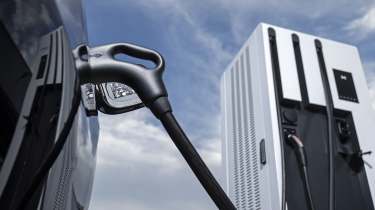
We were unaware in February of how changes to the Zero-Emissions Vehicle (ZEV) Mandate would pan out. But as pressure mounted, the industry called for support to aid the country’s transition to a more sustainable future.
Brands called for renewed incentives to help boost consumer uptake of EVs – something that only came to fruition later in the year. But back in February makers were already describing EV targets as “unsustainable”, as Ford put it, and calling for help that would eventually come in the summer.
Next small Dacia EV to repeat Renault formula
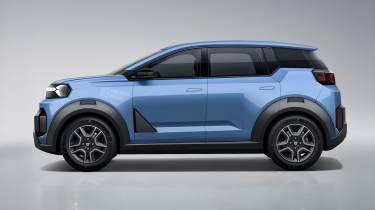
Dacia’s China-built Spring electric city car only went on sale in 2024, but earlier this year the Romanian manufacturer teased plans to build a new baby EV in Europe – and promised it would come to market in just 16 months.
Parent firm Renault has shown how it can cut production times with the new Twingo; lessons it will hope to repeat with Dacia in 2026. Indeed, the new EV will be built on that car’s AmpR Small platform, and utilise much of the same tech. Prices are set to start from around £15,000.
Grande panda doesn’t disappoint
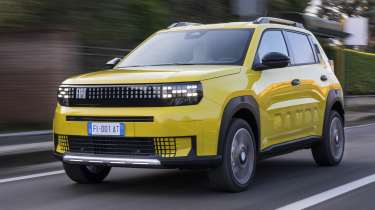
The Fiat Grande Panda was one of 2025’s most hotly anticipated new models, so when the opportunity came about to drive it so early in the year, we simply couldn’t wait – we were on that flight to Italy faster than you can say “Ciao, Bella!”
Having sold more than 7.8 million examples over three generations, the Panda is an incredibly important nameplate for the established Italian car marker. Each version, dating back as far as 1980, had a “simple, unfussy yet masterful execution of both form and function” – as our man explained at the time.
The new car is available with a choice of petrol and electric powertrains, but it was the latter we tried first. Fitted with a modest 44kWh battery and a single e-motor mounted to the front axle, the Panda has a claimed a range of 199 miles – although the 0-62mph sprint takes a leisurely 11.5 seconds. Flat out, you’ll only just be breaking the national speed limit, because the top speed is an underwhelming 82mph.
But putting performance to one side, we were wowed by the bright yellow supermini’s charm. The handling was tidy, the ride comfortable, and we found it particularly efficient when trundling around the back streets of Turin. While power tailed off at the top end, we were pleased with how adept the car felt on faster roads, too.
Inside, the Panda belied its low list price with a funky cabin and plenty of usable technology. “Underneath the design-led garnish,” we said, “is a well proportioned shape with excellent surfacing”. The materials used were “distinctive and cleverly applied” with a host of innovative ‘Easter eggs’ hidden within. The Grande Panda’s boxy silhouette made it more practical than a Renault 5 EV in the rear, too.
Our four-and-a-half-star verdict was entirely justified. Fiat “played a blinder” by delivering a car that is “not only cheap, but packed with character, and if you so wish, an electric powertrain”. We concluded with a simple: “Bravo, Fiat”.
Then, two weeks later, we spilled the beans on plans for a new baby ‘Pandina’ city car based on the same low-cost Stellantis Smart Car platform as its bigger brother. Fiat CEO Oliver Francois told us at the time that the as-yet-unnamed entry model “needs to be simple, innovative”, suggesting that Fiat will look at including only what is strictly necessary – rather than filling it with big-car kit that would inflate the price.
What’s most exciting is that it could be revealed as soon as next year. Fiat is planning a whole family of Panda-related products in time; the line-up will eventually even include larger SUVs and fastbacks. It could be just what the Italian company needs to turn its fortunes around.
Atto 2 begins BYD’s new-car avalanche
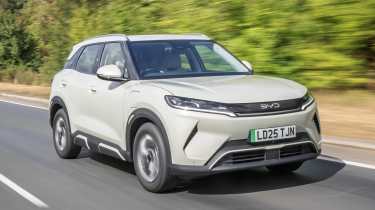
Another month, another new BYD – that’s probably how you’ve felt flicking through the pages on Auto Express in 2025. The Chinese brand’s product deluge began in February with our first drive of the Atto 2 – a small electric SUV.
The BYD impressed us with its practical, high-quality interior, plus its easy and agreeable driving dynamics. While prices hadn’t been confirmed at the time, its so-so range and charging speeds left us a little cold.
Five-star Porsche 911 GT3 thrills us
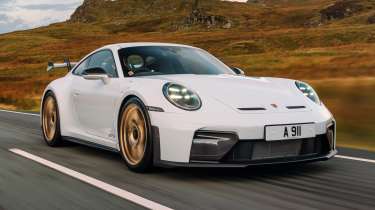
Porsche has perfected the art of subtly updating its cars to keep buyers coming back. While a number of the 992-generation 911 variants had been tweaked in 2024, our first chance to drive the track-focused 992.2 GT3 came in February – when we instantly awarded it a full five-star verdict.
It built on the old car’s exceptional agility with redesigned suspension and steering, while offering more customisation choices and the option of rear seats. However you spec it, the GT3 “remains one of the most thrilling driver’s cars on sale”, we said.
March
VW regains its EV spark
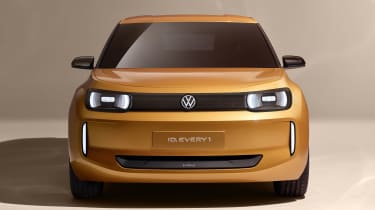
Not satisfied with promising a sub-£25,000 EV next year with its new ID. Polo, VW revealed its most ambitious electric-car project yet in the new ID. Every1 Concept back in March. This cute show car foreshadows a future city-sized model, probably called ID. Lupo, due in 2027 with a proposed £17,000 starting price.
But for VW this is more than just an exercise in building a cheap electric car; it’s a display of how much the German brand is committed to creating EVs for the European masses. To be built on the MEB+ platform that’s about to be used under the new ID. Polo, this A-segment model should have a battery size of around 35 to 40kWh, powering the front wheels via a small electric motor.
At just under 3.9 metres long, it is quite a lot larger than the 3.54m Volkswagen up! it will replace. Yet like its predecessor, the ID. Lupo will be tasked with opening the VW range with the same build quality and design. Conversations with VW head of design Andy Mindt reveal that the car we’ll see in showrooms shouldn’t vary much from the concept.
And it’ll do it alone, because unlike the up! – which shared its platform and much of its body with the Skoda Citigo and SEAT Mii – the new ID. Lupo will be unique to the VW range.
As we reported back in March, it’ll also be the first of VW’s new ‘software-defined vehicles’, built on the back of a joint venture with American EV maker Rivian. Drawing its knowhow, rather ironically, from some of the largest EVs on US roads, VW is using this partnership to streamline its smallest car’s electronics, running all elements from the powertrain, infotainment and battery management through one electronic brain.
This should also yield benefits for drivers, with a new-generation user interface and efficiently packaged interior that’ll seat four people in relative comfort. There might be a GTI version, as we reported exclusively.
The new ID. Lupo won’t be the only new European EV at the £17k price point, though, because Renault has beaten it to the punch with its new Twingo, which will go on sale by the middle of next year.
Between them, these French and German examples of low-cost city-sized EVs will have the job not just of mobilising the European masses, but also proving to emerging market rivals from China and other global economies that Europe has the edge when it comes to design and engineering. Together, these two ambitious models prove European brands are still relevant when it comes to simple, low-cost motoring.
Dacia’s new family SUV is Bigster news
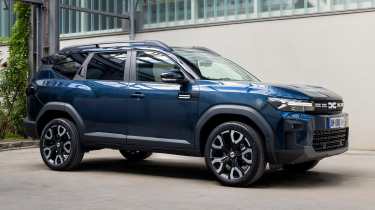
One of the best real-world cars, the Dacia Duster, received a big glow-up last year, and in 2025 its larger, even more versatile brother entered the ring. The Bigster packs more space inside its practical body, while adding new powertrains and a similarly attractive price point.
Unsurprisingly, we loved it. The big Dacia offers buyers a package that’s largely free of pretentiousness, yet brings huge space and style without skimping on value. What could have been better? The ride quality is potentially a little firm, but short of that, we declared it another winner for Dacia.
Kia EV2 shrinks the size of EV motoring
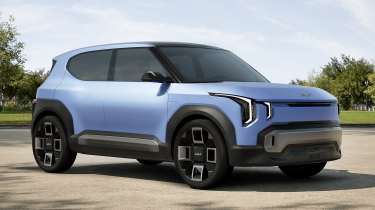
Kia’s busy year was just kicking off in March when it revealed a new compact electric SUV that’ll rival cars such as the Ford Puma Gen-E and new Renault 4 from 2026.
This quirky concept was representative of the fast pace and high quality of Kia’s other new models, including the brilliant EV3 and gargantuan EV9. The EV2 would take these fundamentals and distil them into a tighter and cheaper package – we just need to wait early January to see the production car.
Ford bids sad farewell to Focus family model
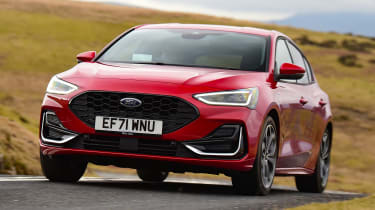
Alongside the new models of 2025, there were some high-level losses too, few with more importance than the Ford Focus.
Confirming the end of production later in 2025 was a huge blow for the brand, because the model wasn’t just an icon of the European range, but arguably the most impactful of Ford’s ‘new era’ cars that were introduced in the late nineties.
The Focus was proof that a family car could look brilliant and drive with the finesse of something far more expensive – something its subsequent generations continued to prove.
We scoop reboot of Audi TT
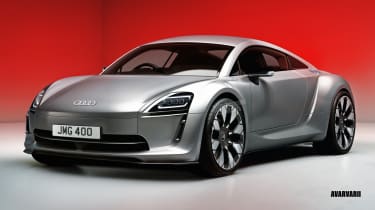
In March of this year, we delivered one hell of a scoop from Audi, that within just six months was realised by the stunning Concept C show car. An interview with Audi CEO Gernot Döllner revealed the brand was working on a concept that would represent big news for the German brand.
In early 2025, Audi was facing an uphill battle with a somewhat underbaked generation of new models – both petrol and electric-powered – that were already facing big challenges on account of their design, interior and tech. These are pillars that have, historically, come to define a car maker that many had thought had lost its way.
This is something that Audi’s management clearly agreed with, teasing that there would be a huge realignment of the brand’s core values. At the head of this movement would be a new electric sports car that would ideologically, if not literally, reboot the two-door TT that some associated with Audi’s golden age. Our exclusive render had nowhere to lead from design-wise, but the fundamentals were clear.
“I believe that Audi should have a sports car, for sure” said Döllner at the time. “That’s part of the DNA, and we have to find the right way, timing-wise, to integrate it.” That time will be 2027, as we found out when Audi finally revealed the Concept C at the Munich Motor Show in September.
It followed the template we outlined in our March scoop. It also revealed a totally new styling philosophy that was shaped by Audi’s chief of design, Massimo Frascella. The two-seat, two-door roadster with a battery-electric powertrain will be derived from the forthcoming Porsche Boxster and Cayman, defining its proportions and delivering a new era of Audi design language. We simply can’t wait to see what’s in store.
Defender V8 Works: old’s cool, for a price
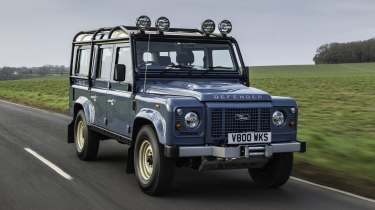
Question: How much is the Land Rover Defender V8 Works? Answer: £228,000. We all did a double-take when we heard that, but when we drove the reworked 4x4, there was no doubting the engineering and craftsmanship that went into it.
The car itself is a limited run of original Defenders restored with JLR’s 5.0-litre supercharged V8 engine under the bonnet.It’s not just the bill of materials that explains the price tag, though, but the engineering that’s gone on to give an original Defender a whole new world of capability. Good thing we didn’t scratch it.
Mercedes CLA plays the long (range) game
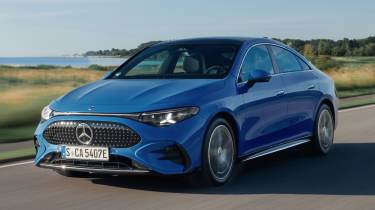
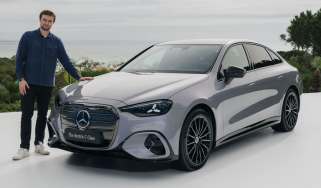
Eliciting a big ‘ooh’ from the crowds in the office back in March was the new Mercedes CLA. Mercedes’ first ‘software-defined vehicle’ was revealed initially in all-electric form, and led on its impressive range and efficiency.
With 485 miles possible from an 85kWh battery pack, and an all-new MBUX system with acres of digital real estate, the CLA left a brilliant first impression that would only be improved further when we drove it a few months later.
New MGS5 SUV is the ‘tricky second album’
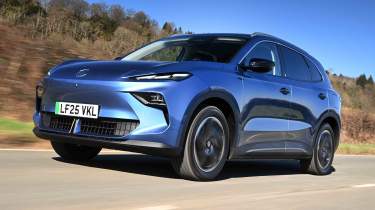
Expectations for MG’s new compact, all-electric SUV were high, off the back of the strong-selling MG4 hatchback. When the MGS5 arrived, the first thing that struck us was the conservative design. Would the same sense of disappointment apply when we drove it?
Yes, to an extent. The MGS5 EV was certainly a good SUV, with plenty of space inside, a nicely appointed cabin and a driving experience that was definitely better than many in the class, but didn’t shout its brilliance out loud like the MG4 did. On that basis, it was a bit of a letdown.
April
Trump tariffs cause huge headache for car makers

The global automotive industry was already going through some tough times before the latest American administration came in, but then it got worse. The world’s second-largest car market suddenly changed tack and imposed multi-billion-dollar tariffs.
It squeezed profits at a time when manufacturers were gearing up for electrified powertrains. The story evolved all the time, with the tariffs changing seemingly as the winds blew.
Spy shots give clues to baby Defender EV
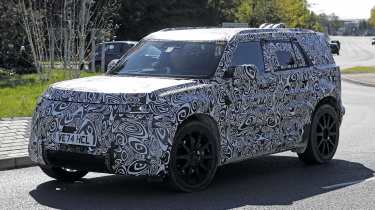
Land Rover’s tough 2025 included US-tariff peril, shrinking demand in China, and a costly cyber-attack. All of which it hopes will be long forgotten when the new baby Defender we scooped in April shows up next year.
The Defender has been an unmitigated success for the brand despite the setbacks, and an expansion of this model line with a new, more affordable version should only do good things for the company’s bottom line.
Details of the new model were revealed when we scooped an early prototype in heavy camouflage. So while it was tough to get a sense of any intricate details, it did offer up a few key pieces of information. Peeling back the cladding, it’s clear the new model won’t be short of Defender-like design cues, with an upright stance, bluff nose and boxy shape. While its full-sized brother is available in three sizes, including a short-wheelbase three-door, the baby Defender will focus on the family-friendly combination of five doors and a big boot.
However, despite being considered a replacement for the long-lived Discovery Sport, the new car won’t come with a third row of seating – there’s won’t be enough space. Instead, Land Rover will consider this a generous five-seater, and a rival for models such as the Audi Q5 and BMW X3.
We might not know exactly what Land Rover’s new model will look like, but we do have a much better idea of what will sit underneath. The firm’s new EMA platform will form this car’s foundation, meaning it will be available with a selection of electric-only powertrains; JLR is suddenly going all in on electric power, having kept its powder largely dry up until now.
As we found out in the subsequent months, this baby Defender won’t be the only new Land Rover to come in 2026; this same EMA platform will also underpin a new low-slung replacement or the Range Rover Velar. The full-size Range Rover and Range Rover Sport will pick up new, cutting-edge EV powertrains too.
What has become more and more open to question, however, is quite how relevant these all-electric powertrains will be in the medium term. For example, the US’s new scepticism in its EV policy has removed many of the incentives to buy electric, and China’s almost complete adoption is largely applied to its domestic EVs, which are more inherently suited to local tastes.
So will Land Rover’s decision to go all-in on EVs with the introduction of its new mass-market Land Rover Defender be the right one? It’s something that will no doubt be the subject of some debate over the coming months, as the maker gears up for one of the most important periods in its near-80-year history.
Smart plans all-new ForTwo
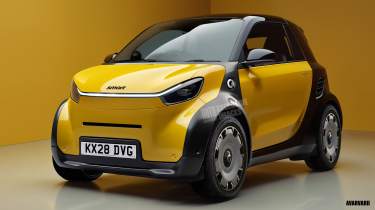
One of the more surprising scoops we gathered in April was word of a new Smart ForTwo: a tiny two-seat city car that will be put into production in 2026. Smart’s European CEO Dirk Adelmann told Auto Express to “stay tuned” for more information on the next-generation city car, and we didn’t need to wait long – Smart confirmed a new #2 in the summer.
But even before the official news, were given a good idea of what the new Smart #2 would look like, with Adelmann saying: “If we come back with a vehicle that’s smaller than the #1 and #3, then we will make sure it’s a true Smart.” As our exclusive images showed, the classic upright silhouette will return, with a wheel-at-each-corner stance and striking dual-colour bodywork.
Yet what’s most exciting about the new #2 is not what it’ll look like, but the toolkit that it’ll use underneath the skin. Unlike the current range, which largely cherry-picks elements from the Chinese part of the Mercedes-Geely joint venture that runs Smart, the new #2 will have a bespoke platform designed specifically for this model. However, the maker will use the full might of its myriad engineering bases to bring the model together.
The reason we think this is such an important car is that it connects Smart to its European heartland in terms of design and innovation. Without a car like the new #2 in the range, Smart could be mistaken for any new-age Chinese brand, even though its design team is based here in Europe. Head of design Kai Seiber, put it perfectly: “The ForTwo is the core of our brand.” We couldn’t agree more.
Aston Vanquish proves an all-round stunner
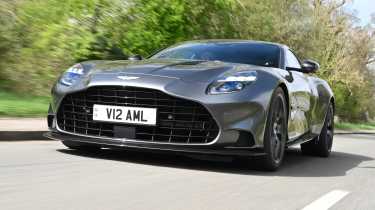
Aston Martin’s new sports car flagship was graceful to look at with its elegant lines, sumptuous interior and V12 engine. This ultra-high-performance machine was a lot to handle, with 1,000Nm of torque directed through just the rear wheels. But as we found on UK roads, it was beautifully set up to deliver this power and precision in a way only a Vanquish could. What could have been improved? Only the gearbox, and even then, it was but a speck on an otherwise brilliant review.
New electric Ford Puma receives mixed review
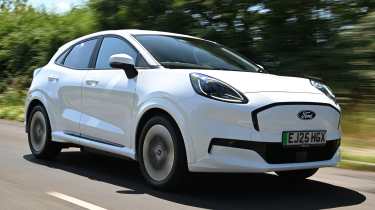
Ford’s most popular crossover is now available with an all-electric powertrain – a surefire recipe for success, right? Well, mostly. We loved the extra versatility of the Puma Gen-E; the lack of exhaust or rear motor unlocked even more boot space under the floor, and the new interior definitely feels like it had gone up a notch. But as with a few EVs based on ICE cars, the Puma’s 234-mile range proved its ultimate undoing. Ford will look to make it better in 2026 with greater efficiency and a 250-mile maximum.
We drive prototype of pure-EV Range Rover
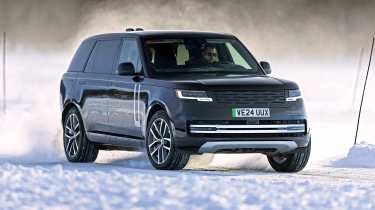
The long walk towards an all-electric Range Rover took another step forward in April with our first drive of a prototype.
The task sounds simple: take the Range Rover, a car that’s already big, heavy and refined, and replace the combustion engine with an electric powertrain. The issue is, a modern Range Rover is so capable that in order to ensure an electric variant can deliver what these cars are famed for, a huge amount of testing is required.
Can the new all-electric Range Rover appeal just as much, or potentially even more, than petrol and diesel-powered versions? We won’t have long to wait to find out.
May
Electric MX-5 could stay true to handling characteristics we love
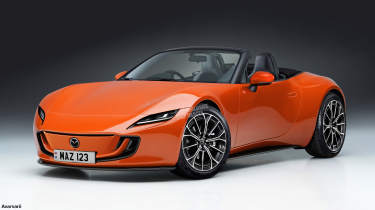
It’s inevitable that the famously featherweight Mazda MX-5 will go electric someday. But in May we uncovered some patent filings that offered encouraging insight for the future EV roadster.
They showed an MX-5-sized vehicle with batteries located in a transmission tunnel-like section, in front of the passenger seat and behind both seats, rather than all being underneath the floor. This arrangement would create a centre of gravity and handling characteristics similar to the petrol-powered MX-5 we know and love.
Could the Fiesta return as an EV?
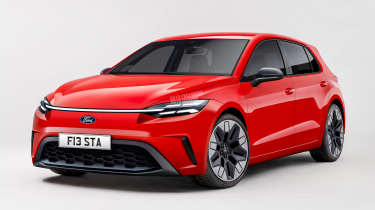
It’s been two years since the devastating loss of the Ford Fiesta, but in May we gave our readers some hope for the return of the supermini. We caught wind that Ford was looking for a partner in the project, although the initial suspicion centred on whether talks were under way with Volkswagen, thanks to the successful partnership that saw the Explorer and Capri use the underpinnings from VW’s MEB platform used in the ID.3 and ID.4.
VW’s head of sales and marketing, Martin Sander, told Auto Express in the summer that he considered this tie-up to have been “very, very, very successful” and that he did “not want to rule out that there are future opportunities here to share technology again”.
But as revealed at the start of December, it’s Renault not Volkswagen that will be providing Ford with a new platform for a pair of small cars, due in 2028, as previewed by our exclusive image of a new Fiesta.
Bringing back the supermini, even as an EV, would give Ford a more affordable entry-level model than the (admittedly best-selling) Puma that currently starts from more than £26,000. Most of the Auto Express team (and readers) were excited about the idea of the supermini making a comeback, especially if using Renault’s Ampere platform would allow Ford to make money on a new Fiesta – profitability was the reason the last one was axed in 2023.
The tie-up also opens the door for a return of the Fiesta ST, with the Renault platform already spawning the Alpine A290 hot hatch, with rumours hinting that Nissan – whose Micra is also based on the Renault – is also planning a Nismo version of its new baby.
The Renault-Ford agreement could stretch further, with talks also under way about working together on vans as well as the two electric cars coming in the next three years to give Ford a much-needed boost in Europe.
New 1 Series scoop
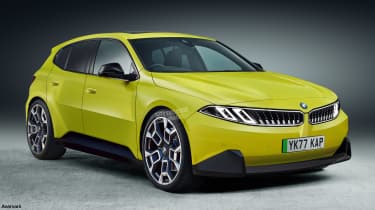
The BMW 1 Series has been a smash hit and is a hugely important car for the brand. So while its chief rival – the Mercedes A-Class – is being axed, a new generation of 1 Series should be arriving in 2027.
Our exclusive images showed what it might look like, incorporating the brand’s fresh Neue Klasse design language. The next iteration of the hatchback will almost certainly come with a choice of hybrid and electric power, as part of BMW’s plan to reinvent its entry-level car.
Dolphin Surf electric city car makes waves
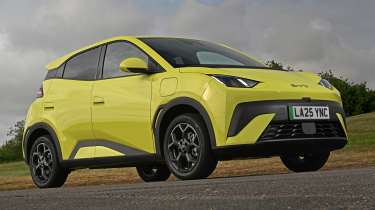
Two years after it was unveiled, the BYD Seagull finally hopped off the slow boat from China, with the electric city car sporting a starting price of less than £19,000 and a new name: the Dolphin Surf.
Apparently the swap was because Brits aren’t the biggest lovers of seagulls, but we were certainly fans of this sharp-looking EV that felt more spacious and sophisticated than you might expect for the price. We also liked the smooth, refined driving experience, nearly 200-mile range and low running costs.
Fab 4 keeps the Renault retro flag flying high
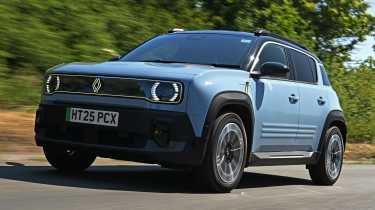
Riding high on the success of the magnificent Renault 5 – not to mention seeing it trounce the Fiat 500e in our twin test in March – the French firm finally let us loose in its second fully electric blast from the past: the reborn Renault 4.
Driving along the Portuguese coast, the new R4 got admiring looks left, right and centre. We thought it looked like less of a facsimile than the R5, but was still instantly recognisable and the designers did a fabulous job drawing on the best-selling original model’s rugged roots to remix the versatile hatchback into a small SUV.
Sure, the classic never had an illuminated grille and its wheels would be dwarfed from the jazzy 18-inch rims worn by its descendent. Yet looking at the side profile, particularly the shape of the glass area and those corrugated bulges across the doors, there’s no mistaking this for anything but a Renault 4.
The interior design has been lifted almost wholesale from the Renault 5, which is no bad thing. It’s a fantastic starting point, with nice screens, intuitive Google-based tech and proper physical climate controls. Some new materials had been added, plus the seats felt slightly softer than in the R5 supermini.
Where the R4 set itself apart from its sibling was practicality. At 4.1 metres long, it’s almost exactly the same size as its enormously popular competitor, the big-selling Ford Puma, but it’s 222mm longer than the R5, with 83mm of that sitting within the rear axle.
That might not sound like a lot, yet while you’d struggle to squeeze adults into the back of the R5, the space in the R4 is more usable and we found there was certainly more there than in a MINI Aceman or Jeep Avenger. At 420 litres with the rear seats in place, the boot was spacious for a car in its class, too.
On the road, the R4 and R5 felt very similar again – although the baby SUV gets slightly softer and taller springs allowing for a subtly raised ride height and more suspension travel. We wished the ride was actually even softer, which would have been appropriate given the way the original 4 wafted over bumps, but the newcomer certainly felt more compliant than the very stiff MINI Aceman, and the Renault was still agile on a twisty road.
Of course, we had to reserve our full judgement until we saw how the Renault 4 handled on UK roads. But our first impression was Renault had yet another hit on its hands thanks to the added practicality, charming design and it being only slightly more expensive to buy than the Renault 5, despite offering a better package as a family car.
Aston Vantage Roadster wows us in Alpine blast
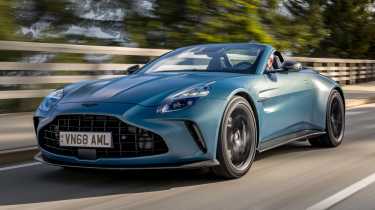
With summer approaching and a need to feel the wind in our hair, we headed to the glorious Austrian Alpine roads for our first drive in the new Aston Martin Vantage Roadster that proved to be “as fast and exciting as it is beautiful”.
The drop-dead gorgeous drop-top wowed us with its interior quality and sharpness, which we felt most of its rivals couldn’t match. Some Aston buyers won’t be pleased with how firm the ride is, but the almost monstrous noise from the 656bhp 4.0-litre twin-turbo V8 blew our concerns away.
June
New Kia Sportage
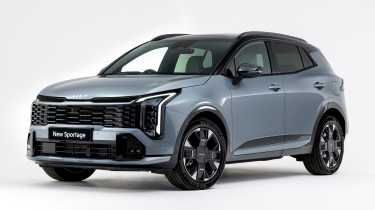
We already considered the latest fifth-generation Kia Sportage to be among the best SUVs on the market, and we’re certainly not the only ones. It was the second most popular car in the UK in 2024, dominating the segment-defining Nissan Qashqai and only narrowly pipped to the top of sales charts by the Ford Puma. So the arrival of the new and improved version was one of the most important moments for us in 2025.
The Sportage was already one of the most striking cars in its class, although the Battlestar Galactica-esque face wasn’t to everyone’s taste, and didn’t have that much of a resemblance to the other Kias.
So as part of its mid-life nip and tuck, the Sportage received a new front bumper, stacked vertical headlights, a wider and more upright grille, and Kia’s signature ‘Star Map’ daytime running light design that, combined, give the car a less polarising but still bold and head-turning look.
The interior similarly features a new, more streamlined dashboard with the unit that houses the car’s dual display now thinner and sporting smaller bezels. As before, every model features an impressive 12.3-inch touchscreen, paired with either a 4.2-inch or 12.3-inch instrument panel, but they’re now running Kia’s latest infotainment system. It’s called ‘connected car Navigation Cockpit’, and while that name might not be very snappy, the software certainly is, with menus that load quickly.
We didn’t love all the dark materials Kia has picked, especially when we compared it with the Peugeot 3008 and Skoda Enyaq, which feature fabrics and other quirkier materials in places, and feel more welcoming as a result. But we couldn’t complain about the amount of space onboard, for passengers and in the boot, plus there were still lots of physical buttons, which we always love to see.
More impressive, though, was the revised full-hybrid system. Kia fitted a more powerful electric motor to give the Sportage Hybrid 235bhp and 280Nm of torque. The extra oomph was obvious, because when we drove it later in the year, we found that the Sportage felt more enthusiastic when setting off and around town, while the petrol engine seemed to hardly chime in any more.
The greatly improved hybrid powertrain paired with the Kia’s comfortable ride makes this an even easier car to live with. Combined with the sleek new look, refreshed interior and functionality still being such a strong point for the mid-size SUV, it’s set to become more popular than ever.
Skoda’s Epiq baby EV breaks cover, and we scoop the vRS
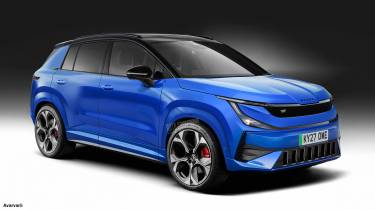
Just over a year after the Skoda Epiq concept previewed a small affordable electric SUV that revives the spirit of the original Yeti, our spy photographers spotted prototypes testing. We could tell the design would be very close to the head-turning concept, and our exclusive images showed what lay beneath the camouflage. Auto Express also revealed there are plans for a hot vRS version, likely using the potent powertrain from VW’s ID. Polo GTI.
Peugeot plans to spice up the EV world with new electric GTi
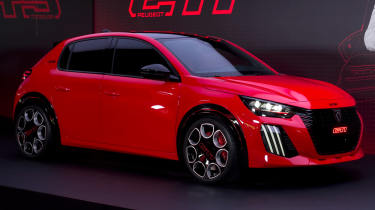
At the very start of the year, we floated the idea of a new Peugeot 208 GTi after executives at the French outfit told us they’d love to see the brand make another hot hatch, and perhaps bring back the hallowed GTi badge.
But we were looking ahead to the next generation of the stylish supermini, due in 2027. So the unveiling of the new Peugeot E-208 GTi not six months after we published our original story was one of those rare occasions when we were happy to be proven wrong.
The E-208 GTi has a hearty 276bhp and 345Nm of torque on tap, and it can sprint from 0-62mph in just 5.7 seconds. It is still front-wheel drive, as a French hot hatch should be, and the front-mounted e-motor features a mechanical limited-slip differential to help make it as agile and sharp as possible.
The chassis has been fettled, too, including 30mm lower, stiffer sport suspension, a revised rear anti-roll bar, and larger front brakes with red four-piston calipers. Peugeot Sport even claims to have made the steering more responsive, and a unique Sport drive mode automatically disables some of the driver-assistance systems so you don’t have to bicker with the car’s bonging on your favourite twisty road.
The regular 208 is already a sharp-looking supermini, and the GTi version takes it up a notch with a new front splitter and rear diffuser, plus a sizable roof spoiler and lots of red accents. But probably the best addition are the 18-inch ‘Hole’ wheels that recall the design of those used on the classic 205 GTi 1.9. We can’t wait to drive this little menace in 2026!
Apple CarPlay Ultra offers all-in-one UX
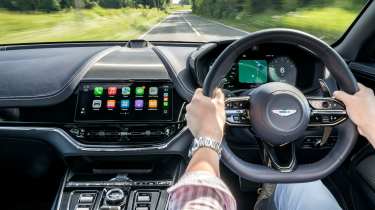
Apple CarPlay is one of the greatest innovations to feature in modern cars, and it got even better in 2025 after the launch of CarPlay Ultra. The Apple system takes over both the touchscreen and driver’s display for a more harmonious user experience.
Aston Martin was the first brand to offer CarPlay Ultra, and we got to test it in the DBX SUV. The unique flourishes for the Aston’s instrument graphics were a nice touch, plus there’s no more jumping between the car’s built-in infotainment system because Ultra handled everything.
Good signs from iX3 prototype first drive
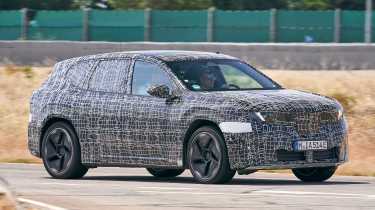
The next-generation BMW iX3 marks the beginning of the fresh ‘Neue Klasse’ era for the brand that will see it redefine every car in its line-up. We finally got our first proper taste of what’s to come in issue 1,886 when we drove a prototype of the pivotal new SUV. It seemed to surf the massive speed bumps we encountered on the road and when we found some corners, as our man put it, “driving the iX3 puts a smile on your face in a way most electric cars don’t.”
DS No8 is an unusual but compelling model
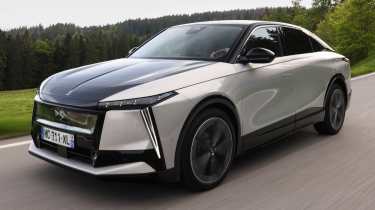
The DS No8 might sound like knock-off Chanel perfume, but it didn’t stink. We were very impressed by the comfortable and luxurious French fastback, from its ride quality and refinement, to the interesting interior and colossal 465-mile range – something none of its rivals came close to matching. It was even well priced compared to key rivals.
Like pretty much every big French car, the No8 will be a left-field choice for mid-level executives, but it should be on their radar, especially for those who like going against the grain.
Omoda plug-in hybrid flatters to… impress
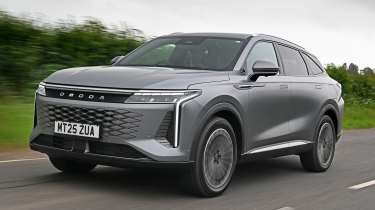
Chinese brands such as MG, BYD and Jaecoo hogged the limelight for most of 2025, but that didn’t stop Omoda’s VW Tiguan and Toyota RAV4 rival capturing our attention.
The Omoda 9 was priced competitively, featured a high-quality and spacious interior, loads of standard equipment and a clever plug-in hybrid powertrain that offers nearly 100 miles of pure-electric range. All for less than £45,000. That said, there are ergonomic flaws, and the infotainment system isn’t that easy to use.
It's safe to say that the first half of 2025 was a busy one, click here to see our highlights from July to December...