What is AEB? Autonomous Emergency Braking systems explained
Pre-crash or collision avoidance systems are now mandatory on new cars sold in the EU and likely the UK – our guide to AEB explains the benefits

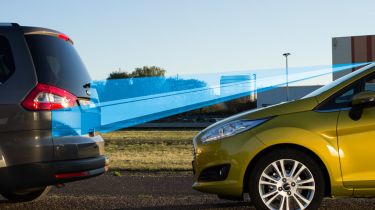
AEB ( Autonomous Emergency Braking) is a safety system in modern cars which automatically applies the brakes when it detects an imminent collision. One of the most common car accidents is the nose-to-tail collision, also known as a ‘rear-ender’, which often occurs due to a following driver’s momentary lapse of concentration. AEB should stop these accidents from happening or at least mitigate the impact.
Many cars with Autonomous Emergency Braking are capable of preventing this type of collision in city conditions and on the motorway, and some systems are able to detect pedestrians, cyclists and animals, as well as other vehicles, and apply the brakes as needed.
Car manufacturers have their own names for this type of technology: Ford’s Active City Stop, Nissan’s Forward Emergency Braking and Volvo’s City Safety are all examples of AEB systems available on the market.

A study by the EU suggested that around 5,000 deaths and 50,000 injuries could be prevented per year by widespread adoption of autonomous braking systems. As a result, they became compulsory on all commercial vehicles sold after 1 November 2015. Since 2019, it’s been impossible to get a five-star Euro NCAP rating without AEB, and as of May 2022 all new passenger cars sold in the EU must have the technology.

Believe it or not, the first AEB system was shown to the public at the Detroit Auto show in 1996 – almost 20 years before AEB systems began to appear in mainstream family cars. Volvo became the first automaker to make AEB standard in all its cars in 2014, followed by Jaguar Land Rover in 2016.
Which cars have Autonomous Emergency Braking?
As of May 2022, all cars now sold in the EU must have AEB as standard, and this will likely be the case for UK-sold cars too. Prior to that, it took the efforts of organisations like independent crash tester Euro NCAP to force carmakers’ hands – they have made it impossible for cars to achieve a five-star rating without AEB since 2019.
How does Autonomous Emergency Braking work?
As with the latest Adaptive Cruise Control systems, AEB works via radar – and occasionally laser – sensors that scan the road ahead for obstructions. In fact ACC and AEB will typically share the same sensors, although some AEB systems add cameras that can spot pedestrians at the side of the road.
Complex algorithms are employed to almost instantaneously analyse the risk of impact, and the AEB system will first warn of the impending danger with an alarm and dashboard lights, before applying maximum braking force if the driver fails to intervene.
If you’re travelling fast prior to an impact, then the emergency braking may only be able scrape off some of the excess speed before the inevitable accident. At lower town speeds, there’s a greater chance the imminent accident may be prevented altogether.
All AEB systems vary, however, so be careful to make sure you understand - and are satisfied with - the level of safety provided by the systems on any new car you're looking at.
Now you know what Autonomous Emergency Braking is, read our guide to cruise control and adaptive cruise control…