What are dipped headlights and when should you use them?
What does ‘dipped headlights’ refer to, and how should you use them? Allow us to, ahem, shed some light…

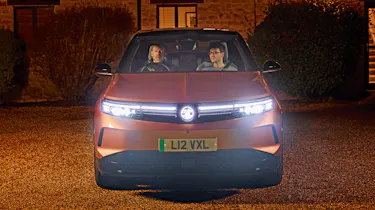
In the simplest terms, ‘dipped headlights’ refer to the step between sidelights and main beam headlights on your car. New cars will generally also have daytime running lights (DRLs), but these work autonomously and don't require any input from the driver, so even if your headlights are turned off, DRLs remain on. They generally won’t go out until the ignition is switched off.
Most cars have four headlight settings:
- Headlights off (daytime running lights only)
- Side lights on
- Dipped beam on
- Main beam on
To change between off (or daytime running lights only), side lights, dipped beam and main beam, manual input from the driver is usually required, often in the shape of a twisted indicator stalk or turned dial.
Many modern cars have automatic headlights that will switch to a dipped beam when the light levels get low enough - this will activate when the lighting system is switched into ‘auto’ mode. There are also auto-dipping headlight functions on some models that will switch from main beam to dipped beam when oncoming vehicles are detected, to avoid dazzling other drivers.
Some of these systems work better than others but for safety reasons, it's always vital for drivers to understand the correct use of each kind of lighting on the road.
When to use dipped beam headlights
A common mistake made in new cars with daytime running lights is assuming that they are a replacement for your car's sidelights. Crucially, when a car's DRLs are on, there is no lighting at the rear of the car. When you turn your sidelights on, the rear lights and numberplate light come on to make it easier for your car to be seen from behind.
Sidelights are the first step you should take in lighting your car as visibility decreases. By law, you must also leave your side lights on if you have to park at night on a road where the speed limit is greater than 30mph. However, many cars have dedicated parking lights for this.
The Highway Code states, "You must use headlights when visibility is seriously reduced", with ‘seriously reduced’ being defined as when you are able to see less than 100m.
If visibility is much less than 100m, because of heavy fog, or immense road spray from torrential rain, you are also supposed to put your front and rear fog lights on, if you have them - but do not forget to turn them off when visibility improves to avoid dazzling other road users.
Also, to avoid dazzling fellow road users, when driving at night you should switch from main beam to dipped headlights when other road users are driving toward or in front of you. However, if you overtake a car in front, you should then put your main beam lights back on to better illuminate the road ahead, provided it is clear.
On top of this, the Highway Code states that in dull daytime weather while you are driving through built-up areas, you should also use dipped headlights to increase the chances of you being seen by other road users. Once again, dipped beam headlights are the next step beyond sidelights when visibility is reduced.
Really then, it is simple. Dipped lights are the brightest lights your car has that won't dazzle other road users. Therefore, as a rule to remember, always use them when visibility is poor, e.g. at dusk or night time, and in bad weather. Move up to main beam headlights when you cannot see any other road users in front of you. There are, of course, fog lights if the weather gets particularly bad and visibility is seriously reduced.
You should regularly check all of your car's lights to ensure they are working correctly and keep the lenses clean so that the different lighting on your car can function at optimum levels.
How to use your car headlights: top tips
- Use sidelights when visibility is low.
- Daytime running lights are not a substitute for sidelights as they don't illuminate the rear of your car.
- Use headlights when visibility is 'seriously reduced'.
- Use fog lights when visibility is reduced to less than 100m by fog or spray.
- Use dipped beam headlights to avoid dazzling other road users when driving at night.
- Use full beam headlights at night when the road ahead is completely clear.
Have you had any problems from being dazzled by other road users? Let us know in the comments below...