New BMW X5 revealed: luxury SUV gets electric iX5 option for the first time
The ultimate do-it-all BMW is now available with an array of powertrain options, including an iX5 with up to 525 miles of BEV range

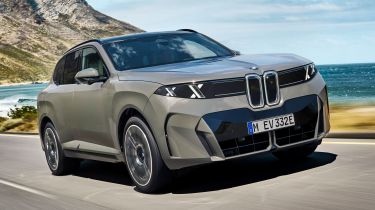
When BMW coined the term Sports Activity Vehicle at the launch of the original BMW X5 in 1999, it suggested that this was a car that could do just about anything. It had to drive like a sports saloon, be as practical as an estate car, plus have the rugged capability of an off-roader – and what a success this template has proven. Now, this all-new fifth generation will add one more feather to the X5’s cap thanks to its powertrain diversity, with diesel, plug-in hybrid or fully-electric options all offered for the first time – and a hydrogen fuel-cell variant coming in 2028.
Strictly speaking, there’s actually five powertrain options available, as overseas models will also have a pure petrol option. In the UK, we’ll be limited to three powertrains at launch, each promising class-leading figures in terms of performance and efficiency. There’s a high-performance plug-in hybrid M Performance model available from the off, and a full-house M model should be along in time. But it’s the bread-and-butter models which will have the biggest impact.
New BMW X5 powertrain options
Opening the range in the UK will be the in-line six-cylinder diesel. This will form the baseline of sales in Europe, but it is unlikely to make up the majority over the course of this generation, as the market continues its shift towards electrified powertrains.

Still, the new xDrive40d variant won’t be completely devoid of hybridisation, as it does feature a 48V mild-hybrid system that helps streamline the diesel engine’s operations and extend the start-top function. Fuel consumption is provisionally rated at 40.1mpg, and BMW has confirmed this variant will produce 308bhp and a chunky 670Nm of torque, powering all four wheels via an eight-speed automatic transmission. It’ll reach 62mph in just 6.1 seconds, so it’s quite substantially ahead of the new Audi Q7 TDI in terms of power and performance.
Next up are two plug-in hybrid models, starting with the xDrive50e with 482bhp and the aforementioned M60e that bumps this up to 603bhp. The system uses a 3.0-litre in-line six-cylinder petrol engine as its base, to which an electric motor is mounted between it and the eight-speed transmission.
Both feature the same 26.5kWh battery pack mounted under the cabin floor, and depending on wheel size offer an all-electric range of around 60 miles – making it class competitive, if not head-and-shoulders above the norm. Under the new weighted fuel consumption test for plug-in hybrids that takes into account fuel consumption when the battery is depleted, the 50e is rated at up to 53.4mpg, with the M60e just lower behind it at 49.6mpg.
New all-electric BMW iX5 joins range
For the first time BMW will offer an all-electric powertrain option with the iX5 moniker, effectively replacing the BMW iX in the process. The UK range will kick off with one 60xDrive variant – a high-powered dual-motor set-up with a colossal 141kWh battery pack and a range of up to 525 miles. This will give the iX5 one of the longest ranges of any BEV on sale in the UK, trouncing SUV rivals such as the new Porsche Cayenne, which offers up to 399 miles at most, and the Mercedes EQE SUV which is even lower, at 372 miles. Charging is also class leading, topping out at 460kW if you can find a DC ultra-rapid charger that’s powerful enough.
Performance isn’t compromised either, as this set-up produces peak power of 569bhp and 805Nm of torque, helping the big beast from 0-62mph in 4.6 seconds and onto a top speed of 130mph.
Lesser-powered electric options will be available in future, but all will make use of BMW’s big technological breakthroughs that arrived with the Neue Klasse generation, including new cylindrical battery cells with higher energy densities. However, the brand will continue with its cell-to-pack engineering technology to enable the chassis to integrate combustion powertrains and the packaging they require.
BMW is also planning to introduce a hydrogen fuel-cell option later in 2028, although it’s expected to be market-specific and subject to the surrounding infrastructure. This type of powertrain works by creating electrical energy from the hydrogen fuel-cell, which then feeds a battery pack as an intermediary storage system before powering two electric motors. Final performance, range or efficiency figures have yet to be confirmed, but the idea is carbon-free motoring – if you can find the right type of liquid hydrogen.
In terms of its chassis and suspension, the X5 has a more sophisticated combination of hardware than the smaller iX3. This will see most models fitted with adaptive air suspension, while higher-spec M Performance models will also pick up active chassis tech such as an active anti-roll system and rear-wheel steering.
What does the new BMW X5 look like?
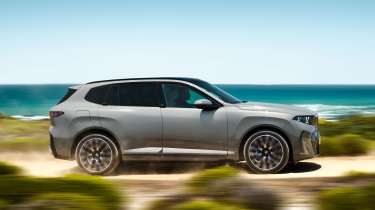
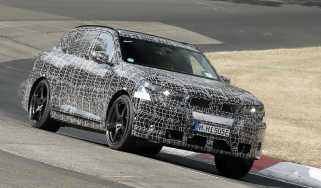
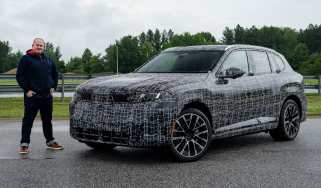
If you’re fond of BMW’s Neue Klasse design language you’ll find lots to like with the new X5, as it fundamentally follows the brand’s new design direction. But while there are some obvious similarities to the smaller iX3, there are differences, too. Looking at the bodywork, it’s clear that BMW’s design team was keen to accentuate the muscular stance with wide haunches and large wheels that can be specified at up to 23 inches.
The Neue Klasse face is correct and present, with the same glazed kidney grilles flanked by technical-looking headlight panels. There’s ample illumination here, but what’s on offer will vary depending on model type. All models feature a new double X-design to the headlights, although this can be switched to a more familiar two-line design if preferred.
M Performance models switch these over to yellow units for dramatic effect, but they’ll only glow yellow with the main headlights switched on – blame strict EU regulations for that. The illumination between the headlights also varies between models.
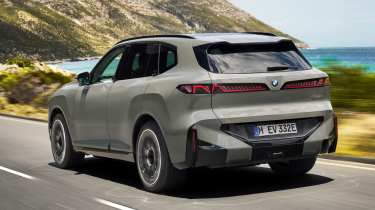
The face itself, though, doesn’t change much depending on engine type, as combustion-powered cars only add in a small amount of extra cooling vents hidden away in a blacked-out panel. As Volvo has done with its new EX60, the door handles have been replaced with small nodules at the base of the windows. These don’t just help with aero, but also clean up the side profile of the car and give it even more of a concept car-like feel.
The general shape is similar to the X5 models that have gone before, avoiding too much of a slope to the roofline and with large windows for good visibility. The rear lights also vary between models, although they share the same basic casing. There’s one massive omission, though, that might upset some customers. BMW has decided to give the new X5 a single-piece bootlid for the first time, removing the Range Rover-style split tailgate.
What does the BMW X5 look like inside?
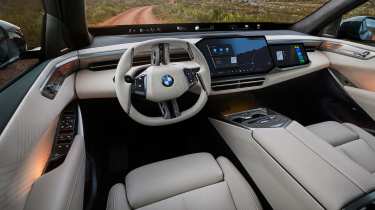
More huge advances can be seen inside the new X5. It shares the same Neue Klasse cabin architecture, meaning the traditional driver’s display has been removed in favour of a full-width Panoramic i-Drive system that runs along the windscreen base. If you’ve been following BMW’s development of this technology, you’ll already know that it’s fully configurable and neatly presents lots of useful information near the driver’s eyeline.
This is then joined by two screens on the main dashboard, with a central 17.8-inch touchscreen that’s responsible for almost all of the car’s key functions, plus a secondary passenger screen that’s tiled behind it. Both feature BMW’s latest digital interfaces, which smartly integrate active route planning into the embedded navigation system.
These digital interfaces are set in a more opulent environment than is the case with the iX3, with higher quality materials, including leather or suede-effect fabric, wrapped across most of the dashboard and doors. There’s also a new type of ambient lighting integrated into a metallic panel that runs behind the main screens and into the doors.
Cabin storage looks to be well catered for, with two large central cupholders and a generous central cubby. Below the dash, there’s a MagSafe wireless charging point for iPhone users, which is quickly becoming an essential feature of high-end cars.
BMW has so far only revealed details of a two-row five-seater option, with seven-seater duties likely to be taken up by the forthcoming X7.
The cars it needs to beat
Diesel: Audi Q7
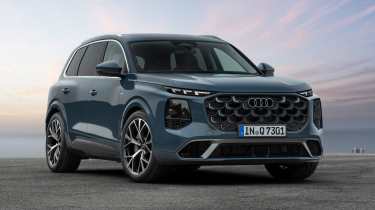
Audi’s all-new Q7 will arrive with a fresh new look, a hi-tech cabin and lots of luxurious appointments – and it’ll do so with a V6 diesel engine under the bonnet. Producing 295bhp and 630Nm of torque, this new generation unit engine promises further reduction in fuel consumption, plus lower emissions and a huge range thanks to its big fuel tank.
PHEV: Mercedes GLE 450e
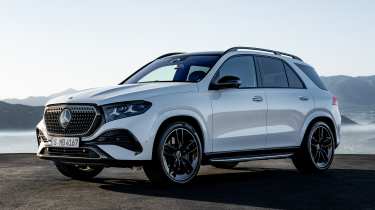
The heavily revised Mercedes GLE has arguably gained its biggest upgrade under the bonnet of the plug-in hybrid variant, as the new GLE 450e swaps the rattly old four-cylinder petrol engine for a smooth new in-line six. In addition to that, Merc is quoting a superb 65-mile electric range and 449bhp peak power output, further improving performance.
BEV: BMW iX
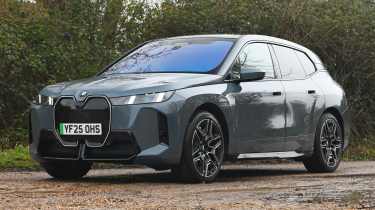
The BMW iX is currently the best all-electric luxury SUV on sale, so despite being from the same company, the new iX5 will have a tough job raising the game in order to beat the car it’s effectively replacing. The exceptional refinement and interior design of the iX are peerless, but even with a recent battery and performance upgrade, the xDrive60 variant is now around 75 miles behind the new iX5 in terms of its range capability.
Did you know you can sell your car through Auto Express? We’ll help you get a great price and find a great deal on a new car, too.