Lightest cars on sale
Not every new motor on sale is a heavy SUV - here are the lightest cars currently around

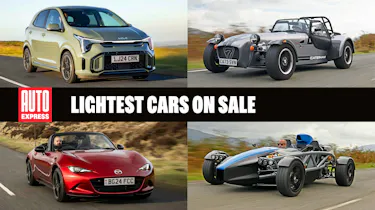
Cars have been getting heavier for some time - first fuelled by the rise of SUVs and then exacerbated by the introduction of electric and hybrid cars with hefty battery packs. The heaviest new cars around are, in some cases, even over three tonnes. Light cars are still available, though, some of them are a sixth of the weight of the bulkiest models on sale.
The lightest cars on sale today broadly fall into two categories: you have your stripped-back lightweight sports cars designed with more than half an eye on delivering performance and driver thrills on a race circuit. Then you have your traditional small city runabouts – cheap little petrol cars that are becoming increasingly rare in the modern marketplace as the focus turns to EVs.
There are also various models from specialist manufacturers designed almost exclusively for track day use, such as the BAC Mono (575kg) or Radical’s range of track machinery (490kg for the SR1) and tiny quadricycles such as the electric Microlino (596kg), but we’ve tried to stick to road-biased cars from mainstream brands to keep it simple. In most cases it’s the entry-level models that deliver the lowest weight, because adding extra features tends to pile on the pounds.
Lightest cars on sale
Below is our list of the 10 lightest road legal cars on sale in the UK today by official kerb weight.
10. Skoda Fabia - from 1,050kg
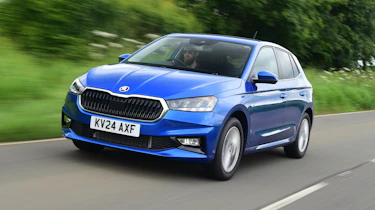
Considering that it’s by far the biggest, most practical car here, it’s impressive that the Skoda Fabia is so light. To get the lightest version possible, you’ll need to combine the entry-level SE Edition trim level with the 1.0-litre MPI engine.
Going up a trim level will add a few kilos, while the 1.0-litre TSI engine adds a turbocharger and thus more bulk. No version of the Fabia is especially chunky, though.
9. Dacia Spring - from 1,006kg
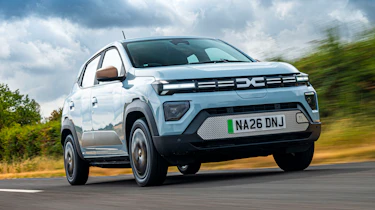
This is the only proper electric car on the list, as the Citroen Ami isn’t a car as far as regulations are concerned. So how does the Dacia Spring manage it? Well, it’s small, so that helps, and there’s a general feeling of it not being very substantial.
The doors feel flimsy, and closing them actually causes the inrush of air to briefly pop-up the roof skin. On the move, you can hear a lot more of the outside world than in most cars, pointing to a lack of soundproofing. Finally, the battery pack is small, so although the Spring is heavier than the circa-800kg petrol-powered Renault Kwid it’s based on, it’s still only just over a tonne.
8. Mazda MX-5 - from 1,003kg
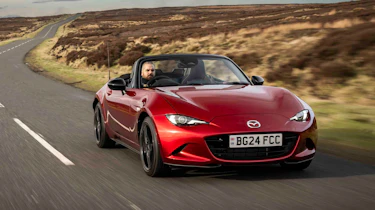
The latest, ‘ND’ Mazda MX-5 bucks the trend of cars getting bigger and heavier with each generation. Compared to the third-generation ‘NC’, the current Mazda sports car is slightly shorter and about 100kg lighter, meaning it tips the scales at just a few kilos over a tonne in its most basic 1.5-litre, manual form.
The 2.0-litre engine adds a bit of weight, but not enough to be off-putting - it is still the one you want. Speccing the automatic gearbox and/or the ‘RF’ retractable hardtop roof adds further kilos, but even at its heaviest, the Mazda MX-5 is lighter than most four-wheeled things on the road.
7. Gordon Murray Automotive T.50 - from 997kg
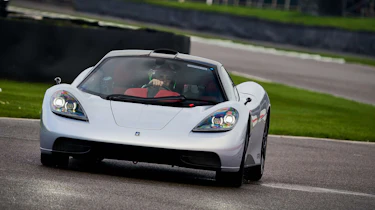
Coming from the man who brought us the McLaren F1 makes the GMA T.50 just about mainstream enough to be included here while other, even more niche supercars don’t get a look-in.
The T.50 is inspired by Murray’s famed McLaren F1, but it seeks to perfect the recipe using technology that wasn’t around back then. Most impressively, it’s quite a bit lighter than the F1, despite being slightly larger and still having a V12 engine. It even has something its predecessor didn’t - a big fan to suck it to the road surface.
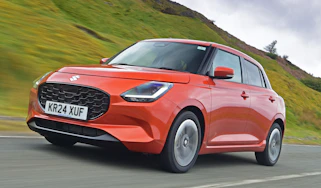
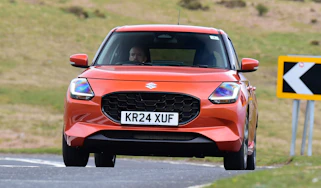
6. Suzuki Swift - from 949kg
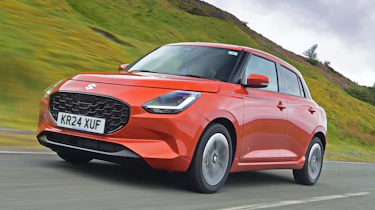
The Suzuki Swift has often been touted as a supermini-sized car for city car money, but these days the price isn’t quite as bijou. The kerb weight remains tiny for a roomy, 1.2-litre mild hybrid model with a lengthy equipment list.
You can tell where some of the fat has been trimmed, though. The interior plastics are quite cheap, and there’s a lot of wind noise at cruising speeds, suggesting Suzuki has skimped on the soundproofing.
5. Kia Picanto - from 947kg
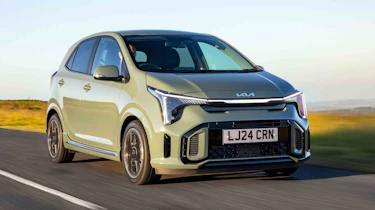
The lightest car currently available that isn’t a quadricycle or flyweight sports car and actually has four wheels, is the Kia Picanto. Although it only beats the Swift by a couple of kilos.
What helps the Picanto is that there isn’t a great deal of it, coming in under 3.7 metres in length. Although it’s better equipped than it used to be, it’s still relatively low on heavy luxuries, and under the bonnet is a simple 1.0-litre, three-cylinder engine without a turbocharger and the associated gubbins to push the weight figure up.
4. Morgan Super 3 - from 635kg
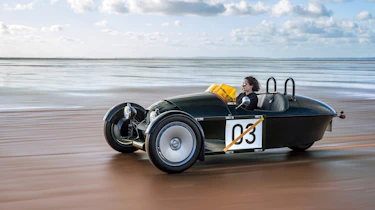
A good way to save weight in a car is to remove extraneous features, although most manufacturers would stop short of shedding a wheel. Not Morgan. The latest version of the British brand’s iconic three-wheeler is the Super 3, and the eccentric, minimalist sports car comes in at a mere 635kg with its 1.5-litre three-cylinder Ford engine.
That unit makes a mere 118bhp, but because the Super 3 is so light, it'll still crack the 0-62mph sprint in a perfectly respectable seven seconds. The top speed meanwhile is 130mph - we suggest you don a helmet before trying to replicate that, or perhaps more fittingly, some aviator-style goggles.
3. Ariel Atom - from 595kg
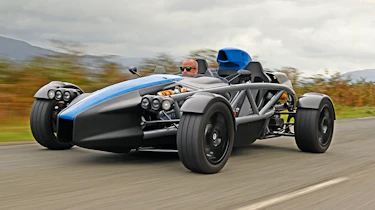
We excluded a lot of track-special machinery from low-volume manufacturers in this list, but the Ariel Atom squeezed in by dint of being such a long-standing popular choice for road and track driving. It’s also about as close to a household name as you can get in this niche genre.
Nothing else gives quite the same experience as an Atom with its unique steel tube chassis and powerful engine. The earliest versions were powered by Rover K-Series engines, before the Atom switched to high-revving Honda engines with supercharged assistance, and there was even a wild V8 version at some point. The current model uses a 320bhp turbocharged Honda engine from the most recent generations of Type R, which is a potent thing to have in a car weighing 595kg. Or if you fancy taking a similar package off road, the buggy-like Ariel Nomad is still astonishingly light at just 715kg.
2. Citroen Ami - from 483kg
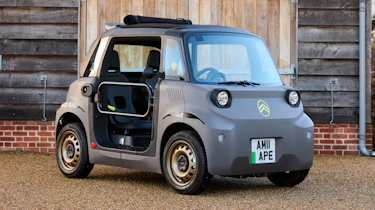
Citroen’s super-cute, super-small Ami is also extremely light. At under 2.5m long and limited by a 28mph top speed, not to mention a 47-mile maximum range, it’s an urban electric vehicle that does the job for which it was designed and not a lot more. Even those who wouldn’t really want to drive one have to admire its clarity of purpose.
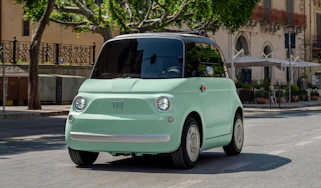
The range has expanded to include an Ami Buggy with a roll-up fabric roof, something which is also available on the closely related Fiat Topolino. Whichever of these you choose, the pithy weight figure remains.
1. Caterham 7 - from 440kg
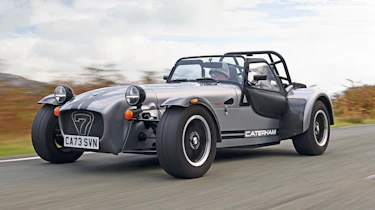
Lotus founder Colin Chapman is well known for his ‘simplify, then add lightness’ maxim so it’s fitting that the Lotus 7 he designed in the late 1950s is still the lightest car on sale in the UK today, albeit under its new Caterham 7 moniker. Nothing drives quite like a Caterham, and the compact sports car’s minuscule kerb weight is perhaps the biggest reason why.
The lightest version is the Seven 170, which is powered by a tiny 660cc three-cylidner engine from Suzuki. Even the heaviest Sevens only weigh about 600kg, though.
Lightest cars on sale 2026
| Rank | Make and model | Weight |
| 1. | Caterham Seven | 440kg |
| 2. | Citroen Ami | 483kg |
| 3. | Ariel Atom | 595kg |
| 4. | Morgan Super 3 | 635kg |
| 5. | Kia Picanto 1.0 Pure | 947kg |
| 6. | Suzuki Swift 1.2 Motion | 949kg |
| 7. | Gordon Murray Automotive T.50 | 997kg |
| 8. | Mazda MX-5 1.5 Prime-Line | 1,003kg |
| 9. | Dacia Spring 70 Expression | 1,006kg |
| 10. | Skoda Fabia 1.0 MPI 80 SE Edition | 1,005kg |
Now take a look at the heaviest cars on sale...