The 10 fastest depreciating cars in the UK
Depreciation is part and parcel of buying a new car, but some models fare much worse than others when it comes to residual values

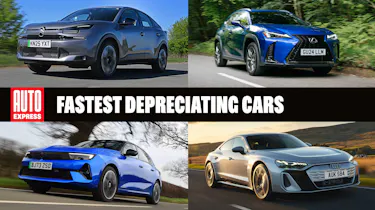
Fuel, car tax and insurance bills can be a real financial pain, but even combined, they’re eclipsed by the biggest single cost of running a car. That’s depreciation, otherwise known as the difference between the on-the-road price you pay to buy the car when new, and the figure you can recoup when selling it to its next owner.
That second-hand price is also known as the car’s residual value, and if you’re not careful, it can be a real sting in the tail of any new or used car deal. Here we’re looking at the fastest depreciating cars on the market, both in terms of percentage retained value and total value lost.
To help you avoid mobile money-pits, we’ve combed the latest new car depreciation data to create a list of possible new car purchases with the biggest sting in the tail – the UK’s fastest depreciating cars.
Our list covers cars that you can buy new today and looks at what they will be worth after three years and 36,000 miles of use. These are the disastrous depreciators that experts say you shouldn’t touch with a bargepole if you want to hang on to your cash. Of course, look at it another way and these cars could be opportunities for the canny used buyer to pick up a three-year-old bargain.
All kinds of market factors have a say in car residual values. Just as rare cars or those with long waiting lists can depreciate very slowly, heavy discounting or abundant supply will usually force values down. Electric cars are a significant presence in the current top 10 fastest depreciators, with increasing supply and choice on the market, falling new prices and discounting by manufacturers struggling to comply with the ZEV Mandate all having an impact.
1. Lexus UX 300e 72.8kWh Takumi
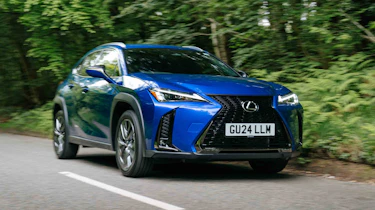
- Retained value: 27.28%
- Average new price: £51,145
- Average retained value: £13,950
It’s unusual to see a Lexus among the fastest-depreciating cars – the brand’s reputation for reliability, high quality and relatively low supply means used examples are always in demand and tend to hold onto their value. Not even Lexus can escape the hefty depreciation felt by a lot of electric cars, though, with the Lexus UX 300e in top-line Takumi spec dropping from more than £50,000 to under £14,000 after three years (buying a high trim level is generally a surefire way to shed value). That’s Dacia Spring money for a luxury SUV the size of a Toyota C-HR. When we ran a UX 300e on our long-term fleet, we found the official 196-mile range only dropped to around 180 miles even in cold weather, albeit in predominantly urban use.
2. Citroen e-C4 Extended Range Collection
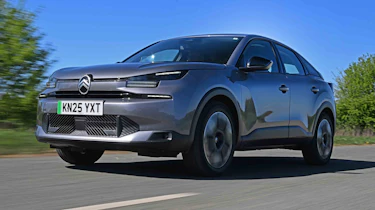
- Retained value: 27.74%
- Average new price: £32,895
- Average retained value: £9,125
The Citroen e-C4 is an excellent EV for anyone prioritising comfort. It has absolutely zero interest in being sporty, instead offering a softer-than-average ride that effortlessly soaks up lumps and bumps in the road surface. Historically, it hasn’t been anywhere near as good at fighting off depreciation as it is at combatting potholes. It was arguably too expensive to begin with, carrying a large premium over the combustion version of the car, like a lot of the entries on this list. Citroen has responded in recent years with aggressive price cuts, which haven’t done wonders for its residual values. Some versions, such as the Extended Range, will lose nearly three-quarters of their original price over three years.
3. Vauxhall Astra Electric GS
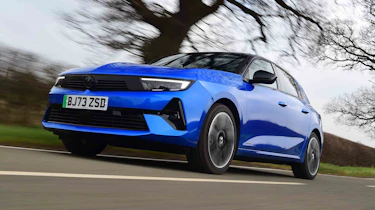
- Retained value: 27.99%
Average new price: £37,250
Average retained value: £10,425
Originally, the Vauxhall Astra Electric was significantly more expensive than petrol and hybrid versions of the car. Fast forward to today, and the facelifted Astra is raising eyebrows in a good way for offering price parity between Hybrid 145, plug-in hybrid and Electric versions of the car. That’s good news for anyone in the market for the new version, but not great for the residuals of existing variants. Wait until the earliest Astra Electrics hit the three-year-old mark, and there will be a bargain to be had, with prices dropping to a little over £10,000. Although the pre-update version of the Astra Electric has a bit less range, it’s largely the same. It’ll be a bargain at £10k, we think.
Used Vauxhall Astra Electric deals
4. Vauxhall Corsa Electric GS
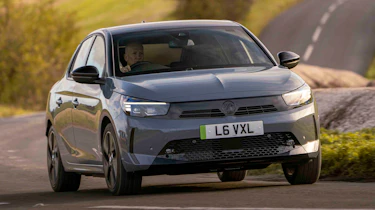
- Retained value: 27.99%
- Average new price: £32,635
- Average retained value: £9,275
In a theme that’s apparent throughout our list, the Vauxhall Corsa Electric was initially quite expensive before drastic price cuts (both from Vauxhall itself and via the car’s eligibility for the Government’s Electric Car Grant) made things more palatable. This, though, has not helped the residuals, which weren’t great already. The difference with the Corsa Electric is that it’s been around longer than a lot of the other lower-priced EVs on our lists, so you can pick one up for very little. Given that it looks the same as a regular Vauxhall Corsa both inside and out, it’ll be an excellent, unintimidating introduction to EVs.
Used Vauxhall Corsa Electric deals
5. Audi A8 60 TFSIe
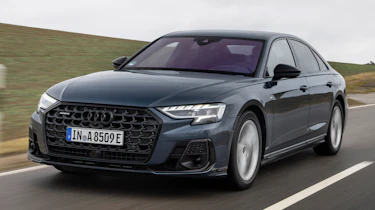
- Retained value: 29.27%
- Average new price: £103,620
- Average retained value: £30,325
A luxury car for the price of a new high-end supermini, anyone? That’s what those buying an Audi A8 in three years will get, given that it’ll be worth little more than 30 per cent of its original price after that period. There’s very little wrong with the car itself, but compared to their smaller counterparts, big German luxury saloons have always depreciated quickly, with owners only too happy to trade into new models after a few years, and used buyers hesitant to take on the hefty fuel and maintenance bills that a car like this can spring up. In losing more than £71,000, the Audi suffers one of the biggest drops in value of any of the models in the top 10.
6. Subaru Solterra Limited
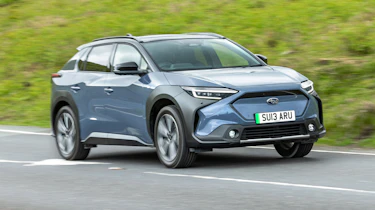
- Retained value: 29.67%
- Average new price: £52,495
- Average retained value: £15,575
The Subaru Solterra is nearly identical to the Toyota bZ4x, which is a long, long way from this list, with a retained value of 40.77 per cent. So why does the Subaru fare so much worse? It’s likely down to a few factors tied to Subaru’s standing as a brand in the UK. It lacks the same recognition as Toyota, with a comparatively tiny presence on our shores, both in terms of sales and its dealer network. Toyota has more than three times as many sites in the UK, and Subaru’s locations are often quite rural. That kind of limited dealer back-up can be off-putting, but if you can see past it, there are already bargains to be had, and prices will only get more tempting.
7. Fiat 500e 42kWh Icon
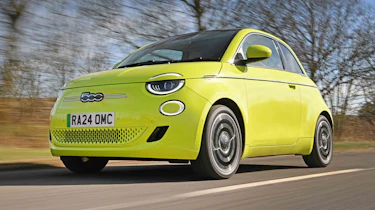
- Retained value: 30.23%
- Average new price: £28,035
- Average retained value: £8,475
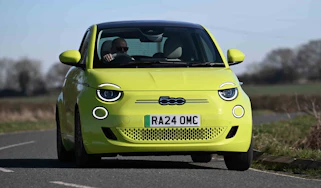
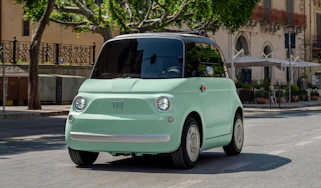
In the market for an urban runaround? Tempting though a brand-new Dacia Spring is, surely a used Fiat 500e worth less than a third of its original value is an even better deal? It’s certainly more stylish, better to drive and feels higher quality. The price Fiat charges for a new 500e seemed a little steep until recent price cuts and grant eligibility, but at just £8,500 for a three-year-old example, it would make a lot of sense. This 42kWh version has a claimed range of 200 miles too, and has the peppier 116bhp motor for 0-62mph in nine seconds flat.
8. Audi e-tron S GT
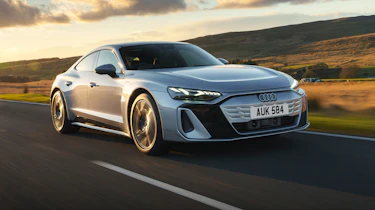
- Retained value: 30.73%
- Average new price: £107,875
- Average retained value: £33,150
Even strongly rated premium EVs like the Audi e-tron GT are often susceptible to steep depreciation, particularly higher spec versions like the S – the related Porsche Taycan Turbo S only just missed out on making our top 10, too. Both cars fail to retain even a third of their value after three years. Few will have bought one of these originally by paying the up-front costs, but if they have, losing about £75,000 is sure to sting. On the other hand, paying low-spec Volkswagen Golf money for a near-600bhp EV that still looks striking several years on from its launch is quite an enticing prospect. You just need to decide which it’ll be for you – the Porsche, or the Audi?
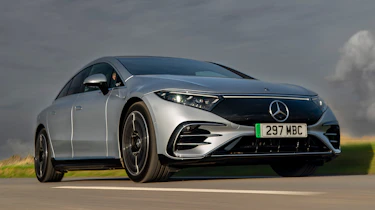
9. Mercedes EQS 450+ Premium
- Retained value: 30.97%
- Average new price: £104,540
- Average retained value: £32,375
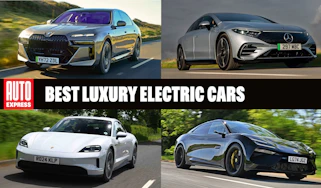
Performing ever-so-slightly worse than the Mercedes EQE in percentage terms is the bigger EQS, although there’s all of 0.03 per cent in it. In pure monetary terms, though, the losses are comparably vast – a whopping £72,000 based on the 450+ Premium. The EQS is supremely comfortable and goes far on a full charge, but rivals, including the BMW i7, are just much better packages overall. The i7 is a bit of a depreciation bomb itself, too, so it’s probably a wiser bet if you’re looking to reap the benefits of poor residual values in a used luxury purchase.
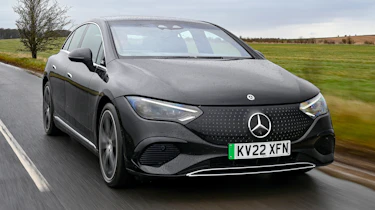
10. Mercedes EQE 350+ AMG Line Night Edition
- Retained value: 31.00%
- Average new price: £86,615
- Average retained value: £26,850
The initial Mercedes EQ line-up of EVs has been something of a disappointment, with bland, samey styling (it’s not easy to tell the difference between this Mercedes EQE and the bigger EQS), average ride and handling, and just a general sense that they’re overpriced. It’s not a surprise to see two cars from the EQ range turning up in the top 10, with the EQE following the EQS. Our road testers awarded it an underwhelming 3.5 stars, so it’s not something we recommend particularly highly when new, but at about £27,000 when it reaches three years old, the EQE starts to make bit more sense.
What makes a car depreciate fast?
As you’d expect, the slowest depreciating cars are models in strong demand, with desirable badges and good reputations for reliability, quality and safety. They are discounted less than rivals when new, and hold their money at resale time.
Strangely, the worst depreciators often have highly desirable badges too, but their new prices are just too stratospheric to do anything but plummet when it’s time to find a second owner. Bread and butter models from mainstream brands whose badges offer little in the way of aspirational value, and whose reputations for quality or performance are not in the same league as models from the ‘in demand’ marques, can suffer too.
People often joke about cars losing half their value the moment they’re driven off the forecourt, but that’s rarely actually the case. Even the worst performers will take a couple of years or more to lose half their value, while some rare, exotic or limited production models may even rise in value – or appreciate – but, of course, that’s not the experience for most new car buyers.
Still, there’s a vast range of depreciation performance across the new car spectrum. Typically, a strong performer will lose less than half of its value over a three-year/36,000-mile ownership cycle, with the slowest depreciating cars still worth 60-70 per cent of what you paid for them. Conversely, a poor depreciator can easily lose 50-60 per cent of its on-the-road price over the same timeframe.
Remember that all depreciation is calculated based on the car’s official list price and if dealers are offering heavy discounts on a car, the depreciation figures will look bad but very few people will actually be paying that much to buy new. Plus, depreciation is a cost that only crystallises when you sell the car. If you hold on to it for longer it isn’t a concern.
Why are some electric car residual values so low?
In the UK, the Zero-Emission Vehicle (ZEV) Mandate means that manufacturers are now legally required to sell a rising proportion of fully electric cars every year up until 2030, when this number will reach 100 per cent.
In order to meet these percentage targets, brands are increasingly resorting to discounting or long-term price cuts to help boost sales of EVs. Then there’s the Government’s Electric Car Grant applied to models at the cheaper end of the market. Naturally, these discounted new cars create pressure on values of electric cars on the used market further down the line.
In addition to this, the rapid development of EV technology and the expanding amount of choice for consumers means that some older models can start to feel dated quite quickly, thus reducing their appeal to car buyers compared to new alternatives. And it’s not all EVs that have a depreciation issue; some of the more popular and competitively priced options hold their value very well.
Car depreciation: the worst of the rest
Our list of the top 10 fastest depreciating cars includes a heady mix of the overpriced, the unfashionable and the unremarkable. If you look further down the charts there’s more of the same, as well as some surprises.
| Rank | Model | Average new price | Average part-ex value (3 years/36,000 miles) | Average retained value (3 years/36,000 miles) |
| 1 | Lexus UX 300e | £51,145 | £13,950 | 27.28% |
| 2 | Citroen e-C4 | £32,895 | £9,125 | 27.74% |
| 3 | Vauxhall Astra Electric | £37,250 | £10,425 | 27.99% |
| 4 | Vauxhall Corsa Electric | £32,635 | £9,275 | 28.42% |
| 5 | Audi A8 | £103,620 | £30,325 | 29.27% |
| 6 | Subaru Solterra | £52,495 | £15,575 | 29.67% |
| 7 | Fiat 500e | £28,035 | £8,475 | 30.23% |
| 8 | Audi e-tron GT | £107,875 | £33,150 | 30.73% |
| 9 | Mercedes EQS | £104,540 | £32,375 | 30.97% |
| 10 | Mercedes EQE | £86,615 | £26,850 | 31.00% |
| 11 | Peugeot 408 | £48,860 | £15,200 | 31.11% |
| 12 | Porsche Taycan | £162,255 | £50,475 | 31.11% |
| 13 | BMW i5 | £110,045 | £34,650 | 31.49% |
| 14 | Citroen Berlingo | £25,330 | £8,075 | 31.88% |
| 15 | Ford Mustang Mach-E | £74,550 | £23,775 | 31.89% |
| 16 | Vauxhall Mokka Electric | £38,105 | £12,175 | 31.95% |
| 17 | BMW i7 | £143,530 | £46,050 | 32.08% |
| 18 | Mercedes-Maybach S-Class | £350,000 | £112,700 | 32.20% |
| 19 | Mercedes-Maybach SL-Class | £243,450 | £78,575 | 32.28% |
| 20 | Genesis GV60 | £58,515 | £20,750 | 35.46% |
Don't miss the best of Auto Express on Google! Make us a preferred source. Click here...