Best cars with pop-up headlights
Safety laws and modern tech have largely extinguished the pop-up headlight so let’s take a look back at the all time greatest cars to feature them.

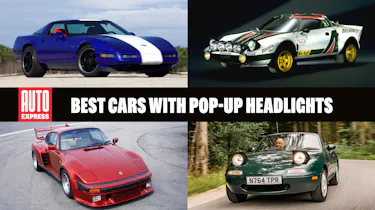
Pop-up headlights – or more correctly, but less entertainingly, ‘retractable headlights’ – are one of the defining design features of cars from around the 1960s to the 1990s. It’s such a simple idea, hiding away headlights until they’re needed, yet one that has imbued a distinctive character on just about every vehicle ever to incorporate them.
They’ve been absent from cars for more than two decades, despite the occasional concept vehicle promising to bring them back, but they certainly haven’t been forgotten. The ever-growing popularity (and value) of cars from the 80s and 90s has kept pop-ups firmly in the spotlight, if you’ll pardon the pun, and the carefree appearance they give a car when raised feels like a real antidote to increasingly angry-looking modern headlight designs.
Below we pick out five of the best vehicles ever to use retractable headlights, and another five cars where the pop-ups themselves were the star of the show. We also explain why the pop-up headlight disappeared.
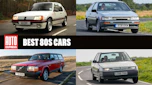
What killed the pop-up headlight?
It’s tempting to lay the blame for the disappearance of pop-up headlights on safety regulations, but it’s perhaps more accurate to say that safety regs are the reason pop-up headlights are unlikely to make any kind of large-scale return.
The simple answer is that pop-ups just fell out of fashion. Pop-ups were once considered the best way to achieve the styling or aerodynamic aims a company had for its new model, while allowing them to meet regulations for headlight height.
But as regulations and production improvements allowed more freedom with conventional headlights (particularly in the US, which began to ditch its restrictive sealed-beam light laws in the 1980s), car stylists found better ways to integrate other styles of headlamps into their new designs.
There were side benefits too, as integrated lamps were just as aerodynamic whether they were on or off, rather than presenting large faces to the wind as pop-ups did when they were switched on. It goes without saying that regular lights were simpler and lighter too, reducing complexity and expense (and a potential failure point) and streamlining the production process. More recently, the compulsory introduction of daytime running lights (DRLs) also impacted thinking around car headlight design.
And yes, standard headlights were safer too, particularly as pedestrian safety regulations began to be incorporated into car safety standards – though these only came into force in Europe in 2005, by which time the last cars with pop-ups (the fifth-generation Chevrolet Corvette and the Lotus Esprit) had already recently gone off sale. Pedestrian safety legislation would make it very difficult for pop-ups to come back, but they didn’t kill them off to begin with.
Top five best cars with pop-up headlights
The five best cars ever made that also happen to have pop-up headlights…
Mazda MX-5
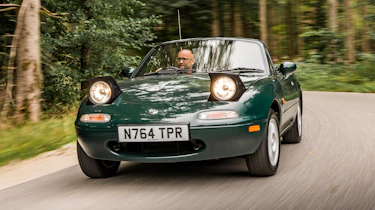
In terms of sheer numbers, the 430,000 or so first-generation MX-5s that Mazda built between 1989 and 1997 doesn’t even make it the highest-selling Mazda with pop-up headlights – the original RX-7 managed more than 470,000 cars. But it’s probably one of the most recognisable and, given Mazda went to conventional light units with the second-generation MX-5, it’s become a characteristic of those early cars.
Combined with a smiley lower grille, few cars have a friendlier face than an MX-5 with its lights up. Oh, and the MX-5 just happens to be a fantastic driver’s car too. The lights don’t make the MX-5 great, but it wouldn’t be the same without them.
Ferrari F40
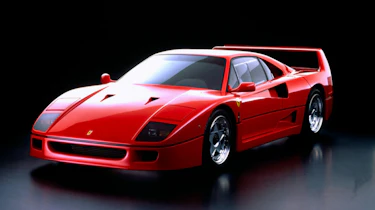
Whisper it, but the Ferrari F40 actually looks a bit silly with its headlights up. It takes away some of the car’s racer-like menace, and given the aerodynamic penalties, it’s no wonder that when the car was taken endurance racing, the road car’s combo of retractable lights and faired-in sidelights was replaced for a set of faired-in headlights instead. But the slightly awkward pop-ups also suit the F40’s sense of purpose, putting the headlights where they needed to be even if the end result wasn’t especially easy on the eye.
Toyota Sprinter Trueno (AE86)
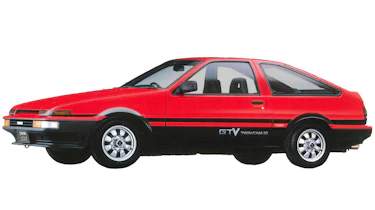
Toyota’s AE86 Corolla Levin and Sprinter Trueno have gained a cult following, the rear-drive 80s Toyota kicking off the popularity of drifting through grainy 90s VHS tapes and its appearance in the Initial D manga. But of the differently-named pair, only the Sprinter Trueno (and the US-market Corolla Sport) got retractable headlamps, giving the AE86 an altogether sharper and more aggressive look. It’s a shape inextricably linked with Japanese car culture – though perhaps even cooler is that in Japan you could buy retractable covers for the yellow fog lights too.
Lancia Stratos
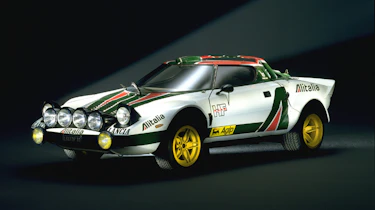
Most cars with retractable headlights look better with them lowered – unsurprising when the whole aim of pop-ups is to hide the lights most of the time. Few cars look more appropriate with them up than the Lancia Stratos though, perhaps because as a car designed for rallying, we’re as used to seeing the crazy mid-engined Lancia barrelling through a forest with the lights raised as we are with them down. That said, there’s one thing that improves the look of a popped-up Stratos further: a big bank of four rally spotlights sitting between them on the nose.
Porsche 968
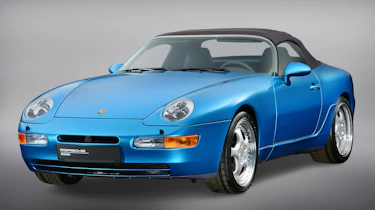
Not all cars hide their pop-ups. The first two generations of Porsche’s four-cylinder transaxle sports car did – the 924 and 944 – but when the 968 came around to replace the 944, it adopted the frog-eyed look of the V8-propelled 928. The headlights are visible at all times, and simply raise to a more vertical position when switched on. The look certainly fits the 968’s smoother, more 1990s shape, but really the pop-ups were a side act to one of the best rear-driven chassis available at the time, and even more so in Club Sport form.
The greatest pop-up headlights on cars
The five cars that made the best ever use of pop-up headlights as a design feature…
Panther Solo 2
Picture credit: magiccarpics
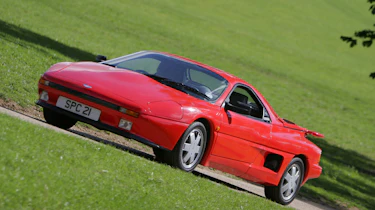
Headlights are, if anything, one of the less intriguing aspects of the mid-engined, four-wheel drive, 2+2 Panther Solo 2, but they were at least appropriately odd. Whether they qualify as true pop-ups or not is open to interpretation, as they spin rather than rising above the bodywork, the cover that normally hides them then acting as the bezel when the lights are switched on. Ultimately as the headlight rotates around its axis, it’s no mere covered lamp.
Mazda RX-7 (FC)
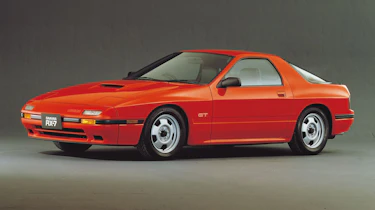
At a glance there’s nothing special about the pop-ups in the second-generation Mazda RX-7. But it’s more what they do when they aren’t popped up that makes these ones interesting. One downside of retractable headlamps has always been the slow process when flashing your lights for any reason, as you have to wait for them to appear. The FC RX-7 got around this by including a window in the bumper, so you could flash away without troubling the pop-up motors.
Cizeta V16T
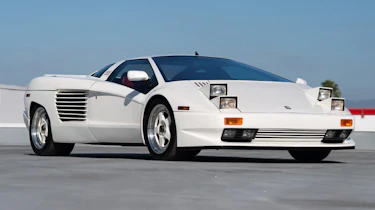
Picture credit: Karissa Hosek/ RM Sotheby's
What’s better than a pair of retractable headlights? A quartet, that’s what, and that’s what you’d find on the barmy Gandini-designed Cizeta V16T launched in 1991. This otherwise Lamborghini Diablo-styled supercar (with four more cylinders, owing to its V16 engine) goes two better than the Lambo, with tandem pop-ups at both sides… in addition to corner lights sourced from the E31 BMW 8 Series, and four driving lamps mounted in the bottom grille.
Chevrolet Corvette (C4)
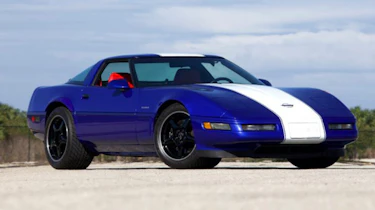
Why simply pop up when your retractable lights can do a backflip? That’s how the headlights on the 1983 to 1996 fourth-generation Chevrolet Corvette operate, with a set of otherwise unremarkable oblong sealed beam units emerging from the bonnet in a balletic twist, and then doing a forward roll when you switch them off again. Very cool indeed, though the relatively low profile of the headlights when up also helped minimise drag.
Porsche 930 Flachbau
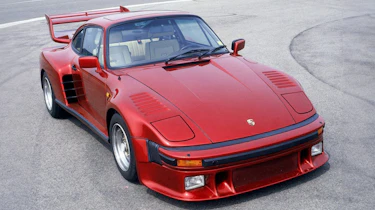
The Porsche 911’s headlights are one of its defining features. They’ve changed over the years, but that round-eyed look has remained fairly consistent, a brief foray into ‘fried eggs’ with the 996 aside. The other exception was with the turbocharged 930, when in 1983 Porsche offered the ‘Flachbau’, or ‘flat nose’, with styling influenced by the 935 racing car. This meant a more shovel-like profile, the loss of the raised wings, and retractable headlights, completely changing the car’s character. With only 948 built, it’s among the rarer 911 variants.
Don't miss the best of Auto Express on Google! Make us a preferred source. Click here...