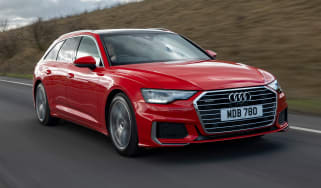
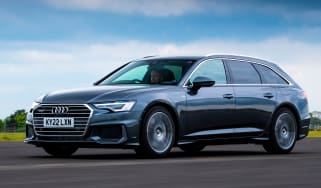
Audi A6 Avant review
Sleek looking A6 Avant estate is comfortable and packed with tech, but boot space isn’t as good as it once was

Our opinion on the Audi A6 Avant
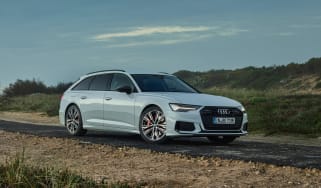
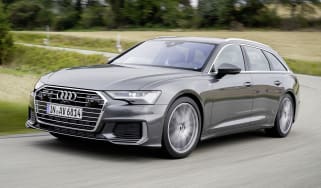
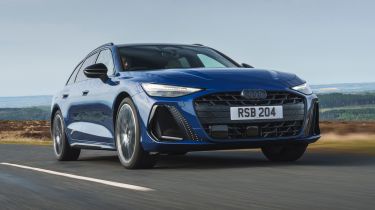
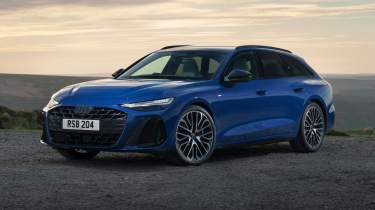
The latest Audi A6 Avant is the perfect showcase for Audi’s current direction. It ticks all of the boxes for cutting-edge tech, everyday cruising comfort and upmarket appeal, while the plug-in hybrid powertrain delivers decent performance, too.
However, the latest A6 Avant is more of a lifestyle-orientated vehicle this time around, emphasising style rather than outright practicality. If haulage is still key for your needs, the larger and more efficient Mercedes E-Class is a better option.
About the Audi A6 Avant
Audi originally planned to give its EVs even model numbers and the ICE cars odd ones, but it has since scrapped the idea. Because of this change of heart, the A6 line-up can be a bit confusing at first glance. Alongside the regular Audi A6 Avant — the one we’re focusing on in this review — there’s also the fully electric Audi A6 Avant e-tron.
The latest combustion-engined A6 Avant sits on a heavily revised version of the previous car’s platform, with the hi-tech architecture redesigned to house the latest petrol and diesel engines, but more importantly a range of plug-in hybrid powertrains.
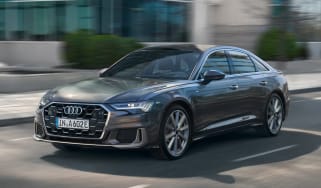
We’ve tested various versions of the Audi A6 Avant since it first went on sale, and we also have an in-depth review of the Audi A6 saloon.
Performance & driving experience
Pros |
|
Cons |
|
The combustion-powered Audi A6 Avant is available with a 2.0-litre petrol or diesel engine, though neither is particularly groundbreaking in terms of power or efficiency. The third option is a petrol plug-in hybrid, which produces the most power out of the three.
Used - available now


The petrol model uses Volkswagen’s four-cylinder turbocharged engine found in many Audis and VWs. Unfortunately, it needs to propel 2,005kg of Audi A6, so it doesn’t feel as swift as it does in other applications. This engine is connected to a seven-speed dual-clutch transmission and is front-wheel drive only.
The diesel includes Audi’s MHEV Plus system, which adds a worthy punch of torque to the driveline when needed, thanks to a small e-motor mounted directly to the engine. This can even drive the wheels for short bursts at low speeds.
This helps streamline the diesel’s operations, while supplementing its 400Nm of torque. The diesel powertrain is only available with quattro all-wheel drive in the UK, and, once again, is paired with a seven-speed dual-clutch transmission.
The A6 e-hybrid is based around the 2.0 TFSI engine and features a supplementary electric motor and a generous 25.9kWh battery. It uses the same seven-speed auto as the rest of the range, and also features quattro four-wheel drive.
| Model | Power | 0-62mph | Top speed |
| Audi A6 Avant 2.0 TFSI S line S Tronic | 201bhp | 8.3 seconds | 149mph |
| Audi A6 Avant 2.0 TDI Quattro S line S Tronic | 201bhp | 7 seconds | 147mph |
| Audi A6 Avant 2.0 e-Hybrid Quattro S line | 295bhp | 6 seconds | 155mph |
Performance, 0-60mph acceleration and top speed
Big kerbweights and relatively small power figures mean the TFSI and TDI-powered A6 Avants don’t offer much bite. In the real world, the petrol does feel sprightly enough, thanks to a solid and easily accessible 340Nm of torque from just 2,000rpm.
The diesel’s 400Nm of torque and quattro four-wheel drive reduce the 0-62mph time, but this figure is only available at a relatively high 3,800rpm, so in terms of on-road performance, you need to work it more than expected to actually build up speed.
The quattro all-wheel drive set-up adds traction, but its positive effect will only really be felt in cold or slippery conditions. Instead, the diesel feels relatively ponderous, and the car’s conservative transmission mapping adds to it. The gearbox setup is no doubt designed to keep the engine’s revs low for the sake of fuel consumption, but the early upshifts regularly put you exactly where the available torque is not.
The A6 Avant e-hybrid offers a 0-62mph time that’s a second faster than the diesel’s, plus the added boost of electrical assistance should satisfy those looking for extra pace.
Town driving, visibility and parking
The A6’s sleek shape, combined with the high dashboard and slim rear windows, affects visibility and can initially make the car feel a touch intimidating from the wheel. The A6 is big and especially wide, which can mean that you do need to think twice (or refer to the excellent camera system) when squeezing down busy urban roads. However, the driver’s seat has plenty of adjustment, so you can hoist yourself up to see over the tall dash.
Once you’re up there, the car has relatively good manoeuvrability thanks to clear, responsive steering that feels intuitive to use, and helps make the A6 easier to drive than it might otherwise be – even without the optional rear-wheel steering.
The gearbox is very smooth, and regardless of the petrol or diesel engine, both are refined when you’re just pootling about.
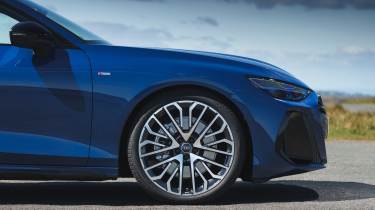
Cars fitted with the larger 21-inch wheels have trouble containing the ride at low speeds, crashing into ridges in the road and feeling like a pothole could easily damage a wheel and tyre. We find the ride improves considerably on smaller 20-inch rims.
Parking can be trickier than in most rivals thanks to limited visibility, but the camera and automatic parking systems fitted to our test cars ultimately made it easy to slip into tight spaces. There is no way of getting around the fact that the A6 is a big car with a large footprint, though.
Country road driving and handling
No large executive estate car really has a mandate to drive with any real sense of engagement, but being confidence-inspiring at high speeds is something that’s absolutely expected, and the A6 doesn’t disappoint.
The steering is a particular highlight, because it’s accurate and has good feel and feedback. This helps you thread the car along twisty roads with confidence, even if the lower-powered models don’t do much to stretch the chassis’s capability.
We have driven cars with steel springs and standard steering and the air springs and rear-wheel steering. We found that the base car on the standard suspension and smaller 20-inch wheels feels more connected to the road, without giving anything away in terms of ride comfort.
Choose Dynamic mode for a sportier drive in air-suspension-equipped cars, and the A6 Avant delivers a decent experience. While the ride firms up, it’s not to the point of being uncomfortable. Body control is noticeably enhanced to make the most of that tactile steering. The rack is quick and offers decent feel, and although the A6 Avant isn’t a natural performance car, this foundation bodes well for future RS 6 Avant variants.
Motorway driving and long-distance comfort
A combination of acoustic glass and adaptive air suspension makes the A6 Avant almost limousine-like in refinement, and the dampers tune out most surface imperfections to keep occupants settled. The lack of wind and road noise is deceptive, too, and you can find yourself travelling at a higher rate than you might expect because the car is so quiet.
Under hard acceleration, the diesel can grumble a little, and it needs to be worked surprisingly hard to access its extra power because it requires high engine speeds to reach peak torque. As such, while the chassis and cabin refinement scream luxury, both lower-powered engines make a little too much noise; expect the six-cylinder and plug-in hybrid models to feel more relaxed on the motorway, especially at high speeds.
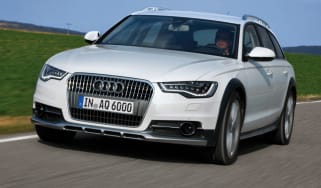
The A6 Avant’s ride height (with air suspension) adjusts with different modes, with the Eco and Dynamic settings lowering the car for improved performance. At the other end of the spectrum there’s a raised mode to help with traversing fields, which gives the car a stance reminiscent of the old A6 Allroad. - Dean Gibson, senior road test editor.
MPG & running costs
Pros |
|
Cons |
|
Putting it simply, Audi’s on-paper efficiency figures are not spectacular against its key competitors.
The diesel is rated at a rather underwhelming 48.7mpg on the combined WLTP test. This doesn’t compare favourably with the equivalent Mercedes E-Class Estate in 220 d form, which is capable of up to 10mpg more. It is worth noting here that the Audi has quattro four-wheel drive as standard, whereas the Mercedes is rear-wheel drive only.
It is also worth recording that we matched the A6’s official MPG figure during our test drive, and thanks to the help of the MHEV Plus system, the numbers didn’t free-fall in town as they can sometimes do in a modern diesel.
Matching the TFSI petrol’s claimed figure of 37.1mpg was also possible on our tests. In fact, we quite easily beat that number over a mix of town and country roads, but we suspect that with a heavier foot the fuel economy would quickly plummet.
| Model | MPG | CO2 | Insurance group |
| Audi A6 Avant 2.0 TFSI S line S Tronic | 39.2mpg | 165g/km | 32 |
| Audi A6 Avant 2.0 TDI Quattro S line S Tronic | 53.3mpg | 138g/km | 37 |
| Audi A6 Avant 2.0 e-Hybrid Quattro S line | 141.2mpg | 46g/km | 41 |
Electric range, battery life and charge time
The A6 Avant e-Hybrid has a 25.9kWh battery, which puts it half a kWh ahead of the Mercedes E 300 e and E 300 de plug-in hybrids. It’s also more than the battery pack in plug-in versions of the BMW 5 Series. Audi claims an all-electric range of up to 68 miles, which is similar to that of the Mercedes E-Class.
The A6 offers a maximum charging rate of 11kW, but there is no DC option. When charging from a typical 7.4kWh home wallbox charger, you’ll be looking at around three and a half hours to charge from 0 to 100 per cent.
| Model | Battery size | Range | Insurance group |
| Audi A6 Avant 2.0 e-Hybrid Quattro Sport | 25.9kWh | 68 miles | 40 |
| Audi A6 Avant 2.0 e-Hybrid Quattro S line | 25.9kWh | 68 miles | 41 |
| Audi A6 Avant 2.0 e-Hybrid Quattro Vorsprung | 25.9kWh | 62 miles | 45 |
Insurance groups
The A6 Avant has the same group ratings as the saloon, so the TFSI starts in Group 31 out of 50, while the TDI kicks off in Group 36 (probably due to the added complexity of the hybrid electronics and quattro four-wheel drive system). The plug-in e-Hybrid starts in Group 40 (again, due to its added complexity).
These ratings are on par with the BMW 5 Series Touring, which starts from group 34. It’s the Mercedes E-Class Estate that commands the really big bucks, though, as the majority of the line-up resides in group 50.
Tax
With prices starting from well above £50,000, every Audi A6 Avant comfortably exceeds the combustion luxury car tax threshold of £40,000. This means your annual VED road tax bill will carry an extra £440 between the second and sixth year of ownership.
If you’re looking to save on your company car tax, the e-hybrid will offer the lowest of the combustion line-up due to its reduced emissions. However, the fully electric Audi A6 Avant e-tron carries the very lowest Benefit-in-Kind (BiK) rates, so that’s the most cost-effective option out of the entire A6 family.
Depreciation
Our market data shows that the Audi A6 Avant will retain between 38 and 46 per cent of its original value after three years or 36,000 miles, depending on your chosen trim level and powertrain. This is a similar outcome to the BMW 5 Series Touring, which holds on to 42 to 46 per cent after the same period. The Mercedes E-Class Estate is ever so slightly stronger than the competition, though, at 41 to 48 per cent.
Interior, design & technology
Pros |
|
Cons |
|
Audi has long been a cornerstone brand when it comes to interior quality and design, but its models of late haven’t had quite the same lead as their ancestors did in decades past. This latest A6 Avant is Audi’s chance to write that wrong and re-establish its credibility, and while not perfect, it gets close to achieving that goal.
Interior and dashboard design
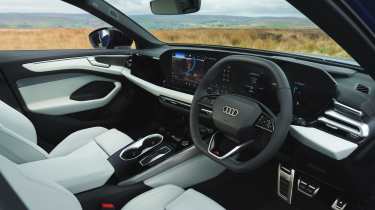
As is often the case when it comes to modern car interiors, it’s the brand’s choice of layout for the digital interfaces that drives its overall design. In the latest A6, the curved main touchscreen dominates the whole cabin, not just in terms of physical space.
Referencing previous A6 models is a hoop around the base of the windscreen, which integrates an ambient lighting strip that also flickers green at each end when the indicators are selected.
Materials and build quality
The materials vary depending on model and trim, but most of the touchpoints in the A6, such as the steering wheel, door handles and indicator stalks, feel suitably premium, if not luxurious. There are a few material oversights, such as the cheap-feeling gear selector, which is surrounded in gloss-black plastic that will potentially be scratched by watches or bracelets. The cabin is superbly built, and we found that it compares strongly against the BMW 5 Series’ extremely well appointed cabin, and feels miles ahead of the Mercedes E-Class.
Infotainment, sat-nav and stereo
To the uninitiated, Audi's latest technology interface can feel a little bewildering and overcomplicated. Separate out the elements and you’ll find some clarity, starting with the driver’s display. Despite arguably inventing the digital instrument cluster, Audi’s new system can be a little frustrating, because there doesn’t seem to be much variability in its layout.
The brand’s famous virtual cockpit with its large-format map view doesn’t really exist in this new era. Instead, there’s a single round element in front of you with various active safety icons, but little more. If your navigation is active, next-turn information is large and relatively clear, but it would be nice to have a clearer map view in front of you.
That central drive element isn’t a traditional rev-counter; instead there’s a power percentage read-out that is largely useless. Select Sports mode and a rev counter does appear, but it’s fairly innocuous and can be tricky to read. You can select a layout to minimise all the visual clutter, which leaves a large black space in front of you.
Depending on the specification of A6 that you choose, a large and very high-resolution head-up display sits above this, and generally offers the same information repeated in your eyeline. Once again, the standard view is rather cluttered and doesn’t offer much useful on-the-fly information, but you can select a simplified option here, too.
We then get to the main touchscreen display, which is very large but also very clear. Directly to your right (and slightly obscured by the steering wheel in certain positions) is a small shortcut section that takes you directly to any of the car’s main functions, and the main home screen has a customisable layout that shows any key information you might need on the one page. Select any of those tiles, and you’ll be taken into each area’s full functionality.
The air-conditioning controls are accessible from the main screen on a static bar at the base, but for deeper functionality than temperature or other main controls, you’ll need to access a separate climate-control screen.
Higher-spec cars come with a third display for the front-seat passenger, and we’re not convinced that it’s particularly useful. While, it can be used to browse other functions and leave the main display free, for example, to show sat-nav directions, it isn’t an essential feature. Especially when navigation information is better off being displayed in the driver’s instrument cluster as we’ve previously mentioned.
Bang & Olufsen provides the premium sound system, and this sounds great. True audiophiles will note that ultra high-end systems available in rivals do have a little more grunt, but these are minimal differences and often cost a whole bunch more as a standalone optional extra.
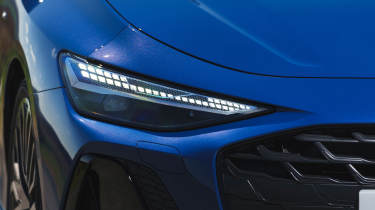
I drove a Launch Edition Plus model in the UK, which had everything but the kitchen sink thrown at it – although it did have a price tag in excess of £67,000. Highlights included adaptive air-suspension, four-zone climate control, a Bang & Olufsen 3D sound system, acoustic glass, gloss-black exterior detailing and matrix LED lighting. - Dean Gibson, senior road test editor.
Boot space & practicality
Pros |
|
Cons |
|
This is an Avant, so you’d think the boot would mean everything, but this isn’t quite the case with the latest A6. Audi has confessed that the rise of SUVs means that families and those after ultimate load space now generally gravitate towards models such as the Audi Q7. Audi’s solution was to turn the A6 Avant into more of a sleek, design-led model, but this has its drawbacks.
Dimensions and size
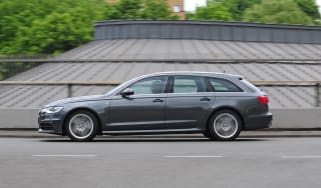
The A6 Avant slots between the 5 Series Touring and E-Class Estate in terms of external dimensions, although it has the shortest wheelbase of the three. The sloping rear end design eats into cargo volume, though.
| Dimensions comparison | |||
| Model | Audi A6 Avant | BMW 5 Series Touring | Mercedes E-Class Estate |
| Length | 4,999mm | 5,060mm | 4,949mm |
| Width | 2,099mm | 2,156mm | 2,065mm |
| Height | 1,491mm | 1,515mm | 1,469mm |
| Wheelbase | 2,932mm | 2,995mm | 2,961mm |
| Boot space | 503-1,534 litres | 570-1,700 litres | 615-1,830 litres |
Seats & passenger space
There’s a good amount of variability to the driver’s seating position in the A6, but visibility out can be hampered by both the tall digital interfaces and relatively narrow windows. There is plenty of space for larger drivers, though, and all the key touchpoints, such as the seats and where you rest your knee against the centre console, are well padded and very comfortable.
Storage is a bit scarce inside, though. The central armrest bin is shallow, the door pockets and glovebox are small, and there’s only a shallow tray ahead of the starter button and drive mode selector.
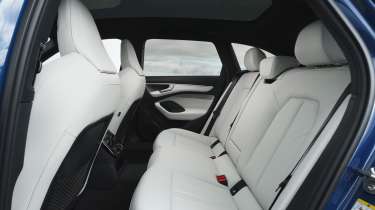
The rear seats have a similar issue to those in the front due the small windows, but overall space is fine, if not massive. Rivals with taller bodies such as the Mercedes E-Class and even the BMW 5 Series have a little more legroom.
There are lots of provisions for passengers back there, such as USB-C charge points and map lights. If you’re travelling with three passengers, a large transmission tunnel eats into foot space for whoever is sitting in the middle.
Boot space
When it comes down to the nitty gritty of an estate car, it’s the load-carrying capability that’s going to be a priority. But in this instance, the latest A6 Avant is a shadow of its former self. A swoopier exterior design means sacrifices have been made in terms of versatility.
Audi quotes capacities of 503 litres for the TFSI petrol, 466 litres for the diesel mild-hybrid and only 404 litres for the e-hybrid. Those numbers are well behind the 565 litres offered by the last A6 Avant; in fact, that number has been a constant of the car ever since the second-generation hit showrooms in 1997. Even the Mk1 had 455 litres of space.
Compared with its premium rivals, the A6 Avant is far behind the 5 Series Touring, which offers 570 litres, while that 466-litre capacity is only six litres more than is offered in the Mercedes E 300 de Estate, a car that we’ve often criticised for its lack of boot space.
The TFSI petrol version is better, but it is still far from stellar at 503 litres, while the e-Hybrid plug-in model sacrifices boot space to fit the battery in, and manages a disappointing 404 litres, well behind the plug-in Mercedes E 300 de.
The floor is fairly square in shape, and a rail system is fitted so partitions or cargo nets can be attached, while the flat sides of the boot help with loading. The back seats fold easily into three sections, so you can pick between cargo and passenger space as required, with a maximum of 1,497 litres on offer. Again, it is trumped by a BMW 5 Series Touring, which has 1,700 litres of space.
Towing
Towing weights are reasonable, if not outstanding, with the 2.0 TDI being the best of the bunch with a maximum capacity of 2,000kg. The 2.0 e-Hybrid can also tow 2,000kg, although its performance will be affected by the amount of charge that’s in the battery, while the 610kg maximum payload weight is 15kg down on the diesel. The 2.0 TFSI can haul a maximum braked trailer of 1,800kg, but the quattro four-wheel drive fitted on the other two versions will be better suited to towing.
There are plus points to the Audi’s boot. The powered tailgate opens tall and the load cover lifts out of the way automatically, while we measured the load lip at 685mm, which is reasonably low. A subtle lip means items won’t slide out accidentally, but you don’t need to lift them very high to remove them. - Dean Gibson, senior road test editor.
Reliability & safety
Pros |
|
Cons |
|
Audi has adorned the A6 Avant with a full roster of active and passive safety kit under one umbrella, called the ‘Drive and Park’ assistance package. This includes adaptive cruise control, speed-sign recognition and alert, a rear camera and a parking assistant. There’s also lane departure warning, cross-traffic alert, swerve assist, front-turn assist and an emergency braking function with vulnerable road user recognition. We did find some of these systems, particularly the lane-keeping assist, to be a bit over-eager at times during testing.
Neither the A6 or A6 Avant appeared in the most recent Driver Power owner satisfaction survey, but the Audi brand only achieved a rather meagre 23rd place out of 30 in the best manufacturer scores. While build quality and infotainment were two highlights, Audi drivers have been left wanting more from the powertrains and the driving experience. Considering that Mercedes managed to top this table, there’s plenty of room for improvement here.
| Euro NCAP safety ratings | |
| Euro NCAP safety rating | Five stars (2024) |
| Adult occupant protection | 87% |
| Child occupant protection | 88% |
| Vulnerable road user protection | 78% |
| Safety assist | 77% |
Buying, prices and deals
Best buy: Audi A6 Avant 2.0 TFSI S line
Prices for the Audi A6 Avant start from around £54,000 for a TFSI petrol model in Sport trim. However, we think it’s worth investing a bit more and moving up to the S Line for just under £55,500, because it comes with quite a bit of appealing extra kit for the money.
There’s not much difference between petrol and diesel price-wise, but we’d choose the former because it’s cheaper and sweeter to drive. If mega miles or towing are on the agenda, though, the diesel still has its advantages.
Business buyers will find the tax-friendly e-Hybrid better suited to their needs thanks to a reduced benefit-in-kind (BiK) tax bill. For the absolute lowest running costs for business users, though, the electric Audi A6 Avant e-tron is the best option.
If you want to save on the list price, be sure to configure your new Audi A6 Avant with the Auto Express Buy A Car service. We also have A6 Avant leasing deals to choose from, along with new A6 Avant models in stock right now.
Audi A6 Avant alternatives
We’ve already mentioned the A6 Avant’s main opponents, the BMW 5 Series Touring and Mercedes E-Class Estate. The former is the sportier car to drive, while the latter majors on luxury. Both have more boot space, too.
Elsewhere, Audi’s own A6 e-tron Avant is an electric alternative that will offer big savings for company car buyers, while the BMW i5 Touring is the electric BMW 5 Series.
Audi A6 Avant pictures
Key updates of the Audi A6 Avant review
14 September 2026: Latest pricing information and driving impressions.
Frequently Asked Questions
Audi’s three-year, 60,000-mile standard car warranty applies to the A6 Avant. However, this is a bit disappointing because while rivals such as BMW and Mercedes offer cover that lasts the same amount of time, they have unlimited mileage clauses.
Deals on the A6 Avant and alternatives
More reviews
Which Is Best
Most Economical
- Name2.0 e-Hybrid Quattro 299 Sport 5dr S Tronic
- Gearbox typeSemi-auto
- RRP£64,190