Volvo plots new Range Rover rival, and it'll dwarf the XC90
Volvo’s design boss is eager to bring a new ‘F-segment’ SUV to market, and it could arrive before the end of the decade

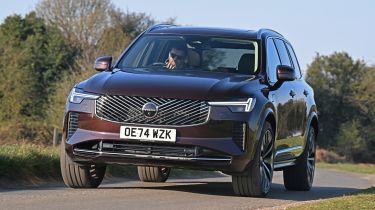
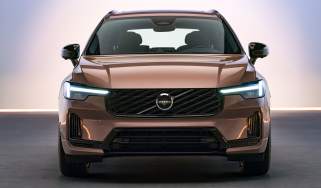
Volvo wants to go after the Range Rover with a new flagship SUV that would be even bigger than the existing XC90, further increasing the Swedish brand’s desirability and luxury appeal, particularly in America, where bigger is always better.
Chief designer Thomas Ingenlath said during the company’s recent product strategy conference, “Volvo clearly is a brand that very naturally would have such an F-segment-sized car in its portfolio. Our brand can very much carry that. So I'm very much looking forward to bringing this to life now.”
The XC90 is by no means a small car, stretching nearly five metres long, and its electric counterpart, the EX90, is even larger. However, both sit in the ‘E-segment’ of the car market, meaning they’re rivals for the likes of the BMW X5 or Audi Q7. The F-segment is reserved for the biggest vehicles on the road, such as the Range Rover.

Ingenlath recalled parking a Volvo XC90 next to a Range Rover, to see how these two big SUVs compared to one another. “I wanted to enjoy how that car [XC90] competes with it, and I have to say, design-wise, I would say it competes with it. But definitely size-wise, I mean, Jesus, it is a different dimension. It's a different dimension between an F- and an E-segment.”
Unsurprisingly, America is going to be the target market for this new and as-yet-unnamed flagship SUV because, as the design boss put it, “In the US, size matters. It's about the size of a car.” However, he added that it’s not just in the land of super-sizing where there’s demand for a model like this. “Even in Europe,” he said, “you can see how these cars are driven on our much more tiny roads.”
Aside from the Range Rover, the Swede’s new flagship will have to compete against the BMW X7 – the next generation of which should be arriving next year – and the Mercedes GLS that was recently refreshed. There’s also the all-new Audi Q9 that’s just launched and this, like the forthcoming flagship Volvo, is its maker’s biggest, most luxurious model, designed primarily to conquer America. In the States specifically, there’s also the Cadillac Escalade and Lincoln Navigator to consider.
The desirability of Volvo was something Ingenlath also spoke about during the conference. “Let's face it, that's what makes a Louis Vuitton handbag sell for an incredible multiple of its production price. This is why a Rolex Daytona sells for 70,000 Euros, because it's the desirability of the product, and it is the power of the brand that makes this pricing possible.”
Desirability is what the designers bring to the brand, Ingenlath believes, and he would know. This is the man who made Volvo cool and desirable with its last major product overhaul a little over a decade ago, which led to the Swedish outfit becoming a proper premium player. The launch of the second-generation XC90 in 2014 was a particular turning point because it pushed the brand’s quality and pricing levels to new heights. Presumably, this next flagship will see both elevated once again.
Volvo CEO Håkan Samuelsson, who previously expressed interest in an even bigger SUV as well, has now set Volvo on a path to try and become “the leading premium car brand,” with the promise of 13 brand-new models by 2030. This new flagship F-segment SUV is almost certainly one of them.
The company has already announced plans to build a "new, next-generation hybrid model" tailored to the American market in its Ridgeville, South Carolina, factory before 2030. This is the same plant where it’s now producing the best-selling XC60 and, while not confirmed, we suspect this new hybrid is the flagship SUV.

It makes sense that Volvo would choose hybrid power for its new luxury leviathan because there’s a slump in demand for high-end EVs at the moment, especially in America. Plus the company has just launched its new ‘long-range plug-in hybrid powertrain’ that delivers enormous EV range figures. The XC90 is now capable of 99 miles on battery power alone thanks to this technology.
In terms of what the new range-topping will look like, we should get a clearer picture soon, because Ingenlath announced that a concept car being revealed early next year will show the brand’s latest design direction, as well as a commitment to bring back tactile controls.
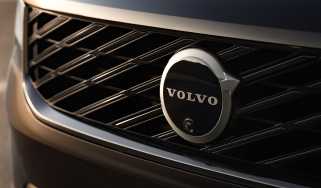
Another thing he is keen to improve is how people recognise Volvo’s cars, hinting that we may see a fresh interpretation of its signature iron mark badge and the grille that frames it. “As a customer, the product that you buy, you want to be identified with the personality and the character of this brand. And in order to do so, you have to actually recognise the brand on the product. And I think one of the major topics for the car industry today is the anonymous look of cars.”
Ingenlath used a classic Leica camera as an example of what Volvo is going for. “It’s not just about switching a button. It’s about the sensation and the sensual quality that such an interaction can give in terms of premiumness, the experience, the luxury of high-quality materials, the luxury of this great sound that that button will create.
The desire to return to more physical buttons was driven by feedback from customers and media, who haven’t appreciated the reliance on touchscreens in Volvo’s latest models. Volvo is “not going away from touchscreen,” the design boss noted, “it’s just to use the screen for what it’s good at”.
Being the biggest Volvo ever will also make the new SUV the brand’s most spacious car ever, and it’s almost certainly going to feature three rows of seats. But as we’ve seen with rivals such as the Audi Q9, there’s presumably going to be a version with cushier captain’s chairs to suit the chauffeur market.
When it comes to making its new cars feel as premium as possible, Ingenlath and his team may look to the Chinese market because, “In China, there's an incredible level of expectation when it comes to premiumness and luxury.

“I enjoy working together with our design team in Shanghai,” he said, “getting as well the demand from our salespeople there and from our Chinese colleagues, who really are pushing us to go beyond what we are used to doing when it comes to luxury, features and comfort in the first and especially the second row.”
Ingenlath hinted that these insights will not only aid the six upcoming models Volvo is developing exclusively for China. The design chief also aims to integrate these lessons across global line-ups, delivering new standards of "luxury and premiumness,” emphasising that “we definitely have to keep fighting and making that a strong aspect of our brand."
As previously announced, Volvo’s CEO Samuelsson is stepping down soon, with current Skoda CEO Klaus Zellmer set to take the big chair no later than October 31, 2027. It’ll be very interesting to see how much of a priority he makes this new extra-luxurious flagship SUV.
In the meantime, you can save as much as £17,000 on a brand-new Volvo XC90 when you buy it through the Auto Express Buy A Car service.
Get even more from Auto Express, follow our channels...
• Google
• Reddit
• Whatsapp