New VW ID. Polo GTI Clubsport Concept: wild EV previews future hot hatch
New concept provides big clue as to where VW might take its electric hot hatchback in the not-too-distant future

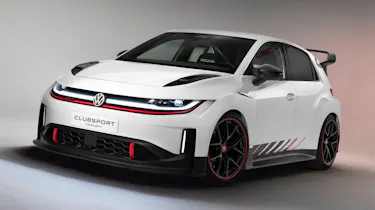
Electric hot hatchbacks might just be about to get a whole lot more serious, with the reveal of the wild new Volkswagen ID. Polo GTI Clubsport Concept. The show car is the most extreme iteration of VW’s iconic GTI brand with electric power, and while this is just a one-off for now, there’s plenty to suggest there’s much more to come in the near future.
The Clubsport nomenclature goes some way to affirm this claim, as it’s a naming structure that VW has typically used on top-spec GTI variants and specials over the years. So while the show car’s wide two-door body and extreme aero tech are quite far-fetched for a production version, a delve into the technical details released by the firm reveals that a future ID. Polo GTI Clubsport road car isn’t such a wild idea.
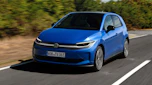
The ID. Polo GTI Clubsport Concept is firmly based on the forthcoming ID. Polo GTI road car, sharing the same MEB+ electric architecture and general structure. This makes it front-wheel drive – like most GTI models – but the electric motor under the bonnet is not the one we’ve seen on this platform before.
How fast is the VW ID. Polo GTI Clubsport Concept?
In place of the standard GTI’s 223bhp e-motor is the high-output AP550 unit as found on the larger ID.3 GTI, as well as the Cupra Born VZ and top-spec Audi A2 e-tron. In fact, peak power has increased significantly over those cars at 371bhp, or 139bhp more than the ID. Polo GTI. Thanks to some modifications to the 52kWh battery, the Clubsport Concept is able to generate up to 388bhp for short periods on overboost. Torque is also rated at a stout 550Nm.
This dramatically improves the 0-62mph time from 6.8 seconds in the road car to just 4.7 seconds for the concept. However, the challenge of putting so much instantly accessible power and torque through just the front wheels means that for the first time, this AP550 e-motor is joined by an electronically controlled limited-slip differential. This helps contain the power and torque, without needing to rely on the traction control system.
In order to fit the new e-motor, extensive work was carried out, resulting in a new front sub-frame. This also includes redesigned longitudinal members, assembly mountings and a new front anti-roll bar. Given the scale of the changes, and the technical detail that VW has gone into to explain them, it’s hard to imagine this all would have been executed without a robust plan for a production variant.
The battery itself has also been upgraded to supply more power over a longer period for track driving, but the 52kWh capacity and 105kW DC charging rates are the same as those on the base car. These changes also facilitate a higher 148mph top speed; this might feel a little short of the norm for German cars, but a 155mph top speed in VW’s electric era will be reserved for its future R models – or so we have been told.
To help slow the car down, VW has added ceramic brakes to the existing ‘one-box’ system; this uses the car’s sophisticated electronic brain to blend both regenerative and friction brakes into the one system, helping create a consistent and reliable pedal feel.
What does the VW ID. Polo GTI Clubsport Concept look like?
All of this new powertrain hardware is matched by some serious exterior changes, not least a conversion to a two-door body. This is joined by flared wheelarches to the tune of 50mm per side, housing 19-inch BBS wheels. By creating space for wider wheels, tyres and axles, VW has been able to optimise the car’s suspension for track driving, creating new wheel housings and suspension turrets in the process.
The suspension layout is as per the standard car, which means it features a MacPherson strut-style set-up at the front and a torsion bar at the rear. This is a trademark of VW’s MEB+ architecture, and a surprisingly unsophisticated option compared to the multi-link systems you’ll find in a Renault 5. In addition to a far more aggressive geometry, VW has integrated its DCC adaptive dampers, which have been modified for this specific concept, alongside a 15mm drop in ride height compared to the GTI road car.
All of this new hardware is clothed in a look that’s still recognisably ID. Polo, but just a little sharper and more aggressive. In one massive wraparound panel that integrates the front bumper and front wings, VW’s designers have incorporated a modified version of the road car’s front lights and glowing bar between them. By removing the upper LED ‘eyebrows’ seen on the road car, VW’s design team has given the concept a more angry face. This is accentuated by intakes at the edge of each headlight, and the new bonnet, which includes some contrasting vents.
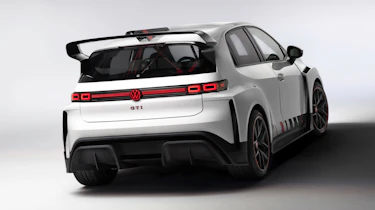
The lack of rear doors has also allowed VW to create a seamless back end that integrates a motorsport-like rear wheelarch flare and aggressive side sill. These terminate in a familiar tail that features a much larger rear diffuser and rear wing set-up, which creates real downforce.
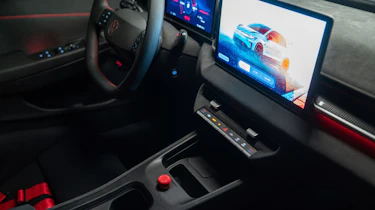
Finally, the cabin is much more ‘racing car’ than road-going hot hatchback, with only two Recaro bucket seats sitting in front of a steel roll cage in the rear of the cabin. Up front, VW has liberally used the brand’s new Art Velours soft-touch fabric.
All of this raises the real question, however. Does this concept preview a road-going GTI Clubsport model, albeit one that’ll have four doors and back seats? While VW is hesitant to confirm it, the car’s mechanical upgrades certainly seem extensive enough to suggest that development is indeed underway for a spicier electric GTI – just don’t expect the wide arches and massive rear spoiler.
Did you know you can sell your car through Auto Express? We’ll help you get a great price and find a great deal on a new car, too.