New Vauxhall Vivaro-e Hydrogen 2022 review
The Vauxhall Vivaro-e Hydrogen is a well-executed solution to the issue of range anxiety for electric vehicles.

Verdict
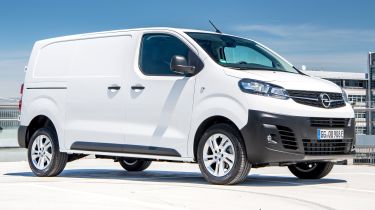
The Vauxhall Vivaro-e Hydrogen has the same driving manners as the electric version, so it's a comfortable and stress-free experience, while cargo space hasn't been compromised, either. The major flaw for this model in the UK is our almost total lack of hydrogen filling stations. If this wasn't such an issue, then the Vivaro-e Hydrogen would be very easy to recommend for buyers wanting a long-range zero-emissions van.
Electric vans are becoming more common in the commercial vehicle sector, but they're still not able to offer the kind of driving range that some users get from their trusty diesel vans. However, the Stellantis Group is aiming to change that with the introduction of a new line-up of hydrogen-powered vans. The venture into hydrogen drive is being led by German division Opel, so we've tried the Vivaro-e Hydrogen to see what it's like.

First, the technical bit. At the moment, hydrogen models (whether based on the Opel, Citroen e-Dispatch or Peugeot e-Expert) are made by plucking completed electric vans off the production line in France and sending them to Opel's Special Vehicles division at Russelsheim, Germany. Here they have some of their electrical running gear ripped out to be reused in a new electric van build and replaced with the hydrogen tech.
Used - available now

2023 MG
ZS
11,062 milesManualPetrol1.5L
Cash £13,150
2022 Kia
XCeed
28,438 milesAutomaticPetrol1.5L
Cash £14,870
2023 MINI
Cooper Electric
33,691 milesAutomaticElectric
Cash £12,400
2024 Audi
A3 Saloon
25,119 milesManualPetrol1.0L
Cash £18,497This replaces the drive battery that's mounted under the cargo floor with three tanks in a steel cage that are capable of carrying 4.4kg of hydrogen, while the Vivaro-e's electric motor under the bonnet is joined by a fuel cell stack which turns the stored hydrogen into electrical energy. Finally, a 10.5kWh lithium-ion battery pack (sourced from Stellantis's plug-in hybrid models, such as the Citroen C5 Aircross) is added under the seats.
This set-up means that the Vivaro-e Hydrogen has the same 134bhp and 260Nm outputs as the all electric Vivaro-e, while drive is still sent to the front wheels via a single-speed gearbox. There's a maximum range of around 250 miles, which is a combination of what the fuel cell and battery can offer. The latter can deliver around 31 miles of range on its own, so you're not entirely stuck if you run out of hydrogen. It's worth noting that it takes three minutes to refill the hydrogen tanks, as opposed to the long recharging times that the battery-powered models have.
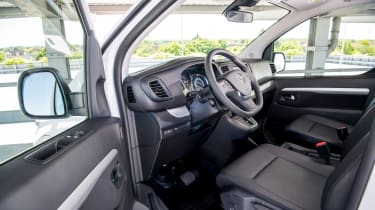
The hydrogen van's carrying capacity isn't affected by the conversion, with a cargo volume of 5.3 cubic metres for the standard van and 6.1 cubic metres for the long-bodied version, while payloads and towing weights are both one tonne. However, one sacrifice you have to make with the Hydrogen model is the option of the double passenger seat and through-loading bulkhead - the location of the battery precludes that set-up.
On the road, the Vivaro-e Hydrogen drives largely like the all-electric model. There's a bit more noise from the fuel cell as it turns hydrogen into electricity, but it's hardly loud and doesn't impinge on cruising comfort, while the sound isn't connected to road speed, so it doesn't get any louder the faster you go. The van is responsive off the line, but it tails off as you reach the 68mph top speed. However, there's more than enough performance for everyday duties.
Overall weight is roughly the same as the battery-powered Vivaro-e, so the hydrogen model is smoother than the diesel model and is more car-like to drive than some of its medium-sized contemporaries.
The only other differences are that the hydrogen van sits a little higher at the back than the all-electric van - likely because there's less weight over the rear wheels – while there's a flap in the front wing that hides the battery charger and the fuel filler just ahead of the nearside rear wheelarch is reinstated an opening for filling the hydrogen tanks. In the cab, the Vivaro-e Hydrogen is identical to the rest of the range, save for the two smaller dials in the instrument cluster, which now show how much hydrogen is left in the tanks and battery capacity.
| Price: | TBC |
| Powertrain: |
E-Motor, 45kWh fuel cell, 10.5kWh battery |
| Power/torque: | 134bhp/260Nm |
| Transmission: |
Single-speed auto, front-wheel drive |
| 0-62mph: | 15.0 seconds |
| Top speed: | 68mph (limited) |
| Economy: | 1.2kg/1km |
| Range: | 250 miles (est.) |
| CO2: | 0g/km |
| Cargo Volume: | 6.1 cubic metres |
| Max payload: | 1,000kg |
| On sale: | Now |