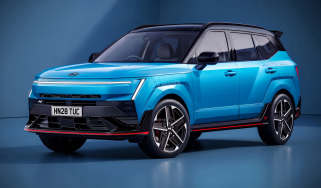
Future of Smart: new boss banks on city car icon’s return but bans hybrid
New European boss Wolfgang Ufer has taken the hot seat to boost sales of Smart’s all-electric SUVs – and bring back the micro car

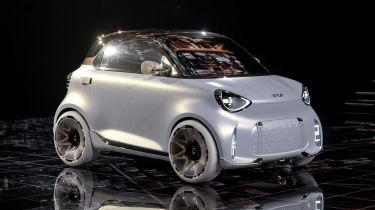
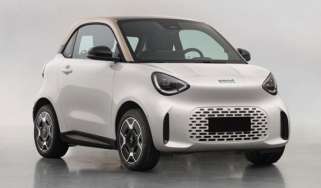
Smart will unveil the production version of its #2 this autumn, as it seeks to plug the huge gap in its brand identity left by the tiny car’s absence.
The electric car company – a joint venture between Mercedes-Benz and China’s Geely – has made minimal commercial impact in the European market, despite rolling out three electric SUVs in the past three years. It registered just 1,770 cars in the UK in 2025, an 11 per cent drop on 2024’s volume.
Wolfgang Ufer, Smart’s newly appointed CEO, is charged with giving the brand momentum. “It’s time [to raise] our sales and marketing levels; here we can be better and create awareness. To introduce cars from a brand no-one knows in new segments, it’s not easy.”
Ufer has worked for Smart for 13 years, managing various European territories and establishing the Chinese manufacturing operation, despite initially turning down the brand three times: “I was really [happy] selling Mercedes SLS and AMG Performance cars!” he joked.
Smart city car’s return can boost whole range
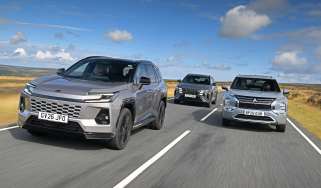
Smart’s challenge is to gain a European foothold with a good quality but indistinct range that’s easily lost amid the influx of Chinese electric SUVs, which typically have lower prices. The #1 small SUV, twinned with Volvo’s EX30, starts around £33,000, while the flagship #5 costs a shade under £40k and measures 4.7m-long, the size of a Tesla Model Y. Couple this with a lack of cars on the streets to boost visibility and it’s clear Smart needs to get back to its iconic roots.
“This question is [always]: ‘where is the two-seater, guys?’,” admits Ufer. “It was never forgotten and we had several attempts to get the right package, the right platform. But the truth is the two-seater was never a car where we made money.
“Would you start a company today with a two-seater? It’s really challenging so we started with a portfolio. Now we are bringing the answer to the [big] question.”
Don’t expect the ForTwo EQ replacement to undercut Renault’s £18k Twingo: Ufer is adamant that Smart is a “premium lifestyle brand”. And miniaturising components to bring the little coupe in around 2.70m-long is “probably the most complex car you can build,: argues the boss: “normally you don't find a platform on the shelf, so we did it on our own.”
The inaugural, ‘90s Smart was so distinctive it became the first contemporary car still in production to be exhibited at New York’s Museum of Modern Art. Trouble is, the unique car cost so much to engineer that analysts Bernstein calculated the project lost Mercedes-Benz $4.6-billion over its first two generations.
To tackle the profitability challenge, Ufer admits Smart is thinking about a full #2 portfolio: coupe, cabriolet, potentially a stretched version. Specifications will span utilitarian pool cars to luxurious urban runabouts.
And he’s excited about tapping the historic ForTwo customer base, a real contrast to the new SUVs which are seeking customers from scratch.
What does the Smart brand stand for in 2026?
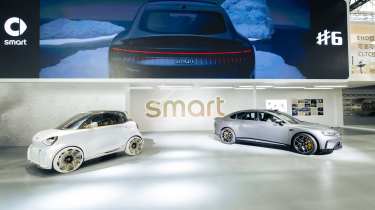
Given the stretch from the celebrated two-seater with its distinctive ‘Tridiron’ safety cell graphic, brightly coloured interchangeable panels and flared wheelarches to generic SUVs, what does the new Smart stand for? Spacious interiors and cutting-edge electric tech – an 800-volt architecture and 400kW DC charging on high-spec #5s – and high performance in the Brabus editions, argues the European boss.
Will the German relax his EV-only policy for Europe, with #5 offered with a Geely plug-in hybrid drivetrain in EHD guise? “We are not convinced we need that for Europe. If you have an 800-volt [system], I’m not sure you really need a hybrid which is a bridge technology.” The cost of prepping the drivetrain to meet the upcoming Euro 7 emissions regulations is another factor.
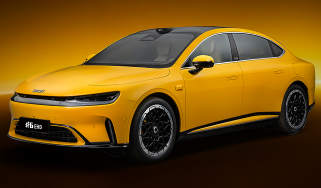
Does that also rule out the #6, a big battery-toting plug-in hybrid saloon with in excess of 1,000-miles of combined petrol/electric range? “We are not sure about that one in Europe, because it’s a hybrid car.” The saloon bodystyle would further stretch Smart’s brand, this time in competition with the Mercedes E-Class. Ufer sees the Mercedes and Smart portfolios as complementary, with the junior brand operating in the A- to C-segments, from city cars to mid-size SUVs.
Is the focus on maximising sales of the existing SUVs, or continuing to grow the range? “I can tell you, I want to do both. I want to sell the #1, #3 and #5 and be more successful, then we will have the historic launch of the #2. We can also talk about additional variants or portfolio changes.”
Does Smart benchmark itself against MINI, and would that entice it into the small hatchback market? “This is not arrogant but we look [less] at MINI, more at our customers and the potential, and whether we see a good opportunity between #2 and #1.” If Smart does seize this opportunity, it can develop cars at ‘China speed’ in around 24 months reckons the boss.
Mission: be one of the fastest growing EV brands
First there’s a lot of work to be done, with the brand being rolled out to more European markets. Progress has been slow, with Smart’s rebirth coinciding with the Covid epidemic and the chips supply crisis, uncertainty around used EV values and national governments’ electric vehicle subsidies, “a rollercoaster” existence, says Ufer.
But this is the same for every car maker, and other Chinese newcomers – Chery, BYD, Jaecoo and Omoda – have made great strides in the “super-challenging” UK market. Smart has only registered 740 cars in the UK so far in 2026, across 32 sales sites. At the ForTwo’s height, Ufer was maximising its sales in big European cities such as London, Paris and Rome, a city where the brand sold 10,000 alone per year.
So where does Ufer want Smart to be in three years’ time? “My personal vision would be for people to say: ‘Okay, we understood what Smart did, they enlarged the portfolio. The #2 is in all possible variants in the markets, and we are successful. In this very challenging environment, we’ve managed our economical situation, which for a full electric brand is not easy. And we want to be one of the fastest growing BEV brands.”
Did you know you can sell your car through Auto Express? We’ll help you get a great price and find a great deal on a new car, too.