There’s no point buying a new car if your old one keeps updating itself
Editor Paul Barker thinks car tech is set to explode in the coming years and it could have an impact on how we buy cars

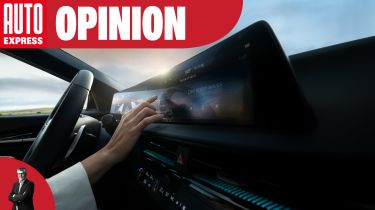
If you think in-car tech has advanced quickly in recent times, then you’re in for a warp-speed experience in the coming years. Tech geeks have long been talking about the advent of the Software-Defined Vehicle, or SDV, where the computer brain of the car becomes a defining feature, linking the clever systems to open up new connectivity possibilities.
Listening to experts at last week’s FT Future of the Car Summit in London, the possibilities are intriguing as things accelerate.

Much as the monthly cost of smartphones has conditioned many car buyers to the monthly outlay of leasing a model rather than buying outright, the phone industry has also prepared us for the concept of updates, which are increasingly the norm for modern connected vehicles. Obviously these don’t update while you’re driving, but through a process of constant evolution, they mean your car is better after a couple of years than it was when you got it.
But this does prompt a few questions that could fundamentally change our relationship with our car. Firstly, are we going to have to view them as we do our entertainment packages? Will monthly car bundles for additional features become an equivalent of Netflix or Spotify on our bank statements? And will you get them cheaper if you put up with personalised in-car adverts? You might also wonder why you should buy a new model, if yours is being constantly updated with the latest features, even though it is three, four or five years old.

Removing the need to get the latest tech will, for some, be a reason to keep their current car. That’s not great for firms trying to sell new vehicles. But possibly the biggest issue, in the long term at least, is the four-wheel equivalent of obsolete software. Anyone with an Apple product will be familiar with the moment a message pops up to say an app or service won’t work any more, because your device doesn’t have the latest operating system.
Imagine getting in your car and finding stuff that worked yesterday doesn’t anymore, because the software is now obsolete, even though the vehicle works perfectly well. The car industry has some work to do to prove that safeguards are in place to make the automotive software revolution a positive thing for drivers of models old and new.
Do you think there is too much tech in modern cars? Let us know your thoughts in the comments section...