Government to relax ZEV Mandate’s electric car sales targets within days
Currently, 80 per cent of new car sales must be electric by 2030, but that target is set to be eased
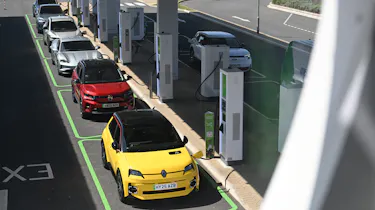
The Government’s controversial ZEV Mandate is set to be eased within days. As it stands, the aim is for 80 per cent of new cars sold in the UK by 2030 to be electric vehicles, but BBC News reports that the targets are to be relaxed as soon as this week, although Downing Street has said a decision is yet to be made.
The news comes after a consultation into the ZEV Mandate was launched in August amid growing pressure from the car industry over the plans.
Announcing the review at the time, Transport Secretary Heidi Alexander said: “It’s right we keep targets under review to ensure they’re practical and back British industry. The end goal hasn’t changed – but we need to take business with us on the journey and that’s exactly what we’re doing today by making sure industry has the chance to shape how we get there.”

The Department for Transport states that the 2030 phase-out of pure-petrol and diesel cars will remain in place, as will the 2035 ban on hybrids; the UK has not followed the EU in its abandonment of outright bans on combustion-engined vehicles.
However, the Government says that “in the context of challenging and complex global economic conditions, including supply chain disruption and tariff and trade uncertainty, the UK is reviewing targets to ensure they remain pro-business and grounded in the real world”.
Until now, a large number of carmakers have struggled to meet ZEV targets without borrowing ‘credits’ from future years, or buying them off other, overly compliant manufacturers. To get as close as they can to the mandated percentages, most brands have offered heavy discounts on EVs, because the cost of doing so is less than the £12,000 fine per model for surpassing the stated threshold.
With the threshold currently set to increase to 38 per cent of sales in 2027, there has been mixed reactions to the Government’s announcement. Chief executive of the UK’s Society of Motor Manufacturers and Traders, Mike Hawes, described the consultation as “a timely opportunity to adjust the transition so it works for all”.
Hawes added: “That means a commercially sustainable transition which supports UK competitiveness, investment and jobs whilst delivering greater choice and affordability for motorists – the sooner, the better.”

Similarly, boss of the British Vehicle Renting and Leasing Association, Toby Poston, said the trade body will “engage fully with this consultation… ensuring [the] Government understands where policy is working, where greater support is needed, and how we can keep the transition moving with confidence”.
On the other hand, many within the EV industry believe that a dilution of targets could negatively affect consumer confidence and thus the UK’s transition altogether. The CEO of InstaVolt, one of the UK’s largest charging firms, Delvin Lane, warned: “Ultra-rapid charging investment doesn’t happen on the back of uncertainty. We’ve invested hundreds of millions of pounds into the UK’s charging network, because Government policy gave us a clear runway to plan against.
“Softening the mandate at this stage risks spooking exactly the private capital that’s been building the infrastructure this transition depends on.”
The 2026 target set by the ZEV mandate is 33 per cent, and although 32 per cent of cars sold in the UK in October were fully electric, the year-to-date picture isn’t as impressive at 26.6 per cent. There are fears sales could slip even further when the eVED pay-per-mile tax arrives in 2028, costing electric car drivers three pence per mile.
Did you know you can sell your car through Auto Express? We’ll help you get a great price and find a great deal on a new car, too.