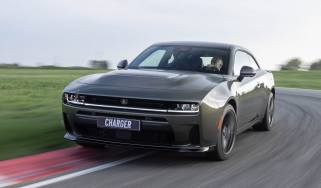
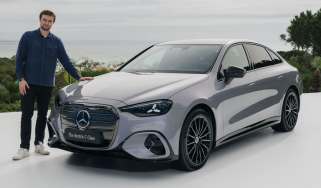
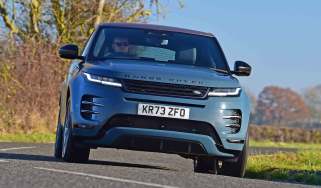
10 ways Andy Burnham can win over drivers: our Motoring Manifesto
In our own Motoring Manifesto, we speak to experts across the industry to highlight 10 key issues Andy Burnham must now address as Prime Minister

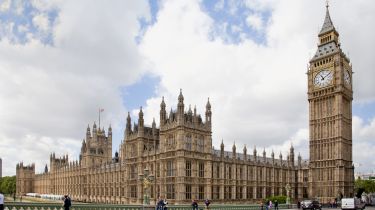
The appointment of a new Prime Minister in the UK is becoming almost as common as the arrival of a new Chinese car brand. Andy Burnham has just stepped through the door of No. 10, inheriting both the nation’s highest job in public office, as well as the responsibility of tackling the mountain of issues the country faces – including those experienced every day by motorists.
That’s why we’ve put our heads together with experts and think tanks from across the industry to come up with our own Motoring Manifesto – in other words, what Burnham needs to do for drivers if he wishes to spend another five years in government following the next election.
1. Commit to long-term road maintenance funding
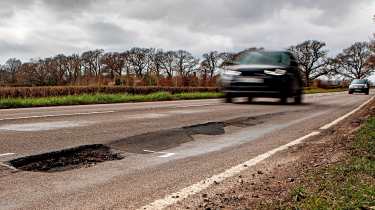
Potholes and the state of our roads were among the biggest drivers of votes in the local elections earlier this year which, following Labour’s disastrous performance, paved the way for Sir Keir Starmer’s exit as PM.
The poor condition of Britain’s roads not only impacts how comfortable (or not) our commute is, but it also costs motorsists dearly as they fork out for repairs. It drives up car insurance premiums, too, because when pothole-related damage becomes too expensive to rectify, many drivers turn to their insurer to pay out.
Under Starmer, the Labour Government announced a major investment into proactive road maintenance, as well as new rules and incentives for local authorities to encourage effective usage of funding. This is a welcome step in the right direction which shouldn’t be rowed back on in order to fund other projects.
“It is essential that, as [Burnham’s] Government now resets its priorities, previous commitments to invest £7.3 billion in local road maintenance over the next four years are not abandoned,” said David Giles, the chair of roadbuilding trade association, Asphalt Industry Alliance.
“Local roads across England and Wales are already in a disgraceful condition, with the backlog of repairs now standing at a staggering £18.62 billion,” Giles said, referencing the organisation’s ALARM report from earlier this year. “With every public service depending on a well maintained and reliable road network, it’s vital that the funding promised through to 2030 is delivered in full and not diverted elsewhere.”
2. Stay the course for EV transition

With the scorching summer we’re experiencing in the UK, it’s fair to say that climate change is very much a reality, and that the switch away from fossil fuels is not only crucial, but inevitable. However, it’s also something that needs to be executed in such a manner as to balance the environmental benefits with the socioeconomic cost – both for consumers and automotive manufacturers.
Key to a smooth transition is consistency – both in terms of messaging to motorists, as well as the deadlines and restrictions imposed upon the industry. The European Union has recently rowed back on its commitments to phase out new petrol and diesel car sales, and while this has been welcomed by select car manufacturers struggling to keep up with targets, it also risks undermining the progress made thus far. The UK needs to double down on its transition targets and avoid pouring salt into the admittedly necessary wound that is the pay-per-mile tax on electric cars.
"We hope our new Prime Minister and his cabinet can work towards bringing the clarity the UK’s automotive industry urgently needs,” said analytics firm Cox Automotive’s insight director, Philip Nothard. “Certainty about the future of zero-emission vehicles is high on the agenda of all automotive businesses.
“The ZEV mandate remains under review, and there are still many questions to be addressed around the EV pay-per-mile scheme, among myriad other challenges. However, the Prime Minister's initial emphasis on bringing down the cost of living and improving consumer confidence will provide some relief for the industry."
3. Eliminate EV charging driveway tax
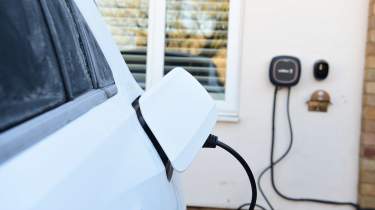
One of the first acts Andy Burnham made when he became Prime Minister was to scrap VAT on domestic electricity. While EV drivers with access to a home chargepoint will certainly be thankful for the few additional quid in their pocket, the move has the unfortunate effect of widening the price difference between domestic and public charging.
Currently, those using electric car chargepoints must fork out a VAT rate of 20 per cent, meaning utilising public EV infrastructure can often be more expensive than running a petrol or diesel car. This fundamentally creates a barrier for those on lower incomes wanting to transition to an EV, which ultimately stalls the overall take-up rate. A review into the cost of public charging leading to a potential cut in VAT is not only the fair solution, but one that will keep electric car ownership attractive once the pay-per-mile tax arrives.
"Making public charging work for every driver, not just those with a driveway, is now one of the biggest challenges facing the EV transition,” said CEO of electric car drivers’ association EVA England, Vicky Edmonds.
“The Government’s Cost of Public Charging review is an important opportunity to tackle that divide, but lowering costs is only part of the answer. Drivers also need a charging network they can trust. That’s why we’re calling for the Public Charge Point Regulations to be reviewed and updated so they better reflect the real issues drivers face every day, from pricing transparency and reliability to clear accountability when things go wrong.”
4. Stoke fuel price competition
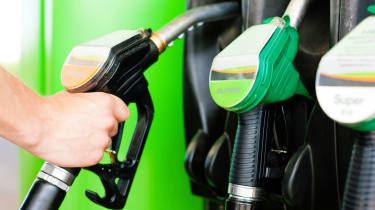
In the transition to electric power, Burnham must not forget the millions of motorists still relying on petrol and diesel. Fuel prices in the UK rose to historic levels earlier this year and while the war in the Middle East is mostly to blame, it’s hard to ignore that the cost of visiting a petrol station remains higher in mainland Britain than in Northern Ireland. As oil prices fluctuate, what we’re charged at the pump always appears to rise faster than it falls, too.
Earlier this year, the Government launched its Fuel Finder scheme, but a large portion of fuel retailers are not publishing the live pricing data that they’re required to. The Competition and Markets Authority (CMA) has been tasked to keep on top of this, as well as look out for businesses operating so-called ‘rocket and feather’ fuel pricing practices. Yet take one look at what we’re still paying at the pump, and it appears the regulator is not doing enough to keep healthy competition in the fuel sector alive and money-hungry retailers in check.
“The launch of the Government's Fuel Finder service, which forces every forecourt to report their prices, has increased transparency for drivers, as they can now use apps to find the cheapest petrol and diesel near them,” remarked the RAC’s head of policy, Simon Williams.
“But we’re concerned the CMA’s ongoing monitoring of fuel prices continues to conclude drivers have been overcharged at the pumps. Data from RAC Fuel Watch also shows drivers in Northern Ireland consistently pay far lower prices for their fuel than drivers in the rest of the UK do,” Williams highlighted. “We call on the Government to look into this inequity.”
5. Back British car industry
Burnham has once again placed British business into the generally regarded safe pair of hands that is Jonathan Reynolds. With cars being the UK's third-largest export in terms of value, protecting Britain’s automotive industry is essential, both in terms of preserving jobs within the sector and stimulating the economic growth required to get our public services out of the dark ages.
Not only do automotive manufacturers face exorbitant energy costs – a particular problem when building energy-intensive EVs – but also the threat of potentially disastrous Rule of Origin tariffs for EU imports and exports. Without a deal, the latter could push up prices not only for producers on either side of the Channel, but for consumers, too, as manufacturers pass on some of the cost.
“The Government needs to make the UK the best place in Europe to build and buy cars,” said professor of business economics at the Birmingham Business School, David Bailey. “That starts with getting energy costs down. British car makers simply can’t compete for global investment if they’re paying significantly more for electricity than rival factories overseas. Cheaper industrial energy would do more to attract investment than almost any headline-grabbing announcement.
“At the same time, the UK also needs a closer trading relationship with the EU to reduce unnecessary barriers and protect automotive supply chains, alongside much stronger backing for the Industrial Strategy to secure battery gigafactories and new vehicle production,” Bailey continued. “If we get these fundamentals right, the UK can be a global automotive success story. If we don’t, investment and jobs will simply go elsewhere.”
6. Ensure roads are properly policed

Speeding fines and drug-driving offences are now at an all-time high. While this could certainly be down to the growing number of cameras (AI or otherwise) keeping a watchful eye on our streets, many feel car crime has in effect been decriminalised, given the dwindling number of traffic police out on patrol and the lack of repercussions offenders face.
Whether it be anti-social driving, driving under the influence or other car-related crimes such as theft, an increased police presence on the roads is paramount if order is to be maintained. Police officers should also be spending more of their time out on patrol or solving cases and less time filling out paperwork. This focus on boots on the ground should work in tandem with proposals from the Government’s new Road Safety Strategy, such as tougher enforcement and sentencing for repeat drink/drug driving offenders, in order to make our roads safer for all.
“Roads policing is central to the Government delivering the targets set out in the road safety strategy and so it’s time we have a roads policing strategy that matches the ambition to reduce KSIs (killed or seriously injured casualties) by 65 per cent by 2035,” said Jamie Hassall, executive director of the Parliamentary Advisory Council for Transport Safety (PACTS). “It will need a robust delivery plan, key safety indicators to measure progress and most importantly the funding to deliver it.”
7. Discourage carspreading
The size of cars sold in the UK is beginning to outgrow the nation’s inherently narrow road network. It’s easy to blame SUVs for this, and while practical family crossovers such as the Ford Puma, Nissan Leaf or Hyundai Tucson shouldn’t be vilified, it does beg the question whether most people require anything much larger.

A means to discourage the largest and most gas-guzzling 4x4s while simultaneously earning the Government a little extra cash could be to add a tax surcharge for the heaviest vehicles. Protections such as a higher weight threshold should be implemented for EVs and hybrids, while charges should remain reasonable, so as not to completely render large vehicles unaffordable.
“The UK currently taxes oversized, American-style SUVs at a fraction of the level seen in countries like France,” said senior policy researcher at the Transport & Environment think tank, Eloise Sacares. “[This] effectively creates a tax haven for the heaviest, most space-hungry vehicles. That distorts consumer choice, encourages oversized models ill-suited to our roads and parking infrastructure and undermines road safety.”
Sacares said a weight-based levy with a threshold that’s higher for EVs and other electrified vehicles would “deliberately protect typical family cars, while targeting oversized SUVs, with the heaviest cars paying the most”. She added: “This would encourage manufacturers to limit the size and weight of the models they produce.”
8. Insurance isn’t a luxury, so help bring prices down
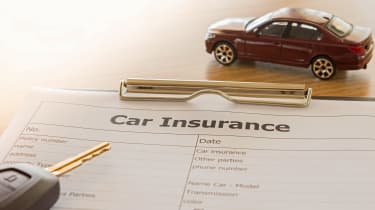
In 2025, over 160,000 uninsured cars were seized from UK roads. Of course, while some caught without cover also commit secondary offences, Citizens Advice told the Treasury Select Committee that many people on lower incomes are having to face the decision of paying for car insurance or putting food on the table.
Premiums have dipped since their peak in 2023, but the cost remains a barrier to entry for motoring for many on lower incomes – especially considering how using premium finance can see drivers forking out a significantly larger sum than if they’d been able to foot the bill up front. A limit on finance APRs and potentially even a reduction on Insurance Premium Tax for motor insurance would make motoring more affordable for many.
“Under a Burnham Government, we want to see the Financial Conduct Authority go further on premium finance. Its market study found high APRs that could not be justified under the Consumer Duty, and yet the regulator appears to be taking a light touch approach to addressing its own concerning findings,” said Rebecca Deegan, director of the Fair By Design initiative.
“The Government should also get insurers and regulators round the table to think more boldly about how they can make insurance affordable for people who rely on their car for employment and to take care of loved ones,” continued Deegan. “The Motor Insurance Taskforce’s report doesn’t come close to acknowledging that people on low incomes are being locked out of opportunity because car insurance has become unaffordable, and they don’t have access to reliable public transport.”
9. Take more steps to reduce test backlog
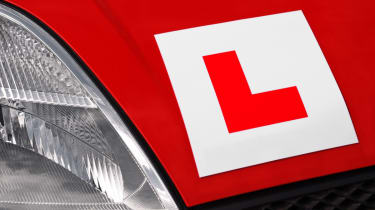
Driving should be an option for everyone, but many younger people are being denied the freedom and opportunity afforded by a full licence because of the huge test backlog that the UK is experiencing. This not only stifles their work and social lives, but also leaves an open door for scammers wishing to prey on and exploit those who are faced with a choice: wait half a year or more for a test, or pay through the nose now.
The Government has already taken steps such as limiting who can book a test and what changes can be made, but it doesn’t address the fact that the Driver and Vehicle Standards Agency recruits as many examiners as it loses. With driving examiners calling for better pay and training and with the National Audit Office estimating the backlog won’t be cleared until November 2027, something needs to change.
“Reducing driving test waiting times should remain a priority,” said managing director of the AA driving school, Emma Bush. “Long delays affect learners’ ability to progress, place additional pressure on driving instructors and create unnecessary uncertainty for people who rely on a licence for work, education and family commitments.”
Bush continued: “We would welcome a continued focus on increasing test capacity, making the best use of examiner resources and tackling misuse of the booking system, helping ensure tests are available for those who are genuinely ready.”
10. Don’t see drivers as a cash cow
Our final request does not concern policy, but the philosophy that forges it. Motorists have long been deemed the unwilling cash cow of successive Governments, with taxes and fees accumulating over time that are difficult to work around given how independent mobility is a necessity for the vast majority of the population.
It’s fair to say that this has made the occupier of No. 11 Downing Street and, by proxy, whoever resides behind the door of No. 10, rather unpopular with anyone who has recently driven a car through a tunnel, city or motorway, or filled their vehicle up with fuel. Forget the die-hard Burnhamites; Labour desperately needs to get the general public onside and steer clear of making any decisions that will negatively impact the near-80 per cent of households that own a car.
“The Government has a nasty habit of greedily doing things to motorists, not for us,” said Auto Express’ chief columnist, Mike Rutherford.
“Even when buying an average-priced (circa £45k) unsubsidised, petrol or diesel-powered family car, the purchaser may well have to pay around £7,000 in VAT, £2,270 for 12 months’ VED, then a cheeky £55 first registration fee, thereby handing Gov a gross profit of £9,325. And all this is before the same consumer is forced to pay the state their fuel duty and VAT; insurance taxes; tolls to use certain roads, tunnels, bridges and city centres; council parking tariffs; plus numerous other cynical fees, levies, charges, fines and barely legal state-sponsored rip-offs. Enough is enough.”
Did you know you can sell your car through Auto Express? We’ll help you get a great price and find a great deal on a new car, too.