Only 3 of the UK's top 10 car brands hit Government EV sales targets, without help
New figures reveal just how difficult it is for car makers to meet the Government’s ambitious EV sales mandate

Just three of the 10 biggest car manufacturers in the UK managed to meet the Government’s tough EV sales targets in 2024. Others only managed to squeeze over the threshold by ‘trading’ allowances from other manufacturers who sold a higher proportion of EVs, or by ‘borrowing’ from future years.
The Government's Zero-Emission Vehicle Mandate was introduced under Rishi Sunak’s Conservative Government as a means to accelerate the electrification of Britain’s roads. The law, which came into force in January 2024, required manufacturers to ensure a certain proportion of their sales were of fully electric vehicles.

In the first year, the stipulated target was 22 per cent, rising to 28 per cent in 2025 and now 33 per cent in 2026. This will continue rising until 2035, from when all cars sold new in the UK must be zero-emissions. For every car sold over and above the threshold, manufacturers are fined £12,000.
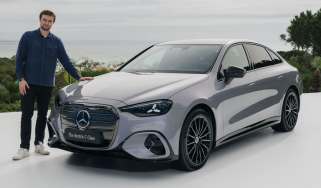
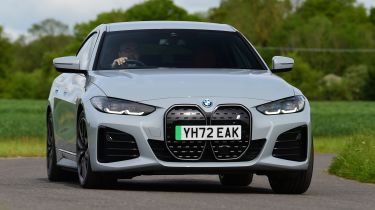
However, it has now been revealed that in 2024, only three of the UK’s 10 biggest automotive manufacturers – BMW (26 per cent of sales were of EVs), Mercedes-Benz (24 per cent) and Hyundai (24 per cent) – managed to hit the Government’s tough targets.
Stellantis, the parent company of Vauxhall and Peugeot, wasn’t far off at 20 per cent, while Ford was some way behind at nine per cent – although this was before the launch of the electric Ford Puma Gen-E, which was the best-selling electric car in January 2026.
In order to avoid fines, other brands have been forced to either ‘trade’ credits from other manufacturers – the likes of Tesla, which only sells EVs can, for example, sell some of its compliance figures to other brands struggling to hit targets – or by ‘borrowing’ from future years. This latter method effectively increases the manufacturer in question’s targets for a forthcoming year, to ease the more immediate impact.
Brands could also ‘convert’ by reducing the CO2 emissions of their petrol, diesel and hybrid fleets, in order to balance out any shortfall in compliance.
And so, despite only 19.8 per cent of new cars sold in 2024 being fully electric, the UK automotive industry was just about able to comply with the Government targets.
It looks like 2025 could provide a similar story as well. Although we don’t yet have official Government ZEV compliance data, Society of Motor Manufacturers and Traders’ registration figures show that only 23.4 per cent of cars registered last year were EVs, shy of the 28 per cent target.
All of this is despite the heavy discounting employed by manufacturers to artificially stimulate demand, as well as the introduction of the Government’s Electric Car Grant, which slashes up to £3,750 off the price of a new electric car priced below £37,000.
SMMT chief executive Mike Hawes said: “The UK’s EV transition pathway was conceived with the best of intentions – but the assumptions behind it have proved over-ambitious.” He called for the Government to bring forward the forthcoming review of the ZEV Mandate, saying: “We need an urgent review that reflects today’s realities, that delivers decarbonisation not deindustrialisation, and offers consumers the choice they have always expected.”

Others, however, are backing the Government to stay its course. Founder and director of Octopus Electric Vehicles, Fiona Howarth, described any potential change in policy as “the wrong approach”.
She said: “We should be doubling down on ways to power our cars and homes with energy produced here in the UK, rather than relying on imported fossil fuels. The focus now should be on building confidence and accelerating the transition, not slowing it down.”
Auto Express attended the SMMT Electrified event on 11 March, along with the minister for aviation, maritime and decarbonisation, Kier Mather. The MP for Selby told the conference that “[the review] is beginning this year, but early 2027, we feel, is the right point to make sure that we can test properly where the pressure points lie in the ZEV Mandate and make sure that it continues to work for manufacturers”.
Did you know you can sell your car through Auto Express? We’ll help you get a great price and find a great deal on a new car, too.