Home EV charger grant sees £150 increase, but most people still can’t get it…
Electric-car drivers can get up to £500 off a home wallbox, but most people still aren’t eligible

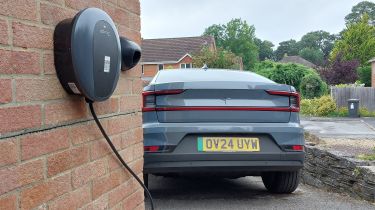
The Government has announced an increase to the Electric Vehicle Chargepoint Grant, allowing eligible applicants to save up to £500 on a new home EV charger. That figure is £150 more than before (previously £350), but the same restrictions apply.
The Department for Transport (DfT) says the new £500 limit will “typically cover nearly half the cost of having an EV charger installed”. However, being open only to those in rented properties, plus business owners, flat owners and those without driveways, means the majority of people – statistics suggest around 55 to 58 per cent of households have access to a driveway or off-street parking – aren’t eligible.
This new cash injection will be available for 12 months from 1 April, with the DfT noting that this will be the final year of grants – with no plans to extend funding beyond spring 2027.
Minister for Aviation, Maritime and Decarbonisation, Keir Mather, said: “We’re taking action to make EV ownership the affordable choice for everyone – not just those with driveways.
“Bigger grants mean families, flat owners, renters and small businesses can now install a charger for almost half the usual cost. Combined with our Electric Car Grant, we’re backing the EV revolution for drivers, businesses and industry.”
The Electric Car Grant (ECG) currently offers customers up to £3,500 off the cost of a new electric car, with cars such as the Citroen e-C5 Aircross Long Range, Ford Puma Gen-E, MINI Countryman Electric, Nissan Leaf and Renault 5 all eligible for the maximum ‘Band A’ discount. Popular models like the Cupra Born, Hyundai Kona Electric, Kia EV4 and Volkswagen ID.3 sit in ‘Band B’, and are available with a £1,500 saving.
Jarrod Birch, head of policy at ChargeUK, welcomed the upgraded chargepoint grant, but reiterated that more needed to be done to balance the cost of home and public charging. “Policy-driven costs mean public charging is more expensive than it needs to be, with standing charges alone rising by 462 per cent since 2021,” he said. “The Government's review into the cost of public charging is the opportunity to address this by levelling VAT [on domestic and public charging]. Making driving an EV affordable for all is the route to keeping the transition on track.”

Coincidentally, in a landmark ruling only last week, leading global professional services network Deloitte, along with rural chargepoint provider, Charge My Street, won a so-called ‘First-Tier Tribunal’ ruling that in some circumstances the lower five per cent VAT rate should apply to public charging.
In a post on LinkedIn, Deloitte legal representative, Oliver Jarratt, said: “We noticed that existing VAT law already says that the provision of less than 1,000 kWh per month of electricity to a person at any particular premises counts as “domestic” – always – so we believed the five per cent rate already should apply to public EV charging, provided it was under that limit.
“The First-tier Tribunal has just given its judgment, ruling that the five per cent rate indeed applies to public EV charging in those circumstances. The judgment is clear, unequivocal and a thumping victory for Charge My Street.”
It isn’t clear at this stage what effect it’ll have on public charging rates in the short, medium or long-term, or whether the government is planning to appeal.
Did you know you can buy a used car with Auto Express? Choose from tens of thousands of cars with trusted dealers around the UK. Click here to buy used with Auto Express now...